
Pro-ballot initiative group submits 108,837 signatures
by July 3, 2026 5:21 pm 546 views
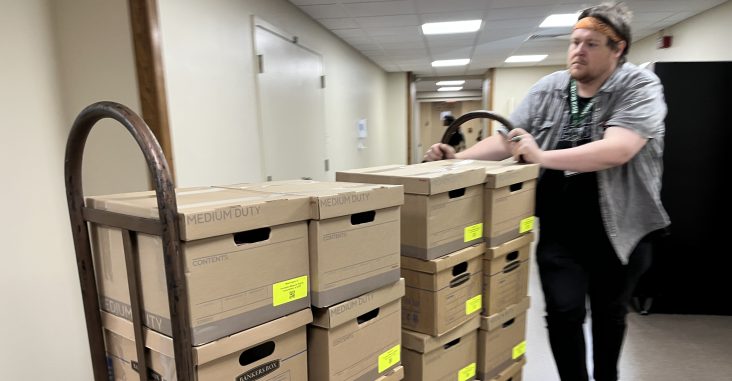
Backers of a proposed Arkansas constitutional amendment that would make citizen-proposed laws and constitutional amendments a fundamental right submitted 108,837 petition signatures Friday (July 3), the deadline for turning in paperwork.
Secretary of State Cole Jester’s office must verify that at least 90,704 came from registered Arkansas voters for the proposal to be eligible for the November ballot.
The Arkansas Ballot Measure Rights Amendment would amend Article 5, Section 1 of the state Constitution, which governs the initiative and referendum process. Protect AR Rights, the coalition sponsoring the proposal, says the amendment is intended to strengthen direct democracy and protect the rights of citizens to sign and circulate petitions.
“It was down to the wire,” spokesperson Gennie Diaz told reporters. “Folks were working till about 4 a.m. We got the final tally about 5 a.m. … I don’t know who slept. Not me.”
If the group collected at least 75% of the required 90,704, or 68,028 signatures, then it will qualify for a “cure period” to attempt to collect the remaining signatures.
Diaz said the group was confident it would qualify for the cure period. She said the group’s internal verification process was “extremely rigorous” in checking voter registration and ensuring signees’ information was correct. She said the group believes it has complied with all the state’s legal requirements.
“We’re confident, and we hope that bureaucracy does not get weaponized against us,” she said.
The proposed amendment would, among other provisions:
Make the citizen initiative process a fundamental right;
Require the government to notify citizens before it rejects their signatures and give them a chance to correct them;
Allow the Legislature to amend or repeal an initiated act by a two-thirds vote but not allow it to amend a constitutional amendment approved by the voters;
Require lawsuits against provisions to provide clear and convincing evidence;
Require lawsuits to be filed within 10 business days after the notice of a ballot initiative is published; and
Require the government to notify sponsors of minor errors and give them 10 days to correct it.
Protect AR Rights is a coalition of nonprofit groups that includes the Arkansas Education Association, Arkansas Advocates for Children & Families, the Arkansas State Conference of the NAACP, the Arkansas Public Policy Panel, Arkansas Citizens First Congress, For AR People, and the Arkansas Appleseed Legal Justice Center.
Two other groups that had sought ballot access did not submit signatures by the July 3 deadline. One, Save AR Democracy, also sought to strengthen the state’s direct democracy process. It was led by the League of Women Voters of Arkansas.
The other, For AR Kids, sought to qualify the Arkansas Educational Rights Amendment. It would have required all schools receiving public funding to comply with the same accountability standards, among other provisions.
During last year’s session of the Arkansas Legislature, several laws were passed that Protect AR Rights said would make it more difficult for citizen-led initiatives to qualify for the ballot. Legislators suggested they were needed to ensure the integrity of the initiative and referendum process.
In a lawsuit led by the League of Women Voters, U.S. District Judge Timothy Brooks on June 30 issued a summary judgment against much of that legislation after issuing a preliminary injunction last November. Protect AR Rights had joined that lawsuit.
Among the provisions Brooks ruled against were those that:
Required canvassers to read the ballot title out loud or have petition signers read the ballot title before signing;
Required canvassers to verify voters’ identification before they could sign petitions; and
Required canvassers to inform petitioners that petition fraud is a crime.
Because of the injunction, Diaz said canvassers did not attempt to comply with those particular laws. Diaz said the amendment is still needed even with the favorable court ruling.
“The Legislature can still put new restrictions in place,” she said. “We have an injunction on what they did in 2025. That is not an injunction that applies to future laws that have not yet been passed, right? So, we need this amendment in place so that they cannot continue to do this, and petitioners don’t have to keep going to court.”
She said voters have used direct democracy to pass the state’s minimum wage increase, medical marijuana legalization and term limits.
Diaz said the group started with volunteers and then also employed paid signature gatherers. It received a $933,200 donation from the National Education Association. It had about 500 volunteers and more than 400 paid canvassers. Volunteers collected 35,000 of the 108,837 signatures.
Editor’s note: Steve Brawner and Michael Hibblen contributed to this report.