
Arkansas newspapers undergo reboot as ownership changes revitalize industry
by July 5, 2026 11:13 am 2,972 views
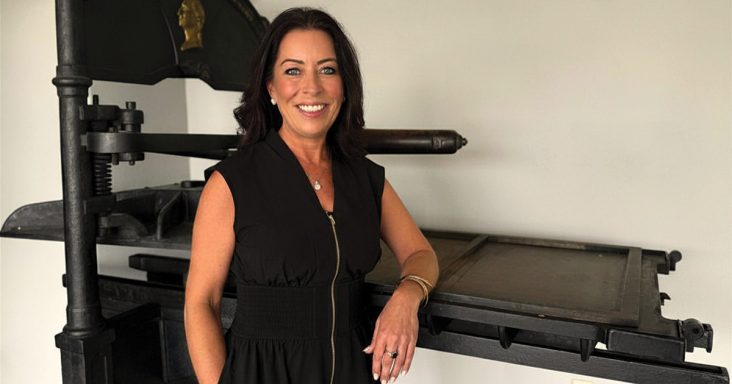
Ashley Wimberley
For the past 20 years, Ashley Wimberley has seen a newspaper industry thrive, decline, transform yet struggle into the digital age, fight new legislative battles, and renew hopes for the future of print.
Today, the Arkansas Press Association executive director feels pretty buoyant about the industry’s ability to adapt. She believes the power of local news will be the bedrock for the future of the newspaper business just as it was for the past.
“The digital age is obviously what’s changed our industry more than anything,” said Wimberley, whose organization represents newspapers and other media partners. “Even with a changing media landscape, people are craving local news. They want to find information that they know can be trusted. I feel like the newspapers who are doing a good job of making sure they maintain local content are doing just fine.”
Established in October 1873, the APA brought publishers of newspapers together to be unified in thought and action related to the profession of journalism. According to the Encyclopedia of Arkansas, the group gathered to “elevate its tone, purify its expressions, enlarge its usefulness, advance it in wisdom and justice, extend its influence in the work of true civilization, and to cultivate friendly relations and a spirit of fraternal regard among its members.” It is the oldest trade association in Arkansas.
The APA recently held its annual conference in Eureka Springs handing out awards, convening panel discussions on industry issues, and hosting political debates for Arkansas governor and secretary of state. Arkansas TV will broadcast the debates over the next few weeks.
“We feel a responsibility to help educate Arkansas on what their options are when they go to the polls,” Wimberley said. The forums also inform newspaper personnel on the political positions of candidates.
Wimberley’s organization is led by a healthy mix of seasoned operators with decades of experience and newcomers who are working through the paradigm shift underway in Arkansas and across the country. The combination of old and new has recharged the industry, she said.
“Nobody’s going to be covering what’s happening in Rison — the Friday night football games, what’s happening at the school, or the city council meeting — other than the Cleveland County Herald,” she said.
“There are lots of people who have been publishing for more than 50 years,” Wimberley said. “Rusty Frazier and Mountain View come to mind. I think the ones who have been the most successful, I think everything kind of comes down to passion for the business, right? You have to have a passion for what you’re doing to stay in this industry.
“I think in addition to that passion, you have to make changes,” she added. “You have to be nimble. Rusty Frazier, for example, never stopped learning. I’ve seen a lot of other publishers do the same.”
In the past two years, several newcomers have entered the newspaper scene. Wimberley points to Andrew Bagley and Chuck Davis, owners of three Delta newspapers; Scott Loftis, owner of three weekly newspapers in north Arkansas; Jeremy Gulban, whose CherryRoad Media newspaper empire stretches across multiple states; and the author of this report, owner of six weekly newspapers, and through a separate company, a co-owner of the Northwest Arkansas Business Journal.
“I think we have a lot of people coming into the industry with different areas of expertise,” Wimberley said. “But I think everybody is, at the bottom line, committed to seeing newspapers across the state succeed.”
Newspapers today have struggled with declining ad revenue, free digital access, rising costs such as postal expenses, and aging leadership that is sometimes unsure how to adjust to the new realities. In 1922, the APA represented 286 daily and weekly newspapers. A little over 100 years later, the number stands at 108 member publications. That includes dailies, weeklies, semi-weeklies and a few digital-only publications. The shrinking of the industry has been a consistent storyline for the past 25 years.
Wimberley and the press association have seen their role expand beyond a trade group. Often, she and the organization she leads serve as business brokers helping retiring or struggling newspaper operators find new ownership.
The challenges for the news industry extend far beyond finance and operations. The Arkansas legislature is constantly tweaking with the state’s Freedom of Information Act (FOIA), which Wimberley believes is among the strongest in the nation for transparency.
“I think what’s happened over the course of time is we have legislation where the sponsor will come forth and say, ‘This is just a tiny, little change. It’s not going to be a big change,’ she said. “Then, we see what happens, and it’s 200 small changes — it becomes death by a thousand cuts.
“I’ve been proud we were able to push back some of those changes and preserve what I still believe is one of the best FOI laws in the country.”
The legislative battles over FOI have led to a cobbled-together coalition of allies: Republicans and Democrats, liberals and libertarians, industry insiders and citizen watchdogs.
Wimberley grew up in a newspaper family. A native of Rector (Clay County), she worked in and around a newsroom most of her life. Her parents owned newspapers in northeast Arkansas and Missouri. She’s done her fair share of inserts, answering phone calls from subscribers who didn’t get their paper that week and selling local ads. Wimberley graduated summa cum laude with a degree in marketing from Union University in Jackson, Tenn., and did a stint in public relations with Little Rock agency CJRW before moving over to the APA. In 2018, she was elevated to executive director.
“I have more hope right now and where we are as an industry,” she confides. “Even though the challenges have become greater, and they seem to become greater every year, I think that the people who are committed to making sure that we have some sense of stability and can preserve what we have … There are enough people pushing in that direction that I feel more hopeful right now than I’ve felt in some time.
“There are groups outside of just the newspaper industry who really care about sustaining journalism,” she added. “They want to make sure there’s community journalism in the state, and I think there are more people fighting for that than just us at this point.”