
Winter storm damages buildings on poultry farms across the state
by February 2, 2026 9:02 am 969 views
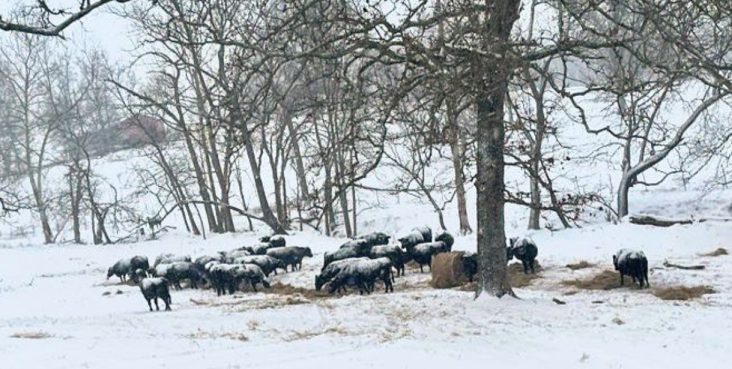
Cattle farm in Carroll Co. Photo courtesy of Arkansas Farm Bureau.
The powerful winter storm that dumped up to a foot of snow and two inches of sleet in many parts of Arkansas has impacted poultry and cattle producers. The Cooperative Extension Service has received reports of farm structures, including chicken houses, being damaged or destroyed under the weight of ice and snow.
Some producers have had trouble getting feed and hay in parts of the state.
Kimberly Rowe, Hempstead County agriculture agent for the University of Arkansas System Division of Agriculture, said several poultry houses have collapsed in the McCaskill area.
“The grower said these were older structures and birds were being relocated to other houses on his farm,” Rowe said. “Regionally, the count for downed poultry houses, primarily broiler houses, is estimated to be in the 30s and continuing to rise. One high tunnel in the county has been reported as a total loss.”
Bobby Powell, Yell County extension staff chair, said about 70 poultry houses throughout the Arkansas River Valley have collapsed. Many of those houses, he said, were older structures that were no longer insured against collapse.
“A lot of those farmers are just stuck,” Powell said. “They’re not going to get any insurance money for those — it’s going to be tough. Many producers will have to rebuild and go into major debt to keep their farms going.
“A lot of old chicken houses were being used for hay and equipment storage,” he said. “One guy I talked to, his barn collapsed with all his hay and tractor inside, and he had no way of feeding his cows. And this is a time when you need to get hay out. So he was relying on neighbors to come and feed hay and stuff.”
The snow that Yell County received was likely manageable by most structures, but the 2 inches of sleet that fell on top of it was particularly heavy, causing structures to fail.
“There’s a lot of damage around here, and it’s going to take time for farmers to get back to where they need to be,” he said. “To get their hay and equipment out and rebuild.”
Eva Langley, Pike County extension staff chair, said structural collapses had been reported throughout her county, including more than a dozen chicken houses and boat dock shelters at each of the county’s three marinas.
As many county roads remain impassable, Langley said that some poultry producers are running out of feed and are having a hard time getting more.
“We’ve had three feed trucks that have been ditched trying to get to chicken houses for feed,” Langley said. “They’re not able to get to them.”
She said some producers have taken to putting out distress calls on social media, and neighbors capable of traversing the roads are answering the call.
“There are people on social media asking for help feeding animals, and there are others responding, ‘tell me where you live,’” she said. “The people with vehicles that can get out and drive, they’re being good neighbors and mounting rescues.”
Faulkner County extension agriculture agent Kevin Lawson said that while his area had seen relatively few structural collapses, cattle producers were working overtime to make sure herds had access to forage and drinking water.
“It’s a unique storm, because we were in a D-3 drought when this happened,” Lawson said. “I had a producer in his 50s tell me that this will be the first time they’ll have to break ice — he’s always had streams running through the farm to keep water. But this year was so dry that nothing was running.”
Jonathan Kubesch, extension forage specialist for the Division of Agriculture, said that for cattle producers, his top concerns boiled down to hay feeding, the health of annuals and thaw damage to feeding areas.
“The entire state has been at some level of drought since the start of the month,” Kubesch said. “With a La Niña pattern in play, we are already feeding a lot more hay than we might have otherwise. As we come out of this storm, we likely had to feed more hay to match increased animal demand. I am mindful that hay inventories might end up lower than anticipated.
“I fielded a call about whether to graze winter annual seedlings before the storm,” he said. “I suggested waiting, hoping to maintain the stand for more grazing later in the winter. While most folks have cold-hardy winter annuals, I am interested in seeing how much this storm sets back some of these plantings, or if the thaw will give us some additional growth with the sudden flush of moisture.”