
Hendrix College launches work experience into curriculum
by April 17, 2026 11:45 am 744 views
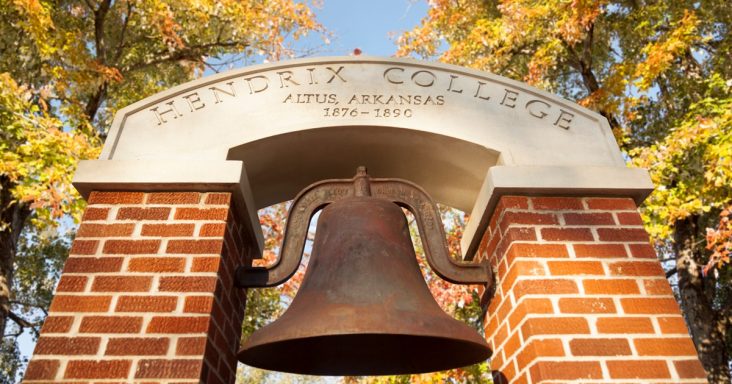
All incoming Hendrix College students will spend a junior year semester in the work world as part of their degree program through the new ‘Via Hendrix’ program announced April 17.
Starting this fall, students must complete the 12-14-week cooperative education program involving professional work or research.
“We will have placements for every major, and for every interest, and in true Hendrix fashion because of our size and our flexibility, if we don’t have it, we will help you create it,” said Hendrix College President Karen Petersen in an interview with Talk Business & Politics.
Petersen said no other college in Arkansas and few in the United States are embedding full-time work experience into the curriculum as part of graduation requirements.
Students will begin preparing for the experience their freshman year. Each student will be assigned an integrated advising team including a faculty member and career advisor who will provide academic and professional support until they graduate. They will prepare for their co-op their second year.
The co-op itself will involve a semester-long work experience that includes a simultaneous class where a professor will evaluate their progress and how it links to their classroom experience.
Their fourth year will involve reflecting on their experience while working with their advising teams to apply for jobs or graduate school. Petersen said students may find they are doing what they love and have a job offer, or they may discover they need to change paths or increase a certain skill.
The college is hiring an executive director to manage the program and is already signing preliminary agreements with employers. Health care providers, professional sports teams, law firms, nonprofit organizations and government entities have expressed interest in hosting and mentoring co-op students.
She said employers soon will face what colleges are currently facing – a shortage of young people ready to fill positions. Via Hendrix will provide them a “pipeline to talent that they can access early, try out, and then hire.”
The program will not cost students money and won’t require them to spend extra time in college. She said she expects most students will be paid. Hendrix is raising funds to underwrite support for students who want to work in the nonprofit sector. The program comes after faculty and campus leadership collaborated for nearly 18 months using market research.
“Hendrix is doing what it’s done so well many times in the past, which is adapting,” Petersen said in the interview.
“We have this incredibly bold and innovative faculty willing to change things, and we all recognize, I think, that this is a watershed moment for higher education. There are a lot of different points of pressure, and in addition to that, there’s the economic and social uncertainty that comes with the introduction of artificial intelligence into the workforce and into society.”
Petersen said instead of starting a major in AI, the college reimagined its approach to liberal arts education by blending an academic foundation, the residential experience, and the new professional cooperative education program.
She said the process “ensures that students can seamlessly integrate that intellectual exploration with their career exploration across all four years in a way that’s supported by the college throughout that process.”
Petersen said the growth of AI is illustrating the value of a liberal arts education because specific skills easily can be replaced. She said ‘Via Hendrix’ will help the college know what skills are in demand in the marketplace.
“The cool thing from my perspective is that it gives us this continuous feedback loop with students and all these different industries so that we will know in real time which entry-level jobs are disappearing, which skills are students lacking for the entry-level jobs that are staying, and how can we make sure they’re prepared,” she said. “And we will be able to adjust sort of continuously in real time because we’ll constantly have students with our partners and be in communication with both the students and the partners.”