
Arkansas lithium potential still strong, but market conditions shifting
by April 13, 2026 3:31 pm 1,222 views
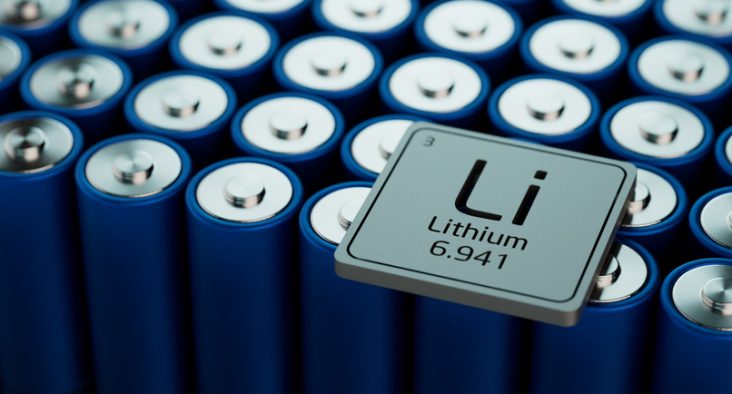
Officials working to develop Arkansas’ fledgling lithium industry provided an overview Monday (April 13) of where the potential for lithium development stands in the wake of shifting public policy and changing market conditions.
Hugh McDonald, Arkansas’ Secretary of Commerce, and several industry officials and startup investors spoke to an audience of around 75 at the Little Rock Tech Park’s Venture Center on Monday. McDonald told the group the investments needed to develop Arkansas’ lithium deposits in the south Arkansas Smackover Formation is a long-term effort, not an overnight project.
“It’s a partnership, it’s a process, it’s for the long haul,” said McDonald. “We’ve made progress the last three years, but we still have a long way to go.”
McDonald said Arkansas’ state policy on how to regulate the lithium industry has set it apart from other states who have moved more slowly.
“The work that’s been done on lithium works,” said McDonald. “We are creating conditions for a successful, reasonable and competitive regulatory environment.”
The Venture Center is in the middle of its third cohort of its one-of-a-kind lithium accelerator. The three companies that are participating in this latest round are:
Entegris POCO Materials – Backed by Entegris’ global materials leadership, POCO Materials is bringing its proven graphite processing heritage to the battery active materials market as an emerging supplier of anode‑grade synthetic graphite.
NewGenium – NewGenium’s unique DLE technology unlocks domestic production of L(M)FP from brine at less than half the cost of China.
Western Cam – Western CAM will reshore high performance LFP cathode material production at large scale and low cost utilising our extensive experience of cathode material manufacturing.
These companies are meeting with state, national and international investors interested in advancing the U.S. position in lithium development.
Presenters noted that market conditions have changed for lithium consumption – which is primarily used in battery production for energy storage or powering electric vehicles (EVs). Last year, an EV tax credit expired, which slowed adoption of electric vehicles for the first time in a decade. However, the advancement of data centers has pushed for more battery storage production, which is boosting the need for lithium.
Midstream missing
A key area for Arkansas and the U.S. to focus on is the midstream process for lithium use. The midstream process involves converting raw lithium feedstock –either hard rock or brine (found in Arkansas) – into chemical-grade lithium compounds.
China dominates the midstream market and presenters emphasized the U.S. must develop this part of the supply chain in order to compete internationally and to protect American security interests.
The five-year outlook for Arkansas, which could be the epicenter for U.S. Direct Lithium Extraction (DLE), shows the potential to produce 100,000 tons per annum (TPA). DLE is a set of advanced, sustainable technologies designed to extract lithium from brine (salty water) in hours rather than months.
In 2020, the first-of-its-kind in the world DLE plant was installed by LANXESS at a facility in El Dorado. The hope is that the technologies being explored by the startups in this cohort of the lithium accelerator can tackle the issues of improving extraction and develop manufacturing processes to speed up lithium mining for battery production.
U.S. Rep. Bruce Westerman, R-Hot Springs, said in a recent Talk Business & Politics interview that the potential is great for south Arkansas, but the mission is critical for U.S. interests. He cited a national security initiative underway at the direction of President Donald Trump known as “Project Vault.”
“I was in the Oval Office with the president when we did this,” said Westerman, who chairs the House Natural Resources Committee and whose Fourth Congressional District encompasses the core of the lithium deposits in Arkansas. “It’s using the XM Bank to establish something similar to the strategic petroleum reserves, but doing it for critical mineral reserves. It would ensure that China can’t dump on the global market and drive prices down, which is something that pushes investors away from doing projects in the U.S. because China controls so much of the market.”
Westerman thinks with the reserves developing and technology ripening, the Smackover Formation will benefit for decades from the lithium industry.
“The demand for lithium just keeps going up,” said Westerman. “Right now, we’re seeing the price of lithium going up and this is another thing that we’re working on in Congress. We want to make sure that we can produce the minerals and the elements here in the U.S. and not be so dependent on China. China has really cornered the lithium market. So there’s going to be a lot of emphasis from the federal government to make sure we can source things like lithium domestically.”
“I think it’s really bright days ahead for south Arkansas and lithium,” he said.