
Fort Smith board encouraged to approve modified federal consent decree
by February 25, 2026 1:13 pm 466 views
The attorney helping the city of Fort Smith modify an onerous federal consent decree requiring significant sewer system spending had a clear message: The city “desperately needs” to sign the proposed modification of the consent decree.
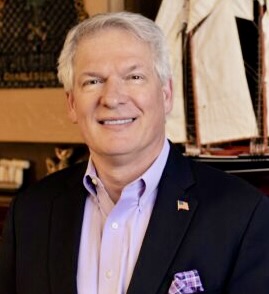
Paul Calamita, an attorney with Richmond, Va.-based AquaLaw, spoke Tuesday (Feb. 24) to the Fort Smith Board of Directors about a modified consent decree the city received Friday from the U.S. Department of Justice (DOJ).
Key provisions that benefit the city, according to Calamita, include an 11.5-year extension of the original 15-year deadline that is set to expire Jan. 1, 2027. The proposed plan moves the compliance deadline to June 30, 2038.
“The agencies would have liked eight (years),” Calamita said. “The extra 3.5 years really mattered, and we were willing to stand our ground for it, and I think they recognized that we made a good case for that time, and gave it to us.”
Another change gives the city flexibility to schedule mandated work, setting a three-year average for required work instead of mandating a specific annual amount.
Also, according to Calamita, the DOJ and U.S. Environmental Protection Agency (EPA) agreed in the modified proposal to revise its dispute resolution process to set a time limit — “shot clock” — on the agencies to submit a statement of position should they disagree with a dispute raised by the city. This change prevents the agencies from delaying the city’s ability to take a dispute to court, Calamita said.
CONSENT DECREE HISTORY
After decades of failing to maintain the city sewer system, EPA and DOJ officials executed a consent decree in 2014 with the city of Fort Smith that required certain improvements to the city’s sewer system. The federal agencies were acting under provisions of the U.S. Clean Water Act initially established in 1972.
The city has estimated that the total cost of consent decree work could approach $800 million. The early estimate was that consent decree work would total about $480 million. The city reports that it spent about $136 million between 2015 and 2024 and spent about $49 million prior to 2015.
In May 2020, the EPA and the Arkansas Department of Environmental Quality (ADEQ) agreed with the city that sewer improvement work will be “inordinately expensive” and gave the city another five years from the initial 12-year mandate to complete the work.
In May 2022, Fort Smith voters passed a 0.75% sales tax from Jan. 1, 2023, to Dec. 31, 2030, with 83.3% of the revenue going to federal consent decree work on the city’s water and sewer system and 16.7% directed to the police department. Funding for consent decree work to date also has come in part from water and sewer bill increases, which were up 167% between 2015 and 2022.
Fort Smith voters in May 2025 approved by a wide margin a sales tax plan to provide $360 million over 30 years to fund federally-mandated sewer system work.
DIRECTOR INPUT
Director Christina Catsavis said she is not happy with the modification, suggesting the city is “caught with a false choice” between not pursuing less-stringent measures in order to gain a time extension.
“I am not comfortable signing on to an agreement that could effectively mandate escalating rates without preserving the ability to contest compliance based on our financial reality,” Catsavis noted in a statement sent to Talk Business & Politics.
Calamita said he also does not like the language to which Catsavis referred, and he shares her concern, but he said the proposed modification has several major concessions from the agencies that is an overall benefit to the city.
“In my judgment, we’ve got a very good modification that would put us back into full compliance,” Calamita said. “And that language, that boilerplate language, which even the (President Donald) Trump DOJ continues to impose every day in new consent decrees, is not the hill for us to die on in the circumstances that we’re in.”
He agreed with Catsavis that federal officials have not given the city enough credit for the work that has been done, but said board approval of the modified agreement would result in “durable compliance” that would then give the city some leverage to push back against any future federal demands. He also said once durable compliance is proven by the city, consent decree management could be handed over to the state, specifically the ADEQ within the Arkansas Energy & Environment agency.
“So I see this modification as the last step here, and that in the next year, hopefully if the state of Arkansas remains willing, that we can then transfer this to a state enforcement mechanism, which will be much more flexible for this type of citywide long-term construction project,” he said. “I think it’s much more appropriate to be with the state.”
‘WATERSHED EVENT’
Director Neal Martin expressed concern about language in the modification and the threat of penalties, saying they feel “like a weight over our heads.” Part of his concern, he said, is if the modified agreement prevents the city from engaging in future negotiations.
Calamita expressed doubt that the agencies will pursue significant penalties, especially if the city approves the modified agreement and continues with the “front-loading” of work financed by the recently-approved sales tax plan. He again said the city “desperately needs” to approve the modified plan to avoid penalties and gain more time and flexibility for sewer-system work.
Director Jarred Rego said the proposal “is a good thing,” and he praised former Director Lavon Morton for leadership in pulling together the sales tax plan voters approved in 2025. Rego said if the board rejects the modification, the federal agencies would have less reason to not assess significant penalties for past problems.
Calamita agreed, and said the city’s relationship with state and federal officials have improved, primarily because of the sales tax package approved in May. He said the sales tax plan proved to be “a watershed event” that showed federal and state officials that the city and its residents were serious about addressing consent decree requirements.
Calamita also said Arkansas’ Congressional delegation worked to lobby the federal agencies on the city’s behalf. He said U.S. Rep. Steve Womack, R-Rogers, and U.S. Sen. John Boozman, R-Ark., “have been the tip of the spear” to push the city’s cause with the agencies.
A vote on the modification is set for the March 3 board meeting.