
State Chamber leader Randy Zook expects 2026 to be pivotal year
by January 27, 2026 2:00 pm 588 views
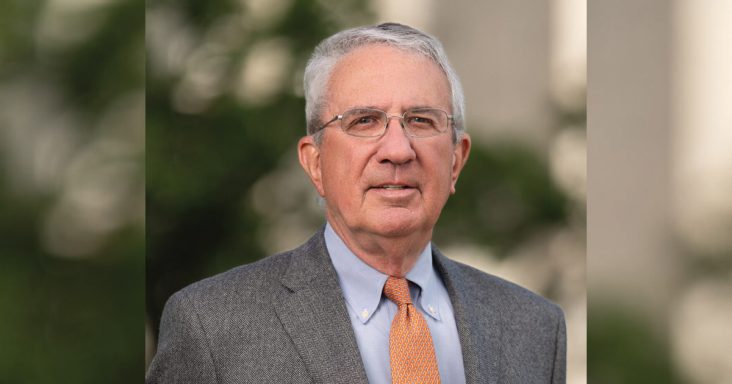
Randy Zook is the CEO of the Arkansas State Chamber of Commerce and the Associated Industries of Arkansas. It’s a role he’s held for two decades, and he’s seen a lot of transformation in the state’s economy.
Zook sees big opportunity on the horizon at the state and national level based on a number of different factors. During the holidays, he sat down with Talk Business & Politics Editor-in-Chief Roby Brock for a conversation.
Roby Brock: Let’s talk about what has been happening in the economy generally. I know when the year 2025 started, there was a lot of nervousness over tariffs and trade policy, a lot of uncertainty in the economy. I feel like that has worked its way out, even though it still is tumultuous when you look at those particular topics. Have we just gotten used to it?
Randy Zook: There’s a lot of that. Pain even for a long … Ultimately, you get accustomed to it, so that’s kind of where we are. Uncertainty is the bane of a businessperson or manager’s existence. We want to know what the rules are, what the likely outcomes are from whatever actions we take. And in this environment, that’s just really been tough. “Challenging” is the right word, I guess, probably the most accurate one.
Brock: But corporate profits are still strong. Private business that I talk to generally feels pretty positive about the future and where things are going. You’ve done some survey work among your members recently. What did you get from some of the chamber survey in terms of confidence in the economy?
Zook: Most people think their business is doing well and they think the future’s going to be bright and good. It’s not an out-of-the-park kind of a response. But when you say what’s the future, the next 12 months for your business look like? Most people are pretty confident and optimistic. It’s just business is doing fairly well. Profits are pretty strong, but some of them are difficult to predict for the next six to 12 months.
People are buying stuff. Christmas numbers look like they’re going to be pretty healthy. A lot of it we won’t know for sure until you get all the retail results, but Walmart is doing great. Amazon’s doing great other than the port disaster here in Little Rock. But people are buying. People have money in their pockets and an outlook that’s very favorable.
Brock: We’ve had a lot of positive economic development announcements in Arkansas this year. I feel like almost about two a month on average, if I had to put a number to it, maybe even a little bit better than that. Lots of pro-business legislation passed in the legislative session earlier this year that we are starting to see the first tailwinds of some of that. What would you point to – and I’m going to limit you to two things — as the most significant things that were done in the session.
Zook: I would say the bill that allows for construction work and process for the utilities to be able to go ahead and begin investments and begin recouping that without added interest costs. That’s long-term, that’s a big deal.
Brock: Because energy is huge right now. The No. 1 thing that I hear businesses ask for when they’re looking to locate.
Zook: It really is. Have you got the juice and what am I going to have to pay for it? So those are the two questions, the first two in any site decision.
Brock: What’s the second thing that you think was most significant?
Zook: I would say Issue 3 for sure. Ultimately, if we can pass it this coming fall, we’ll have a real competitive leveling of the playing field. We’re behind the curve on the economic level with other states.
Brock: Explain what Issue 3 does. It’s a legislative referred amendment.
Zook: Issue 3 will make us competitive with Texas, Oklahoma, Mississippi, other states around us where they have economic development districts, which allow tax increment financing for new projects in an area. Think about the Army-Navy hospital in Hot Springs. How in the world do you ever get a developer to come in there and renovate that and convert it into apartments or a hotel or a mixture of that sort of thing without some kind of help in underwriting the cost of it? These districts would allow that type of development. Retail for small communities where there is no grocery store. How in the world do you ever get somebody to take that risk without substantial help? This amendment ultimately would make that possible. It would put us on a level playing field with Texas primarily.
Brock: We’ve had a bevy of job announcements this year. There have been some big ones. The major metro areas in Arkansas, central Arkansas, Fort Smith, Northwest Arkansas, the Jonesboro metro market, have all been strong. There’s been a lot of rural Arkansas developments. Why do you think that is happening?
Zook: Well, it’s a mixture of things. No. 1, the biggest one, I guess, is the investment down in South Arkansas and Monticello where Weyerhaeuser is putting in a $500 million engineered wood products facility, which will begin to use some of that abundant pulp wood that we’ve got down there that you can hardly get anybody to buy right now. It’s going to provide an outlet for that resource and it’s going to create around 300 jobs in the plant plus a couple hundred jobs in the woods harvesting pulpwood to supply it. That’s a big deal in Southeast Arkansas, an extra 400 or 500 jobs in an area that’s hemorrhaging population because the lack of job opportunities. Tate Industries up in Pocahontas, that’s another big one. And there are several of them in other parts of the state.
Brock: Other steel developments in Northeast Arkansas, too.
Zook: I think there’s an abundance of land. There is an availability of energy and there is a workforce in rural Arkansas that is untapped in terms of you’ve got them in the big population centers, but when it’s like in a Nashville, Arkansas that lost a major plant, there’s a workforce there that’s ready to be redeployed.
We’ve got several of those situations around the state where you’ve got a readily available workforce, but for the most part, workforce is still a challenge and workforce participation is still below the national average in Arkanas. So we’ve still got a lot of people on the sidelines. Now look, you may have to drive a pretty good distance. But people will drive 40, 50, 60 miles for good jobs in certain parts of the state. That is a real issue, but they do it because the jobs are good and the pay is good.