
Dismal prices may cut cotton acres in 2026
by January 27, 2026 2:51 pm 615 views
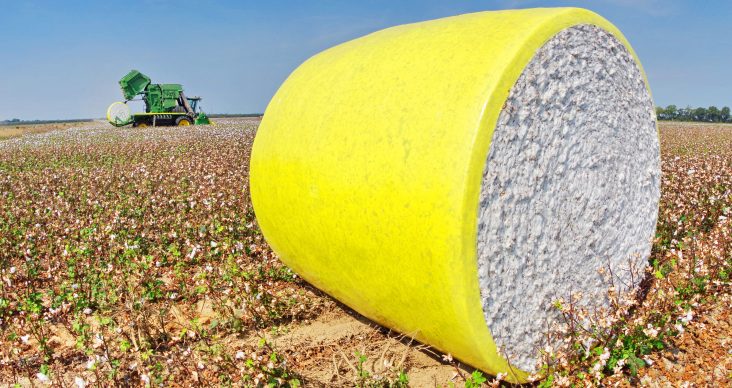
Harvesting cotton near England, Arkansas. Photo courtesy of Arkansas Farm Bureau.
Cotton acres in Arkansas were sharply down in 2025, and that downward trend may continue in 2026. The primary culprit is prices.
With cotton prices consistently trending lower and soybean prices seeing a bit of a rally, Division of Agriculture economist Scott Stiles said it’s possible many of Arkansas’ cotton acres could shift to soybeans in 2026.
“The cotton market has done nothing but trend lower,” Stiles said. “The high price for the December 2025 contract was 70.93 cents per pound in early April. Fast forward to November and the December contract traded as low as 60.79 cents. We’re now at the lowest price levels since the summer of 2020.”
Stiles said December 2026 futures for cotton are at 67 cents per pound, whereas soybeans seem to have gotten a bump with November 2026 prices near $11 per bushel.
“We need December cotton prices to be in the upper 80s to 90 cents for growers to cover their costs, so 67 cents isn’t going to excite anybody,” Stiles said. “It will take very strong yields and cost reductions somewhere to make that work. But if soybeans stay at this $11 mark, it’s very likely we see some cotton acres shift to soybeans.”
There were 515,000 cotton acres planted in the state last year, down from the 640,000 acres planted in 2024, according to the National Agricultural Statistics Service (NASS).
The growing season last year was also plagued by weather problems, said Zachary Treadway, cotton and peanut agronomist for the University of Arkansas System Division of Agriculture. Heavy rains in the spring forced producers to plant later.
“We were behind the eight ball from the very beginning,” Treadway said. “And we knew after planting it would turn off hot and dry. A late crop that was stunted during peak bloom set us back in a year where we couldn’t afford to have a set back.”
One crop that rotates with cotton did slightly better in 2025. Peanut acres jumped from 45,000 to 48,000, according to NASS.
“We had kind of the same story with our peanut acres,” Treadway said. “We had similar planting problems and the heat didn’t help things. But harvest was pretty kind to us with peanuts and we did see a slight increase in peanut acreage this year.”
Despite a relatively good harvest, and possibly better yields than expected, cotton acres will still likely decline in the Natural State this year, Stiles added.
“Everybody’s in survival mode at this point and they’re looking at the best option,” Stiles said. “You may call yourself a cotton grower, but 67 cents will test your loyalty.”