
The Supply Side: ReturnPro in Bentonville processes returns for retailers, suppliers
by June 23, 2026 1:09 pm 891 views
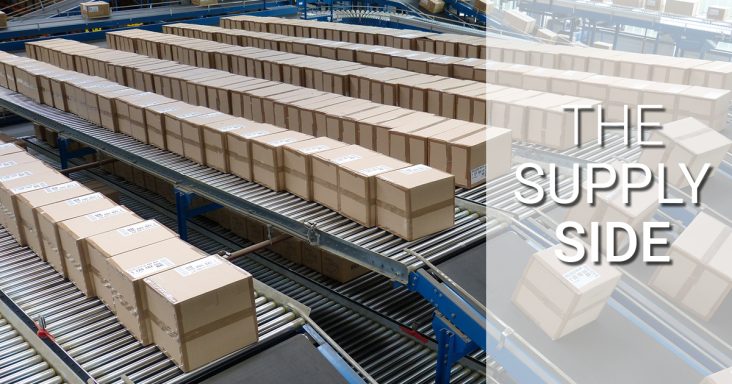
Retail returns topped $850 billion last year, according to the National Retail Federation, and that number continues to grow as online retail accelerates. Returns have risen to roughly 17% of sales in recent years with no signs of slowing.
Reverse logistics is big business, and so is return processing and resale, which is often handled by three different providers.
Miami-based ReturnPro is different. Since 2008, the company has helped retailers, brands and third-party sellers solve return issues by addressing every part of the post-purchase experience. Since 2016, ReturnPro has had a return warehouse facility in Bentonville. The 150,000-square-foot warehouse is a one-stop shop for returns. The facility primarily focuses on technology returns and is one of 12 ReturnPro sites in North America.
Wes Berry, executive vice president of client partnerships, said ReturnPro sits between retailers and suppliers. ReturnPro said some retailers send all the product back to the supplier, while at other times the supplier only wants certain products back. ReturnPro works with both sides of the transaction to help them derive the best value from the return. That could include refurbishing the product and reselling it to consumers through a secondary marketplace.
The company worked with a North American small appliance brand that was seeing growth in retail and direct-to-consumer channels, but behind the scenes, its returns strategy was inefficient. Its return policy, to destroy the product, was initially meant to simplify operations. Instead, it was costing them millions in unrealized value, creating inefficiencies, and offering no visibility into what was being returned or why, according to ReturnPro.
The appliance vendor lacked infrastructure and a scalable recovery strategy that would not be too costly and improve accountability. ReturnPro helped the vendor realize $1.6 million in annual net recovery. The process included a resale process, and within one year, more than 127,000 units were expected to move through the new return model.
Berry said the Bentonville location primarily focuses on Apple and Android products, power tools, gaming systems and a few other technology-related products. ReturnPro Bentonville processes annually about 5 million retail returns for retailers like Walmart, Bass Pro Shops and Sam’s Club. He said the Bentonville location employs between 150 and 160 workers, and the facility was recently expanded by more than 30%. Berry said ReturnPro will also act as a return center when some products are routed back to vendors from retailers or consumers.
“We will process these returns,” he said. “The stuff that’s supposed to go back to their vendors, we will put that in packing and pallet spaces and ship it back to the vendors on a cadence, and the rest of it, we will try to extract the most value we can out of it. Typically, the best way to do that is to sell it right back on that company’s marketplace.”
With consumer electronics, he said, all data is wiped from the devices slated for resale. Items like smartphones or tablets are refurbished if needed and then graded on condition.
“Our main goal is to never throw anything away,” Berry said. “There’s always a buyer for a product, but we get consumer data off the product, get it to the best level we can, and then list that product right back on Walmart marketplace, eBay, or Amazon, and sell it. We take our fees out of that, and drive that value back for the retailer, so they’re not out the money.”
He said ReturnPro facilities specialize in certain categories like apparel, general merchandise or technology. Apparel returns are the most common, particularly because of consumer behaviors like buying the same item in multiple sizes and keeping only the one that fits. Also, the rise of e-commerce shopping has led to an increase in return rates and volumes across most categories. Wardrobing is also a growing issue with consumers who buy an item, wear it and then return it as new. It does not just pertain to apparel. It is also a problem with power tools and even big-screen TVs following the NFL Super Bowl.
“We believe across the retail industry that the fraud problem is about $150 billion annually,” Berry said.
The company also has Clarity, an AI-powered tool that works like an airport scanner used by the Transportation Security Administration (TSA). Berry said Clarity was developed by a subsidiary company of ReturnPro and is being used in the Bentonville warehouse to detect product authenticity. Berry said iPhone fraud and iPod fraud have been prevalent in recent years, but Clarity can detect fraud within seconds. He said too often a consumer would put an old phone in the return box, and it was not detected at the source of the return until after the refund had been made.
“Sometimes the iPhone box might contain a brick or some sort,” Berry said. “That was also the case with a lawnmower fraud scheme. They would remove the battery, the most expensive part of the mower, and replace it with a brick.”
The Clarity scanner has been trained to spot fakes and is getting smarter, given its intuitive nature. Berry said the disruptive technology has the potential to reduce return fraud.
“Think about high-end designer handbags,” he said. “Someday, stores could have these scanners and immediately validate authenticity on returns at the retail counter.”
Editor’s note: The Supply Side section of Talk Business & Politics focuses on the companies, organizations, issues and individuals engaged in providing products and services to retailers. The Supply Side is managed by Talk Business & Politics.