
Town hall focuses on health care access, self advocacy with health care needs
by May 21, 2026 9:02 am 399 views
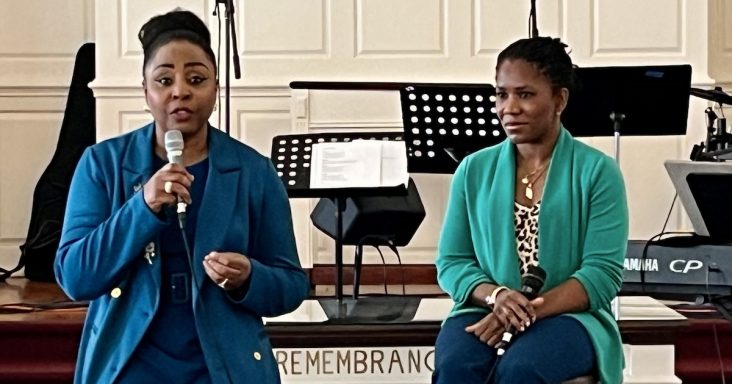
(from left) Dr. Jessiela Roberts, a family medicine, hospice, and palliative care physician at UAMS, and Dr. Daphne MacBruce, a pulmonology and critical care medicine physician at Mercy Hospital, talk about health care issues during a Wednesday (May 20) town hall held by the NAACP Sebastian County Branch.
Approximately 30 people gathered Wednesday (May 20) evening at Community Bible North Church in Fort Smith for a town hall meeting to discuss health care advocacy and best practices for staying healthy, with part of the discussion addressing Baptist Health-Fort Smith cuts in services.
The NAACP Sebastian County Branch hosted the town hall.
Little Rock-based Baptist Health recently announced it would close clinics and services in Fort Smith, affecting 150 jobs including 10 physicians. The hospital system operator stated it had lost $127 million since acquiring the Fort Smith hospital in 2018.
While the emergency department, operating room, medical-surgical nursing, “low acuity” intensive care unit beds, geriatric psychiatry, and radiology services will remain open, inpatient infectious disease, nephrology, oncology, and pulmonary services are closing. Cardiology, pediatric, neurology, infectious disease, renal, and oncology clinics also are closing, Baptist Health said.
“We want our community to be healthy,” said NAACP Sebastian County Branch President Talicia Richardson. “And if we can do our simple part by convening two practicing physicians in our area to have a candid conversation with individuals, whether they belong to a church or not, is very important.”
Dr. Jessiela Roberts, a family medicine, hospice, and palliative care physician at the University of Arkansas for Medical Sciences (UAMS), and Dr. Daphne MacBruce, a pulmonology and critical care medicine physician at Mercy Hospital, have participated in four town halls hosted by the NAACP branch.
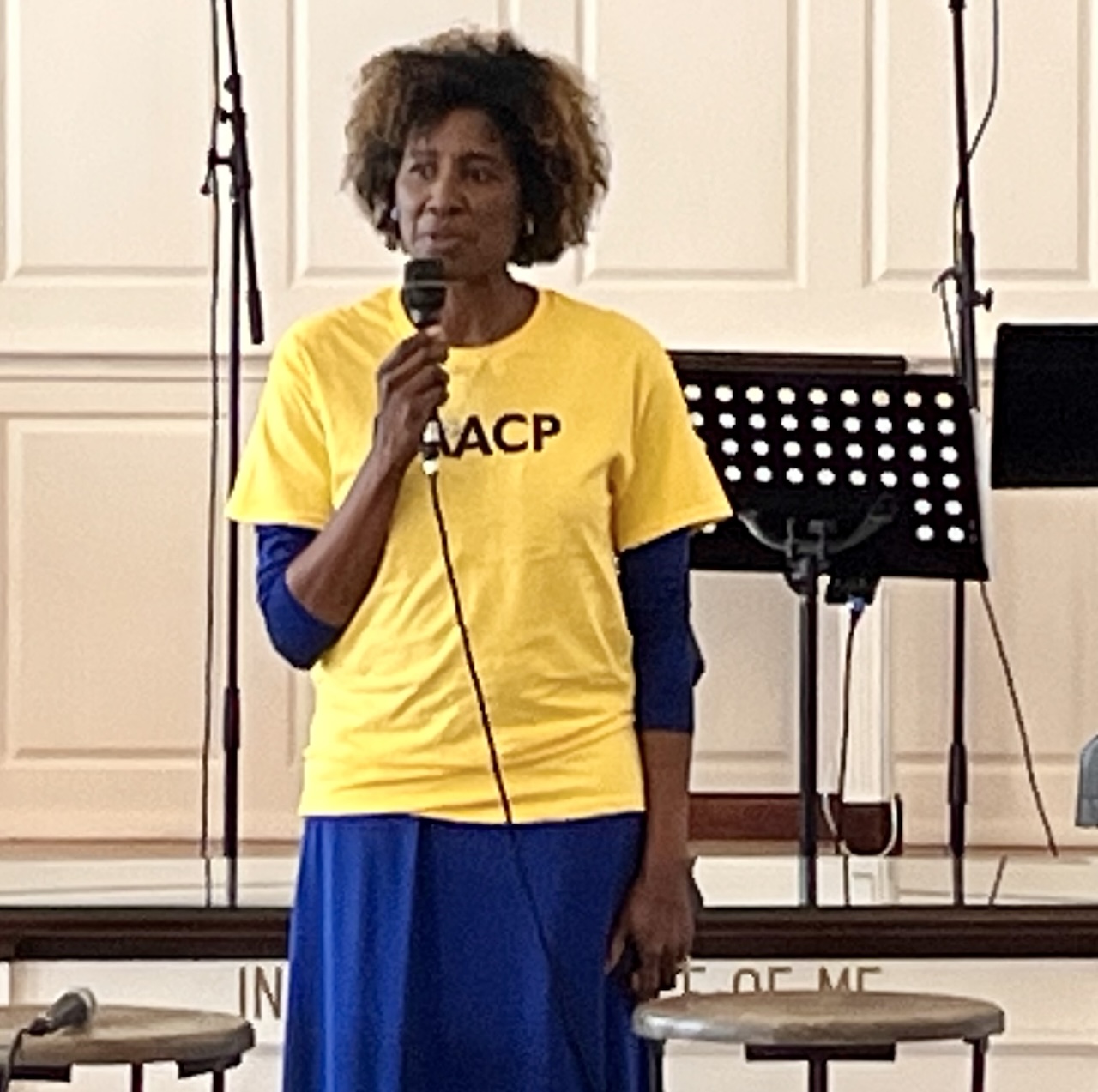
“Our goal was really to teach you how to advocate for yourself, teach you really what other things you need to do as you create your other process, and hopefully empower you with some of the skills and the tools and point you in the right direction,” Roberts told the crowd.
During her presentation, Roberts stressed the importance of patients having a primary care physician, knowing where their specialist – if employed by Baptist – is moving once services close, and obtaining access to medical records.
“It’s really important that we teach patients to take ownership of their health care,” Roberts said.
MacBruce reiterated similar comments, focusing her comments on having a primary care doctor patients can trust and accessing preventative care, such as important screenings that can detect issues early. Patients who do not seek preventative care often find out about an issue after it is too late, she said. Citing lung cancer as an example, MacBruce stated, “When you find it early, you cure it.”
Establishing goals to discuss with the doctor is another suggestion MacBruce recommended. She encouraged attendees to prioritize the most important issue to discuss with their doctor, ask someone else to attend appointments to help remember what was said, and schedule follow-up appointments to discuss other issues. MacBruce also discussed the important role pharmacists play in preventative health care.
“Pharmacists are trained to go over your medications to make sure there are no drug interactions, to make sure there are no side effects,” she said.
In addition to discussing access to primary care doctors, discussion included the importance of having the right insurance, talking to a doctor about needed immunizations, establishing advanced directives, sharing those decisions with family ahead of time, and talking with neighbors and other family members to ensure they are accessing the necessary services.
“What we want to do is to empower people to be able to navigate this situation as best as we can,” MacBruce said.
The purpose of the meeting was not to scare attendees about upcoming changes but to empower them, Roberts said – something Richardson also explained.
“If they’re already an advocate for themselves, how can they advocate for those that are in their immediate neighborhood?” Richardson said. “How can they advocate for people that may not even be in the Fort Smith area because this is a nationwide issue [health care advocacy]. This is not just a Fort Smith issue.”
Wednesday’s event was the fourth in a series held across the northern part of the city. While other town halls are not planned, Richardson said the event was recorded for other organizations to access.
“If anyone wants this to be brought to their event, their whatever, we’re there,” Richardson said. “We want to be present.”
To schedule an event, contact the NAACP.