
Arkansas company is finding innovative uses for mobile storage
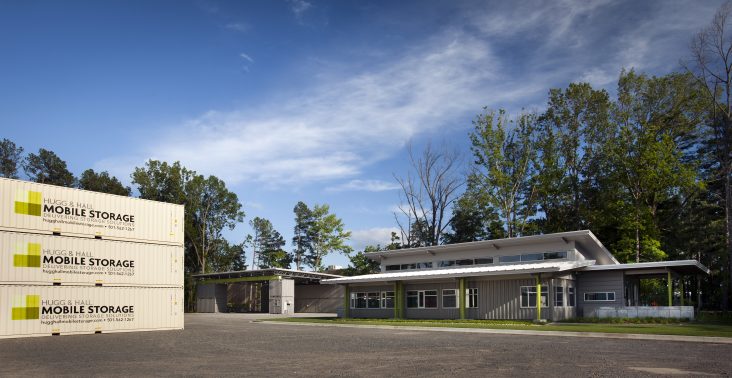
The use of mobile storage containers has drastically improved the way construction sites operate. Now, Little Rock-based Hugg and Hall Mobile Storage, which is marking 30 years in business this year, is looking to the future with ideas of how simple steel shipping containers can greatly improve aspects of other industries, including hospitality, housing and energy.
Since being founded, the company has expanded to 17 locations in Arkansas and six neighboring states. It offers customized containers that can serve a broad range of purposes. The containers were once used for shipping freight at sea.
They are primarily modified to serve as temporary offices and mobile storage but can also be used for other purposes. They hold the promise of speeding along economic development projects, especially in places with small budgets like Keo or Carlisle. The containers can be used for outdoor recreational purposes, like serving as trailheads, restrooms or companies that provide needed gear.
“The container module — the way it’s built, the way it’s engineered — it’s just a really robust, initial platform to do so many different things with,” President and CEO Jim Hugg said.
The work to customize containers is done by the company before they’re delivered, often at the same time as site foundation work is being completed. He says that saves time and adds a lot of flexibility. The containers are also delivered by the company’s own fleet of trucks, bypassing third party companies.
“The modular delivery model, it’s just got a lot of advantages to it because you’re cutting down the delivery time of a project by 30% to 40%. And then we’re fabricating all this work in a controlled factory environment in our shop,” Hugg said. “We deliver it to the job and immediately, all you do is hook up the utilities and you’re ready to go.”
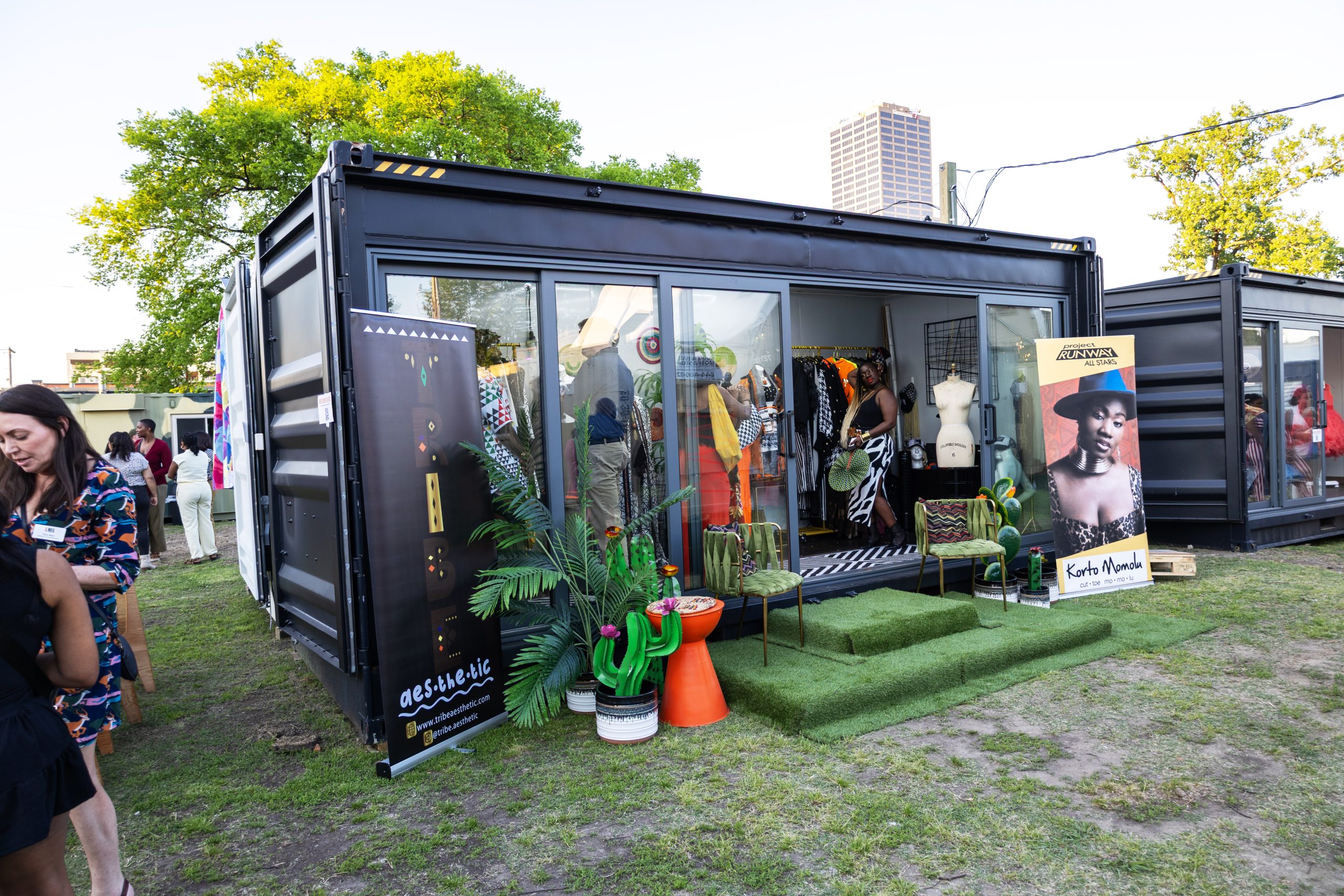
A project in recent months on Little Rock’s W. Ninth St., which was once the heart of the city’s thriving Black business, cultural and entertainment district, shows the unique ways storage containers can be used. Beyond the Divide created a district on an open lot using 22 shipping containers that became temporary shops, galleries and gathering spaces. Other containers were placed along the street to be painted by local students and artists.
Art Kinnaman, Hugg & Hall Mobile Storage’s chief operating officer and vice president, said it was the latest such event to involve the company in a relationship with the city that has stretched back for more than a decade.
“When they told us what was going on with the number of containers and all, I said let’s get together and talk about this. And then we found out that this was about historic 9th Street in our community,” Kinnaman said.
“We were both raised in this community, this is where we choose to live, to work, raise our families, and so it was an easy yes. And also, it’s a fabulous and somewhat unique way for us to showcase all of the different products and things that we can do while also doing the right thing for our community and for our friends,” Kinnaman said.
Company origins
As a young man, Jim Hugg wasn’t initially interested in joining his family’s long-established business, which sold and rented construction and warehouse equipment. Instead, he opted to attend college and pursue a goal of becoming an architect. But Hugg later saw construction sites with temporary storage and offices being run out of old 18-wheeler trailers that didn’t seem safe.
“They weren’t secure, they were rickety,” he said. “A lot of times you’d see these stairs made out of concrete blocks. They weren’t OSHA [compliant] and they weren’t convenient to use,” he said.
When his family was approached with a proposal to create a sister company that would use the existing infrastructure at its southwest Little Rock yard to sell and lease mobile storage units, Hugg said he realized he could use his architectural expertise to create safer on-site facilities. He founded Hugg & Hall Mobile Storage in January 1996 with his father Charles Hugg and business partner Robert Hall.
“They said Jim, why don’t you come over and that could be your thing. We’ll help incubate this thing and support you. This would be a way for you to sort of join the family business. That’s really how it got started,” Hugg said. “At the time, I was kind of ready for a different opportunity from architecture, so I came on board.”
Hugg said he and the company would not have had the success it has over the last 30 years without the support of his wife, Mimi.
The core business involved delivering containers to construction sites that could be used for storing heavy equipment, tools and materials. It changed the longtime practice of renting trucks and loading materials inside which were then taken to off-site storage locations and unloaded.
“Part of the marketing was, we’ll bring the mini-storage to you. You can put this right at your site,” Hugg said. “It’s much more convenient, much safer, much more cost effective and time-saving to have it on your site.”
Containers were also modified for use as portable offices, which he says were safer, made of more robust materials and were more secure than trailers. They can also be easily moved, if needed.
Hugg & Hall Mobile Storage was initially a local dealership for a national company that used a specially-made kind of storage unit. But eventually Hugg & Hall emerged as its own company and decided to exclusively use former steel shipping containers that once held freight on large ocean ships. They’re very durable, having been made to withstand strong storms at sea and being repeatedly loaded and unloaded at posts.
Because of their universal sizes and ability to be interlocked, the containers have been compared to Legos. Just as kids can find different ways to snap them together, so too can Hugg’s company configure containers into unique buildings by welding or stacking them based on customer needs. Additional containers can be added later if more space is needed.
As the company looks to the future, Hugg said one key industry they’re targeting is energy.
“They have a big need for backup energy systems that are housed in a portable, robust steel enclosure. It’s a complex unit, it has to have fire suppression and power and ventilation, but it’s another part of that segment of containers that we’re looking to develop,” he said.
The housing sector also has a lot of potential for using prefabricated modules, especially to address housing shortages. It’s estimated that modules built in controlled factory environments can save 20% in construction costs and require fewer subcontractors, which can mitigate a labor shortage.
While the company’s core business remains mobile storage and offices, Kinnaman said, “the possibilities are endless. I tell friends all the time, you’re only limited by your imagination, truly.”
In Arkansas, Hugg & Hall Mobile Storage has yards in Little Rock, Pine Bluff, Lowell, Fort Smith, Jonesboro, Bryant and El Dorado. In surrounding states, it has locations in Oklahoma, Louisiana, Texas, Missouri, Mississippi and Tennessee.