
Arkansas’ Goodwill leader shares business model goals
by March 24, 2026 2:00 pm 372 views
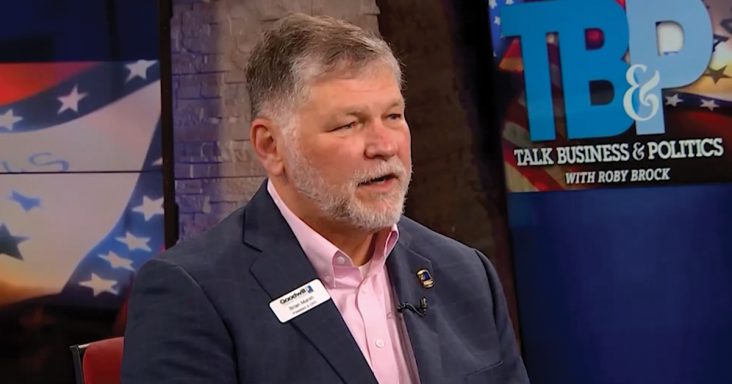
The CEO of Goodwill Industries of Arkansas Brian Marsh knows his nonprofit is practically a household name, but he’s hoping its work can change household incomes.
Marsh sat down with Talk Business & Politics Editor-in-Chief Roby Brock to discuss Goodwill’s business model, the work it is doing to sustain itself, and most importantly, its efforts in workforce education.
Roby Brock: When people think of Goodwill, they think, ‘I can take things to Goodwill. They will take them, they will resell them in their stores.’ Explain the business model to people.
Brian Marsh: Everybody knows who Goodwill is, but very few know what Goodwill does. Our mission is changing lives through education, training, and employment. And so in our stores, that is our social enterprise that powers our mission. Our mission is based in education. We have the Excel Center, which is an adult high school. In our training, we have trade school. And now we have two trade school locations — one in Springdale with the high school there, and then one in Little Rock. And we do (prison) reentry. We’ve got a very successful reentry program. Recidivism in the state is running around 50%. Recidivism for the graduates of our program is less than 5%.
Brock: This is where someone comes out of prison, they don’t have the skillset they need, they need help transitioning back into work. This is the program that you’re speaking of.
Marsh: This is the program. It’s a paid 16-week program, and it teaches them more than just how to get a job, but how to keep a job. And the life skills, the soft skills, the durable skills that are required to continue to be employed. The success rate is very high. We’ve had over 1,000 graduates since we started the program in 2012 and we’ve expanded. In the last four years, we’ve got 125 spots right now and we’re moving towards 150. We’ll be opening that operation and that mission in Mountain Home soon and then following it to Harrison. But we have it in 27 locations across the state right now.
Brock: What kind of jobs are they being trained for?
Marsh: The trade school — and really the training there is in durable employment opportunities: welding, certified medical assistants, pharmacy techs, construction. We’re working on pre-apprenticeships for HVAC and electrical. They are jobs that are going to continue and will not be heavily impacted by AI in the future. It’s those jobs that lead to a living wage. So when someone comes to us and they’re underemployed, they may be making around $7,000 a year on average. They’re eligible for something in the range of $45,000 in federal and state assistance … This helps to bridge that benefits cliff. Goodwill is working across the country with legislators to try and fix that and build a glide path on this assistance.
Brock: I’ve taken a tour of your facility in southwest Little Rock. It’s very impressive. And this was a takeaway for me: I feel like everybody that’s coming through the Excel Center there, they have a job at the end of it. It’s not that you just educated them and turned them loose. You help them get all the way to their first paycheck.
Marsh: Yes. The purpose, again, is employment. We look to the ABCs of work: ‘A job, a Better job, and a Career.’ So they might come to work for Goodwill and get a job, and it’s their first job. Then, we work with them to get those durable skills for the better job, and then work with our career navigators to get them into a career path.
If someone comes to us and they graduate from the Excel Center, we’ve got a 90-plus percent placement into careers out of the Excel Center, but we partner that also with the academy. Now, they go through the academy classes and they become a certified medical assistant where we’ve got a 97% placement rate. So they’re getting a job and they’re getting a job in a high-paying career.
Brock: So how does that work? Say I dropped out of high school, I want to go back and get my GED. Let’s say I’m a clerk at a retail store. I want to get my GED. I’m still just going to have my GED and be a clerk at a retail store after that. You’re putting them on a different path, correct?
Marsh: When they come to us, they get a high school diploma. So it is a transcripted diploma. We actually operate the only two adult high schools in the state where an adult can earn a high school diploma, which puts them on track to earn more than $17,000 a year more than they would if they had the GED.
These statistics are nationwide statistics. The Notre Dame Laboratory for Economic Opportunity has done a wonderful study on Goodwill, the Excel Center model and graduates. So when they come to us and they’re on that path, first thing we do is we test them for proficiency and to determine where they are in their educational path. And generally, we’re seeing our students with fifth to seventh grade reading levels. Over 60% have tried to pass the GED and failed because it’s a computerized test. And 90% of them have failed all sections.
When they come to us, we test them, we build a pathway. We do remediation. So we take them up to high school reading level and math levels, and then they begin their high school journey. And that high school journey is 22 credits. It is absolutely the same as what they would do as if they had finished when they were 16 and dropped out, but they had finished for their diploma.
We do that and then we work with employers in the area to determine what jobs are needed, what roles are needed, and then we’re training them for that… so it’s quickly adapting to the needs of the employers in the area.