
Winter weather not helping with low cattle herd numbers nationwide
by January 26, 2026 3:31 pm 506 views
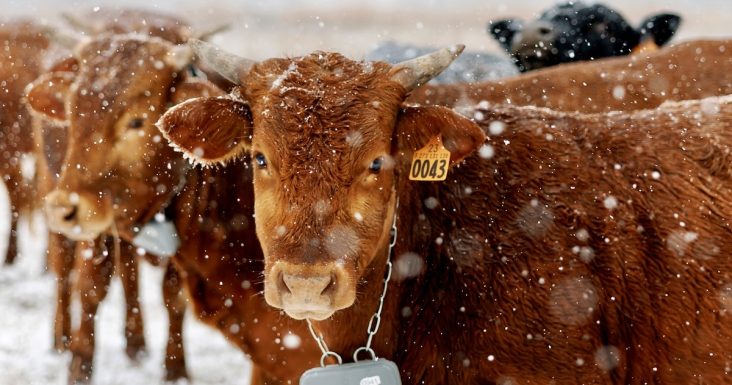
photo courtesy of the Oklahoma State University Extension
Frigid Arctic air bringing severe winter weather across much of the country will impact cattle markets in the coming weeks and months, according to Derrell Peel, livestock marketing specialist with the Oklahoma State University Extension.
Peel said prolonged subfreezing temperatures require additional effort and expense by cattle producers. Extra work includes chopping ice to ensure water availability and providing additional feed to maintain cattle health. He said for cow-calf operations in calving season, the challenges are greater.
“Newborn calves are especially vulnerable to cold weather until they get dried off and successfully nurse,” Peel said. “It takes additional effort to save calves and avoid frozen ears, tails and feet. Calf losses may impact cattle supplies in the coming months. The cold temperatures will reduce feedlot cattle performance, adding additional days to finish cattle and reducing carcass weights and beef production in the coming weeks.”
The January Cattle on Feed report indicates there are 11.45 million head of cattle on feed lots to start the year, down 3.2% from a year ago and the 14th consecutive month of declining feedlot inventories. Peel said feedlot inventories over the past 12 months are at their lowest level since September 2018 and are down 3.8% from the cyclical peak in September 2022.
December data indicated feedlot placements were down 5.4% from the prior year. Total placements for the last six months account for 92% of the feedlot inventory and were down 8.2 % year over year, Peel said.
He said feedlot marketings — the number of cattle sold by feedlots to packers — increased 1.8% in December from a year ago. The marketing volumes fell by 11.9% in November. Peel said the December rise was the first increase in the past eight months. Feedlots sold 6.9% less cattle over the past six months compared to the year-ago period.
The January Cattle on Feed report also included the quarterly inventory of steers and heifers in feedlots. Heifers as a percentage of feedlot inventories increased to 38.7%, the highest level in the last year. Heifers continue to make up an above-average share of total cattle on feed and suggest limited heifer retention.
The U.S. Department of Agriculture (USDA) will release the cattle report on Jan. 30 and provide data on cattle inventories, including the inventory of replacement heifers.
Peel said for packers like Springdale-based Tyson Foods, the prospects for cattle availability continue to be tight. He said no cattle are moving across the Mexican border, which took about 3.2% of the available cattle out of the supply chain in the past year. He said Canadian feedlots are buying cattle in northern states like Montana and taking that supply out of the U.S. market because cattle supplies in Canada are tighter than in the U.S.
Peel said the closure of Tyson’s Lexington, Neb., plant and the layoffs at the Amarillo, Texas, plant are indications that the industry will get worse before it gets better. He said tight cattle supplies will continue through 2027, because there was no indication of heifer retention — need to produce more calves — in 2024 or 2025.
“Once cow-calf operators start holding back heifers from the feedlots, that will signal a change in the market,” Peel said. “That said, the supply will get tighter once those heifers are held back. At the very earliest, an increase in the cattle supply will take two more years.”
It takes heifers nine months to grow a calf. They are shipped to feedlots around nine to 11 months old where they are fattened up for six months.
Peel said packers have borne the brunt of the shrinking cattle herd. In fiscal 2025, Tyson Foods’ gross losses in beef totaled $1.35 billion. The company forecast beef losses of $500 million for fiscal 2026. Tyson will report its fiscal 2026 first-quarter results before the market opens on Feb. 2.