
When 2 Northwest Arkansas towns right-sized their maps
by May 17, 2026 11:16 am 1,473 views

Two years ago, two city councils in Northwest Arkansas did something that city councils almost never do. They voluntarily gave up land to a neighbor.
Rogers gave up the Scissortail neighborhood, a built-out community west of Highway 112. Cave Springs gave up a chunk of its eastern fringe. The swap was ugly. Packed chambers, earnest lawyers, opposition websites. People were genuinely angry.
Then it happened. Nobody’s water stopped running. Cave Springs became one contiguous city again. Rogers got a more manageable footprint. Both cities moved on.
What happened wasn’t just a cleanup of messy boundary lines. It was a small, unglamorous act of honest governance — the kind this region is going to need more of.
This month, Northwest Arkansas hosted the 34th Congress for the New Urbanism and the Strong Towns National Gathering — back-to-back in Bentonville and Fayetteville, May 12-16 and May 18-20, respectively. Two thousand planners, architects, and developers will study this region, arriving right at the two-year mark of a swap that many people thought was reckless and a few thought was illegal. What they’ll find is that it worked, quietly and without drama, and that both cities are better for it.
They’ll also find a region with some explaining to do. The argument both organizations have been making for years — and that the Northwest Arkansas Council’s infrastructure working groups have been wrestling with quietly — is that annexation patterns that outrun service capacity don’t build wealth. They just move costs forward. And eventually, those bills come due.
Bentonville is dealing with exactly that right now. Four sewer basins at capacity. A $239 million infrastructure program just to serve the city it already is. And annexed land on its perimeter — some farmland, some never connected to a single municipal service — sitting on the books of a city that’s already stretched.
Meanwhile, Cave Springs is on a roll.
The swap put the city back together geographically. Its access to the Northwest Arkansas Conservation Authority’s regional wastewater plant means it can say yes to development at a moment when infrastructure is the thing standing between this region and homes for its growing population. The Urban Land Institute has been working with the city on its downtown plan. CNU has selected Cave Springs as one of three Legacy Project recipients for this Congress, bringing a design team that includes DPZ — Andrés Duany’s firm. DPZ doesn’t show up as a favor. They go where they think something real is happening.
Cave Springs has sat at the crossroads of Highway 112 and 264, right next to XNA, for a long time without much fanfare. That’s shifting.
In the swap, Rogers didn’t lose ground. And Cave Springs didn’t just grow. They worked together and both came out ahead. That’s what we do in NWA. The Northwest Arkansas Council, the Conservation Authority, and the Regional Planning Commission exist because growth problems don’t stop at city limit signs. The Rogers-Cave Springs swap was that same instinct applied directly to the map.
CNU doesn’t travel to cities to hand out ribbons. It comes to challenge them — to ask whether today’s choices will still look reasonable in 20 years. Cities sitting on land they can’t serve while investing their infrastructure dollars elsewhere know that question well. Part of what that requires is the willingness to look at your own map with clear eyes and recognize where the lines no longer make fiscal sense.
The land swap was a beginning, not a one-off. If our region absorbs that lesson and acts on it, we will be in better shape for the next 50 years than if we hold all the old lines.
Two years in, Cave Springs is thriving. The swap worked. The lesson is available.
The question is who’s paying attention.
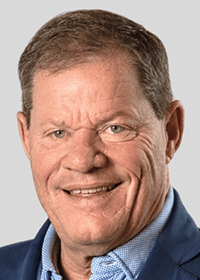
Editor’s note: Bob David is a developer and principal at Leadership Properties in Cave Springs. The opinions expressed are those of the author.