
Beaver Watershed Alliance receives $618,000 for smart growth project
by October 30, 2025 11:46 am 486 views
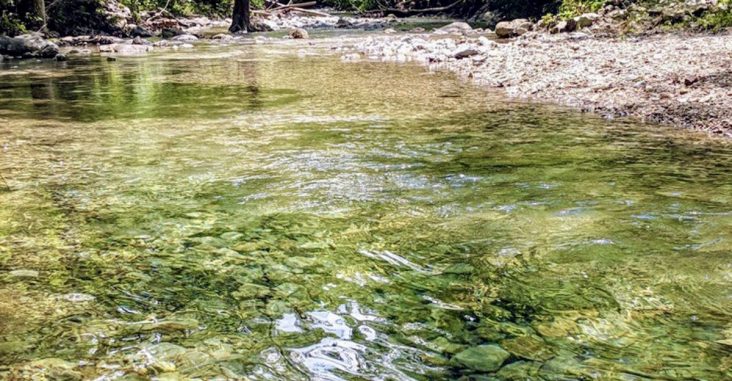
The Beaver Watershed Alliance announced Thursday (Oct. 30) that it has been awarded a $618,235 grant to continue its work to protect the water and to implement smart growth strategies in the Beaver Lake watershed.
The three-year grant includes $349,529 in federal money from the Arkansas Department of Agriculture’s Natural Resources Division and the U.S. Environmental Protection Agency (EPA). The alliance also received $268,706 in matching support from community partners.
The new project, Beaver Lake Watershed Flood Assessment, Smart Growth Implementation and Technical Assistance for Source Water Protection, will build on recommendations from the Beaver Lake watershed protection strategy to reduce nonpoint source sediment and nutrient pollution, according to a news release. The initiative will develop a watershed-scale model to identify flooding and stormwater “hot spots,” implement three nature-based smart growth projects, and provide technical assistance to area communities for riparian and streamside restoration.
According to the alliance, Beaver Lake provides drinking water to more than 600,000 residents in Northwest Arkansas, but population growth and rapid development are “placing increasing pressure on the watershed. As impervious surfaces — such as roads, rooftops and parking lots — expand, stormwater runoff increases, carrying sediment and pollutants into streams and rivers. This runoff contributes to erosion, flooding and declining water quality.”
According to the Arkansas Economic Development Institute, the population of Northwest Arkansas is expected to nearly double by 2045.
“Flooding is becoming more frequent, and we need better tools to understand where and why it’s happening,” said Becky Roark, executive director of the Beaver Watershed Alliance. “Watershed systems — like riparian areas, floodplains and wetlands — are critical infrastructure. This grant allows us to invest in data, restoration and planning that protect our drinking water and natural resources.”
When impervious cover exceeds 10% in a watershed, water quality degradation becomes measurable, research shows. The Beaver Lake watershed, which largely comprises forest and agricultural land, “is at a critical juncture as development accelerates,” according to the alliance. “The new flood and stormwater model will fill critical data gaps and guide local governments, developers and landowners in making informed decisions that balance growth with watershed protection.”
Healthy riparian zones, comprising vegetated areas along streams and rivers, help to filter pollution, slow runoff, prevent erosion and support aquatic life. Through this project, the alliance is expected to help communities restore and enhance these areas to protect stream health and strengthen flood resilience.
“We’re grateful to the Arkansas Department of Agriculture’s Natural Resources Division and the U.S. EPA for their continued investment in our region,” Roark said. “Together with local partners, we’re building the tools and partnerships needed to ensure Beaver Lake remains a clean, reliable water source for generations to come.”
The alliance is a nonprofit that works to maintain high-quality drinking water in Beaver Lake and improve the water quality throughout its watershed. It brings together agricultural, conservation, recreation, business and community stakeholders to promote ways to improve the watershed’s health.