
Drought conditions impacting cattle producers across the state
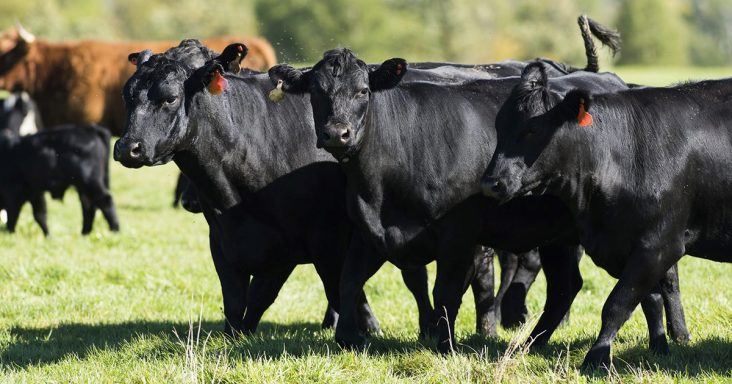
Parts of Arkansas have been deluged with rain during the last week, but nearly all of the state is in some form of drought, according to the U.S. drought monitor. All of Northeast Arkansas is in a moderate drought, while parts of Greene, Mississippi and Clay counties are under extreme drought conditions.
More than seven inches of rain have fallen during the last several weeks across the region, according to the National Weather Service. However, the prolonged drought conditions have had an impact on the agriculture sector, especially cattle farmers.
Cattle farmer John Kunkel told Talk Business & Politics that he has already ordered wintertime hay in anticipation that the drought conditions will continue throughout the summer and into the fall. Kunkel’s farm is near the Strawberry River, a river that flows from Fulton County and through Izard, Sharp and Lawrence counties.
“The Strawberry River has reached record lows, and the creeks that normally flow through the Spring have gone dry,” he said. “We can’t control the weather, but we can plan ahead to protect our livestock and our farms.”
Jonathan Kubesch, assistant professor of forages for the University of Arkansas Division of Agriculture, said drought conditions appear to be easing somewhat in the northern and northwestern areas of the state, while drought conditions are intensifying in southeastern and northeastern corners.
“This has been one of the driest fall-winter-spring periods in history for the state,” Kubesch said. “While Arkansas and the surrounding region have experienced several short, intense rainfall events throughout the spring and summer, they don’t help to counteract the overall effect of drought on forages and grasslands. It’s starting to interfere with some of the hay harvest. It’s been delayed while we wait for stuff to dry out. The big fear with drought is that forages are going to be more ‘stemmy,’ or we just won’t have the quality there in the first place. If things are wet, we’re not able to wrap bales. So, we’re hoping enough people are able to get adequate nutrition in their hay.”
Kubesch said farmers who planted summer annuals, such as crabgrass, sorghum sudangrass and pearl millet, are “beginning to see the fruits of that labor.”
“There was enough moisture to get some of these summer annuals going in most of the state,” he said. “That was the drought mitigation plan for some folks, so they would have something to feed to the animals.”
Pasture managers in some areas haven’t been so lucky, however.
“I’m feeling really bad for the folks down in the southeast, where it was dry-ish for the winter annuals,” Kubesch said. “Now their warm-season perennials, like bahiagrass, are starting to come on and be the main focus of their program, and there’s not enough rain to run it. People ask me which is worse: fall drought or spring drought? It’s whichever one we’re not ready for. And unfortunately, it’s really hard to get ready for something when it’s a perpetual problem. It’s hard to prepare for drought when we’ve got a perpetual issue with moisture.”
Pasture managers are also facing many of the same pressures and concerns as row crop farmers, including the high cost of fertilizer and other inputs, and problematic disease and pest pressure exacerbated by drought conditions.
“We generally don’t want to make herbicide applications in drought conditions,” Kubesch said. “The good side of that is that we’re not stunting the growth of good plants. The bad side is that we’re not knocking weeds out of stands.”
Ally Krumsiek, extension beef cattle specialist for the UA Division of Agriculture, said whether an area is experiencing plentiful rainfall or exceptional drought, preparation is key.
“Don’t overlook having fresh water available to livestock,” Krumsiek said. “Creeks and ponds are great resources, but if we don’t have fresh water flowing through them, they can become stagnant, which can in turn increase algae and bacteria, which aren’t the best for cattle.”
Krumsiek recommends providing a clean water source that’s consistently full, even if that means hauling water to temporary troughs.
“When considering nutrition for your livestock, it’s important to remember that water is the most important and overlooked nutrient,” she said. “Especially as we get into these hot, humid conditions that are coming our way.”