
Research points to insects as food alternative for organic poultry farms
by February 25, 2026 10:00 am 441 views
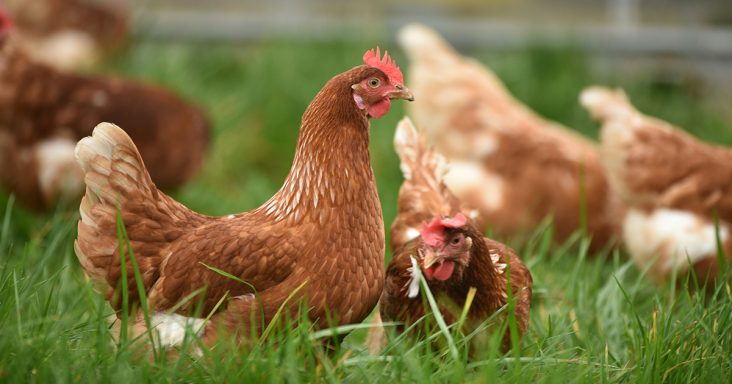
Skyrocketing input costs are forcing livestock producers to find other ways to provide protein to flocks. Insects might be a high-protein alternative for organic poultry farmers, according to the National Center for Biotechnical Information.
A team of researchers from the Dale Bumpers College of Agricultural, Food and Life Sciences at the University of Arkansas is set to study the issue.
Synthetic amino acids are generally prohibited in certified organic poultry production. Methionine is the only synthetic amino acid allowed in organic poultry feed at restricted levels due to its high biological requirement.
Finding a natural, cheaper source of methionine has been a priority for organic farmers, and the U.S. Department of Agriculture’s National Institute of Food and Agriculture has awarded a nearly $1 million grant to Adnan Alrubaye, an assistant professor of poultry science in the Dale Bumpers College of Agricultural, Food and Life Sciences.
Alrubaye’s collaborators on the project include researchers with the USDA-Agricultural Research Service, the Center of Excellence for Poultry Science and the Arkansas Agricultural Experiment Station, the research arm of the University of Arkansas System Division of Agriculture. Alrubaye is also part of the experiment station. Arkansas is one of seven states to receive this grant.
Alrubaye and his team will also evaluate commercially raised crickets, which preliminary data showed to also have potential as a sustainable source of methionine for organic poultry diets. Alrubaye, who is also associate director of the University of Arkansas’ graduate program in cell and molecular biology, and his team of researchers plan to collect and prepare insect meal from wild harvested insects and perform microbiological safety and nutrient analysis of the meal to formulate broiler rations.
Researchers will evaluate growth performance and meat quality of broiler chickens fed with insect-based diets and conduct an economic analysis to evaluate the feasibility of insect meals as a viable source of methionine. They will also conduct on-farm testing of the effectiveness of treatments in organic poultry production systems.
“The long-term goal of this proposal is to provide a natural and sustainable source of methionine and minimize the impact of dietary supplementation of synthetic methionine in organic poultry production,” Alrubaye said. “Our overall goal is to evaluate the potential of insect meals as a natural source of methionine, while assisting organic poultry producers to comply with the requirements of the National Organic Program.”
Arkansas typically ranks in the top three for broiler production in the country and is a top five egg producer, annually, according to the Arkansas Farm Bureau.
Project results and information on organic poultry production will be shared with organic and sustainable agriculture communities by an extension team made up of experienced poultry specialists and stakeholders who have been involved in organic poultry production.
The team will present the project’s results at conferences, in electronic and printed materials, and through training activities at a research and teaching-oriented organic poultry facility. Additionally, the team will conduct train-the-trainer programs for extension specialists and other interested stakeholders on the project’s objectives, results and applications.
The first phase, collecting and preparing insect meal, includes formulating broiler rations to optimize methionine levels. Traps will provide farmers with an economical way to collect supplemental protein sources from their animal and agricultural farms and will be deployed at multiple locations to collect houseflies from poultry farms.
“The harvested flies will be collected and processed to obtain dried insect meals,” said Alrubaye. “The dried insect meal will be screened for the presence of selected poultry and human pathogens, including Salmonella, Listeria monocytogenes and Campylobacter jejuni, using standard culture and PCR-based detection methods to ensure the safety of inclusion of insect meals in poultry rations. We will conduct nutrient analysis of dried insect meals to determine true metabolizable energy (TMEn) and digestible amino acids of insect meal and formulate rations for broiler chickens.”
Feed trials will be conducted during the second phase to evaluate growth parameters and feed efficiency in broiler chickens fed an insect-based meal compared to those fed synthetic methionine.
“We will also determine the post-harvest meat quality and conduct sensory studies to evaluate the consumer acceptability of meat from broilers fed with natural and sustainable sources of methionine in comparison to broiler chickens fed with conventional diets,” said Alrubaye. “We will utilize the data from the aforementioned studies to determine the most effective treatments, and we will conduct on-farm testing of the effectiveness of treatments in organic poultry farms.”
With insect farming projected to generate 5.5 million tons of insect waste in North America by 2033, scientists with the experiment station, Bumpers College and USDA-ARS looked at the byproduct as a soil amendment in soybeans and switchgrass.
The research showed that the insect waste, also called frass, delivered two to four times greater nutrient efficiency than poultry litter and reduced soybean leaf damage by 38% to 45%.