
Federal money seeks to transform health care in Arkansas
by November 5, 2025 12:29 pm 876 views

Arkansas health care leaders are looking to diagnose several long-term critical issues, and a new pot of federal money will be a catalyst for the changes.
While the One Big Beautiful Bill passed earlier this year by President Donald Trump and the GOP-controlled Congress made major cuts and changes to Medicaid, the measure also included $50 billion earmarked for states to transform rural health care.
“With the rules that they proposed, it would be very difficult to backfill, if you will, the funds that we would’ve gotten from Medicaid,” said Bo Ryall, Arkansas Hospital Association president and CEO. “I think what they’re trying to do on the federal level is transform health care and provide it in a different means through telehealth, through additional workforce, things like that. So we’re going to receive the money, but we’re going to have to make changes. That’s just the rules as they are.”
The Rural Health Transformation Program affects states like Arkansas that rely heavily on public insurance programs, like Medicare and Medicaid, according to the Arkansas Center for Health Improvement (ACHI), a nonpartisan, nonprofit health policy center. A recent analysis outlined key provisions of the plan.
There will be two tranches of money that Arkansas could apply for that could amount to as much as $500 million of program funds coming to the state over the next five years. Gov. Sarah Sanders’ administration has asked stakeholders across the state for proposals to compete for the money. States must apply for the funds by Nov. 5, despite the federal government shutdown. Sanders’ office announced Wednesday (Nov. 5) the state had applied for program funds.

“About 45% of Arkansans live in rural areas, where residents face less access to health care, worse health care outcomes, and more fragile health care systems than residents of urban areas,” the ACHI report stated. “Although Arkansas has been spared when it comes to hospital closures compared to surrounding states over the last decade, 50% of rural hospitals in Arkansas are currently vulnerable to closure — the highest percentage in the nation.
“Given these risks, it is critical that Arkansas’ Rural Health Transformation funds be spent on promoting the long-term financial stability of rural health care providers,” it also said. “The program offers an opportunity to build efficient, collaborative, and sustainable rural health care infrastructure and reduce the rural-urban gap in health care access and quality of care.”
The new federal law is significant in that it represents a big shift from federal government oversight to state control of health care spending. States will have broad discretion in spending the funds, but the legislation outlines limitations.
WORKFORCE, TELEHEALTH
Rep. Lee Johnson, R-Greenwood, is a physician and serves on the House Public Health and House Insurance committees in the state legislature. Johnson said his efforts will center around workforce and medical residency slots. He also sees a big role for the state to capitalize on telehealth.

“Leveraging telehealth is an important thing,” he said. “We have a real opportunity in our state with the increasing broadband access to leverage telehealth in a different way to rural hospitals. Rural hospitals need to be able to keep as many patients as they can in their facilities. Sometimes the limitation to that is lack of access to specialties, and that’s something that I think we can solve through telehealth.”
The hospital association’s Ryall shares Johnson’s focus on workforce.
“I think that additional residency slots on hospital campuses would be a great way to get more physicians in the pipeline and keep those physicians who are graduating here,” he said. “As we’ve gone from two to now we have four medical schools, there’s going to be plenty of people that we need to keep in the state and keep them in these residency slots.”
Ryall also mentioned increasing money for loan forgiveness programs for health care workers to strengthen workforce needs.
Jodiane Tritt, Arkansas Hospital Association executive vice president, said the potential for telehealth expansion could also add to the transformation potential.
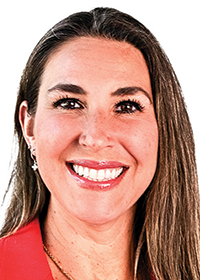
“We know we’re short on workforce, and we need to be able to use technology to augment the talent that we have with the existing workforce as we’re growing it,” she said. “So another really great use of those dollars would be to expand our telehealth infrastructure in the state and to be able to let technology be an aid to physicians and nurses and clinicians and health care providers in making sure we can communicate better and more efficiently about patient needs and where patients need to be transported.”
Other areas of emphasis suggested by federal guidelines for the new money include information technology advances, innovative care models, and improving rural health care access. Funds may not be used for lobbying, supplanting existing federal or state funding, transferring expenditures between different levels of government, or financing the non-federal share of other programs.
EYE ON INSURANCE
The federal government shutdown has centered on health insurance premiums, which are expected to mushroom in the Affordable Care Act health exchanges. In Arkansas, insurance companies are poised to enact large premium increases due to a variety of circumstances — more patient utilization, higher delivery costs, and the expiration of Biden-era subsidies.
The insurance sticker shock has heightened the debate over seeking more transparency in the rate-setting process. Both Rep. Johnson and the hospital association said this will be a focus of future debates at the state level. Johnson said he doesn’t know exactly why insurance rates are rising; he can’t pinpoint the reasons for the increases.
“I don’t know that I know exactly, right? I mean, I think that’s part of the problem of the issue,” Johnson said. “I think we need to understand better how those calculations are made. We say things like, ‘we know the costs of health care are rising.’ Well, where are they rising, and what is constituting those cost increases? They’ll say more people are accessing the system. Where are those people accessing the system and how? I think having more transparency so that we can all understand with clarity — both the consumers, providers, and then employers who are paying a lot of these premiums — so that they can understand where is the math.
“We want to have healthy insurance companies, health insurance companies in Arkansas,” Johnson added. “We need them to be viable, but we need to understand with clarity when they’re asking for these extraordinary premium increases that the math actually works.”
“Arkansas is very under-resourced in health care,” Tritt said. “Our commercial rates are not high enough to support the increase in cost and Medicare and Medicaid reimbursement rates, especially as more people choose Medicare Advantage plans that are administratively burdensome and pay the hospitals incredibly subpar rates. So when those things happen altogether, it leaves us under-resourced.”
Improved reimbursement rates are a federal issue and would have to be addressed by Congress, which doesn’t have the matter as its highest priority.
“I think the reimbursement rate conversation has to continue from a hospital perspective and certainly from a physician perspective,” Ryall said. “We are one of the lowest states in both of those areas as far as Medicare reimbursement. So yes, we have to continue talking about Medicare. We have to continue talking about Medicaid, and we also have to talk about commercial insurers because those rates — we’ve seen study after study show that we’re the lowest rates in the country in almost all three of those areas. So we’ve got to see improvement there.”