
Washington Regional announces restructuring plan, will cut 86 jobs
by May 28, 2026 12:14 pm 2,368 views
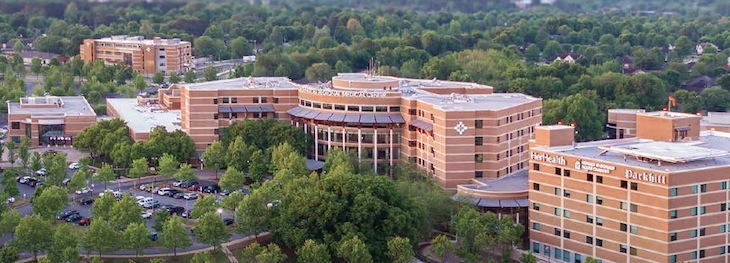
Amidst rising inflation costs, lower reimbursement rates, and shifting state and federal policy, Washington Regional Medical System announced a restructuring plan Thursday (May 28) that will result in 86 job losses. The Fayetteville-based healthcare system stressed that job cuts would have more impact on administrative functions than direct patient care.
“We are all aware of the challenges facing the hospital industry, particularly in Arkansas,” said Dr. Lucas Campbell, Washington Regional president and CEO. “The factors (inflation and reimbursement) are well documented. While we continue to advocate for competitive reimbursement, we are all closely evaluating any and all opportunities to improve our financial performance. Like others, we are implementing difficult, but necessary, workflow and workforce changes without impacting bedside care. Not only are we reducing labor expense, we are better aligning our administrative labor with more streamlined operations.”
Announced as a “strategic organizational restructuring,” the health system said it would streamline operations and redesign workflows “to reduce administrative burdens to better support bedside and clinical teams.” Changes will include consolidation of select management and support functions, resulting in the elimination of positions as the organization works to strengthen its long-term financial stability.
“The workforce reduction will impact 86 staff members and is one of numerous operational changes the leadership team is actively working to implement to improve financial performance. Patients will not experience a disruption in the care they receive,” a statement from Washington Regional said.
“The current healthcare environment continues down an increasingly difficult path,” Campbell said. “We are all evaluating our business and implementing significant operational changes. By restructuring our management operations and consolidating roles, Washington Regional will reduce redundancies and optimize efficiency while still providing the high-quality care our community has come to expect.”
Policymakers at the state and federal level have warned of impending challenges for the healthcare industry due to inflation and reimbursement cuts. In addition, changes in the health insurance marketplace have decreased coverage for millions of Americans and led to higher uncompensated care for hospitals and health systems, which are required to treat patients regardless of their ability to pay.
According to the Arkansas Hospital Association (AHA), the cost of uncompensated care at Arkansas hospitals increased 14.9% during the 2025 fiscal year compared to the previous year. Washington Regional said its uncompensated care costs have risen in a range similar to the statewide average. The AHA has also reported that, as of June 2025, approximately 40% of Arkansas hospitals were operating at a loss, and 70% of rural hospitals are in the red.
“When hospitals are not adequately reimbursed for providing care, they are forced to reduce services and staff,” warned AHA President and CEO Bo Ryall a year ago.
“When more Arkansans lack coverage, hospitals bear the cost of uncompensated care,” Ryall said. “Arkansans who lose Medicaid will still need healthcare and will turn to our already overburdened emergency departments for services, increasing wait times for all patients, whether insured, uninsured, or covered by Medicaid or Medicare. Patient care in emergency departments often is more extensive and requires more costly treatments that drive up healthcare bills. Hospitals are forced to absorb significant uncompensated expenses. When expenses outpace revenue, hospitals are left with no choice but to make more cuts.”
According to the American Hospital Association, general inflation in the U.S. rose 14.1% between 2022 and 2024, while net Medicare inpatient payment rates increased only 5.1%.
Last year, when Congress passed President Donald Trump’s One Big Beautiful Bill (OBBB), the measure included work requirements for certain Medicaid populations and the curtailment of state Medicaid provider taxes. Opponents estimated that 140,000 Arkansans would eventually lose health insurance coverage because of Medicaid changes and tax changes that make insurance less affordable.
All six members of Arkansas’ federal delegation voted for the OBBB, which also provided individual and corporate tax breaks.
The federal bill did create a Rural Health Transformation Program. The state of Arkansas is receiving $208,779,396 for fiscal year 2026 through that program, but details are still being developed, and there will be restrictions on how the money will be spent. Hospital and healthcare strategists have stated publicly that the one-time $208 million will not make up the billions of dollars lost through Medicaid reimbursement cuts and insurance declines.
“Healthcare organizations are evolving to serve their communities, particularly as financial pressures continue to mount,” Campbell said. “While change is necessary, our commitment to providing high-quality care for our patients and the community is nonnegotiable. For more than 75 years, Washington Regional has cared for Northwest Arkansas, and the purpose of this restructuring is to strengthen our ability to continue to meet our mission and stay focused on our vision.”