
Fort Smith water studies show recent history of system weaknesses, needs
by March 10, 2026 9:37 am 1,006 views
Editor’s note: This is the second story in a series addressing identified Fort Smith water system replacement and repair needs with cost estimates that approach $600 million. Link here for the first story.
A review of eight planning documents and water system master plans produced by engineering firms for the city of Fort Smith between 1993 and 2022 shows that city elected and administrative officials have known about system needs and weaknesses for decades.
The history and information was compiled from water system studies and analysis dating back to 1993 provided to the city by Burns & McDonnell, Mickle Griffin Engineers & Surveyors, and Hawkins-Weir Engineers. Executive summaries were aggregated by Mickle Griffin, and supplemented by conversations with city of Fort Smith leadership, and previous reporting by Talk Business & Politics.
Following are the documents reviewed.
1993: Water System Master Plan I, Burns & McDonnell
1993: Water System Master Plan II, Burns & McDonnell
1995: Water System Master Plan III, Burns & McDonnell
1997: Water System Master Plan IV, Burns & McDonnell
2009: Long-term Water Demand Projections, Burns & McDonnell
2010: Water and Sewer Service – Southern Growth Area & Chaffee Crossing, Mickle Griffin (MWC)
2011: Water System Improvements to Supply Chaffee Crossing, Mickle Griffin (MWC)
2022: Water System Master Plan Report, Hawkins-Weir Engineers
SYSTEM HISTORY, 1990s STUDIES
The city’s modern water system began as a private company in 1884 and was acquired by the city in 1911. Fast forward to 1993 and the city’s water system was supplied by Lake Fort Smith, Lake Shepherd Springs, and the Lee Creek Reservoir, which are all in Crawford County.
A 1993 study by Burns & McDonnell projected that the system’s service population, which includes several wholesale water users in Arkansas and Oklahoma, would grow from 129,000 in 1991 to as high as 299,000 by 2040. U.S. Census Bureau data shows the Fort Smith metro population estimate at 232,848 in 2024.
The average day raw water demand was projected to rise from 26 million gallons per day (MGD) to as high as 54 MGD by 2040. The Burns & McDonnell report said the system would have a supply deficit between 2000-2005.
With that information, the city evaluated 14 water supply options, and would decide to expand Lake Fort Smith with project costs then estimated to be as much as $200 million. The cost would eventually be around $200 million. The work included raising the Lake Fort Smith dam 101 feet, tripling the capacity of the reservoir, and boosting the supply from 21.5 MGD to 45.5 MGD. The lake expansion, completed in late 2006, increased water storage from about 8.4 billion gallons to almost 28 billion gallons, according to city info.
POST-EXPANSION ESTIMATES
Burns & McDonnell followed the Lake Fort Smith expansion with a 2009 report estimating that the city’s total water supply would meet projected demands to 2060 and beyond. Water conservation programs, higher water rates and slower-than-expected economic and population growth helped keep water consumption below expected trends. City info at the time showed that water production – akin to water consumption – in 2008 was 9.3% less than in 1997.
However, according to Burns & McDonnell, treatment capacity at Lake Fort Smith and Lee Creek would need to be expanded between 2020 and 2054 to eventually reach 70 MGD at Lake Fort Smith and 15 MGD at Lee Creek.
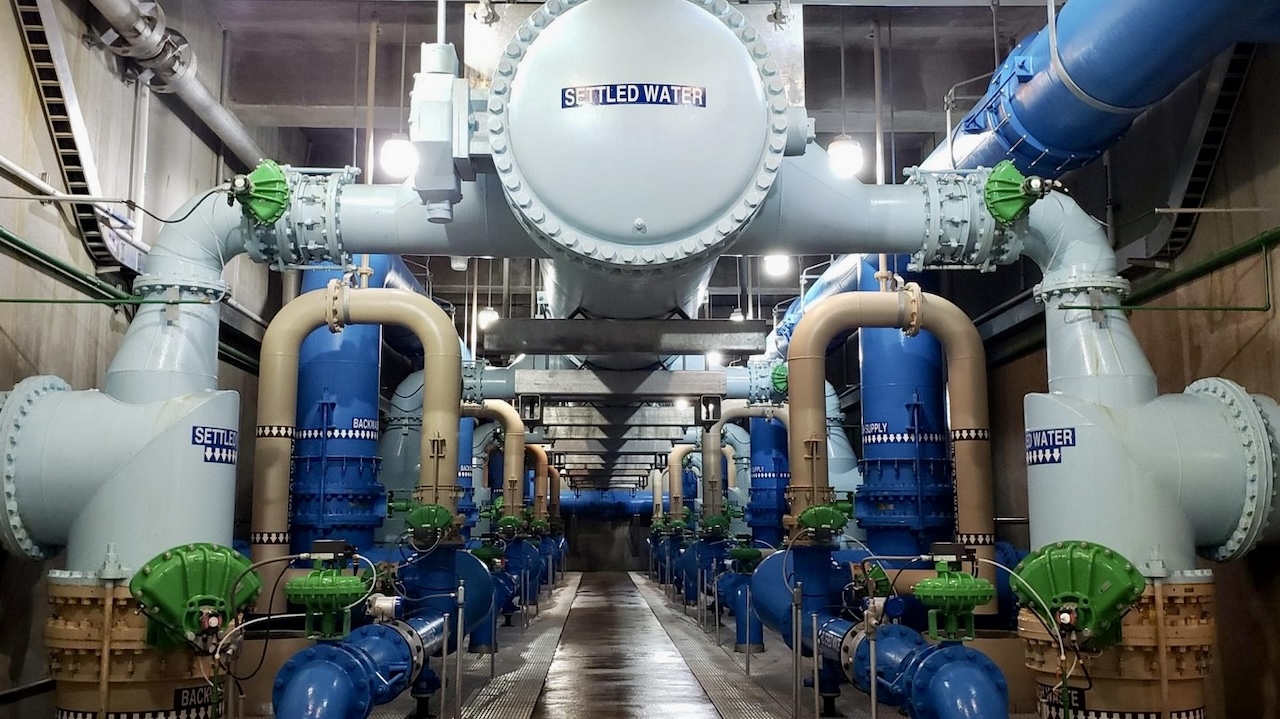
But projections would change in subsequent years, with the one constant being calls for modernizing the water transmission lines, treatment plants, and the distribution network – including pump stations and water towers – within the city of Fort Smith.
Following are some key points noted in the post-Lake Fort Smith expansion studies from Mickle Griffin and Hawkins-Weir.
• Demand projections were lowered, with reports in the 2010 to 2019 period estimated a 1.14% annual growth in water demand, and the 2022 study estimating a 1.5% annual demand growth.
• The reports confirmed previous Burns & McDonnell estimates that water supply is adequate but treatment capacity at Lake Fort Smith and Lee Creek will not be able to meet water future demand for the city and its wholesale customers.
• The population of urban users in Fort Smith, Van Buren, and Barling was approximately 119,000 population in 2022, excluding other wholesale users. The total population now served by water from the Fort Smith system is estimated at 160,000 or less.
• The aging treatment plant at Lake Fort Smith – located in Mountainburg – and aging water transmission lines from Lake Fort Smith to the city of Fort Smith were identified as a “critical vulnerability” as early as 2010. The 27-inch line from Mountainburg to Fort Smith was installed in 1936.
• A new 48-inch transmission line from Lake Fort Smith was identified in 2009 as a critical need. The first of five phases of the work has been completed, with the remaining portion estimated to cost between $280 million and $585 million. The city as of early 2026 had no mechanism to fully fund work for phases 2-5 of the transmission line.
• The 2010 and 2011 Mickle Wagner Coleman studies focused on the city’s southern growth area to address near- and long-term water demand in the growing Chaffee Crossing area. The 2010 study identified a growth area of 12,850 acres – 20 square miles – and projected a maximum daily demand of 11.7 MGD from the growth area over a 25-year period.
PRESENT DAY REALITIES
The 2022 Hawkins-Weir study identified major deficiencies in the city’s water system. Those included 16 of 20 pressure zones lack sufficient 24-hour net-effective storage, replacement of around 30,000 linear feet of small-diameter water lines, replacing 37,000 linear feet of galvanized steel pipe, approximately 250 aging fire hydrants need replacement, and the downtown Fort Smith area needs a dedicated reduced pressure zone to protect aging infrastructure.
The 2022 master plan estimated a total cost of $279.3 million for the infrastructure needs. The costs include $13.37 million for integration with the 48-inch water transmission line, $24.84 million for the city’s water distribution system, almost $141 million for completion of the 48-inch line, and $46.5 million for a 10 MGD expansion of the Lake Fort Smith water treatment plant.
However, city officials in August 2025 said the estimated cost for a 15 MGD expansion was between $90 million and $180 million, and the cost for a 30 MGD expansion is between $180 million and $360 million.
Todd Mittge, director of engineering with the city of Fort Smith, Lance McAvoy, the city’s director of utilities, Matt Meeker, director of public works for the city, and Jimmie Johnson, deputy director of engineering, have in recent board meetings and interviews said the city’s water system now operates in “crisis mode.”
McAvoy argues that the city needs to find a way to complete the 48-inch line and the Lake Fort Smith water treatment capacity at roughly the same time.
“You can build a transmission line, but if you don’t have any water to put in it, it’s going to sit there as an empty straw,” he said. “And it’s a very expensive empty straw.”
Editor’s note: Upcoming stories in this series will include details on critical weak points in the water system, water meter replacement, revenue options to fund identified needs, water rates, and wholesale water users.