
CEO: Fort Smith osteopathy school designed for growth
by January 20, 2026 9:12 pm 984 views
The Arkansas College of Osteopathic Medicine in Fort Smith has roughly 150 slots per class, but it’s designed for up to 250.
Arkansas Colleges of Health Education (ACHE) President and CEO Kyle Parker told the Rotary Club of Little Rock Tuesday (Jan. 20) that, in addition to adding students in the future, the institution is adding programs now. Those include a doctorate of public health, a doctorate of medical sciences, a doctorate of educational leadership, and a physician associate program.
ACHE is the parent institution that includes the osteopathic program as well as programs for physical therapy, occupational therapy, biomedicine and public health.
Osteopaths are physicians like medical doctors, but their training and approach are more holistic and more hands-on. Arkansas now has two schools, the other being the New York Institute of Technology’s College of Osteopathic Medicine at Arkansas State University in Jonesboro.
Parker, an attorney, was hired to lead ACHE April 1, 2014, and the school broke ground on the first building in March 2015. The school sits on 472 acres, 200 of which Fort Chaffee donated, and only 40 of which are being used. The school has collected more than $100 million in donations without taking any state dollars. It employs more than 360 employees.
Two and a half years ago, it bought a 318,000-square-foot nursing facility and invested roughly $62 million. Now the institution features the nation’s largest privately owned osteopathic research center.
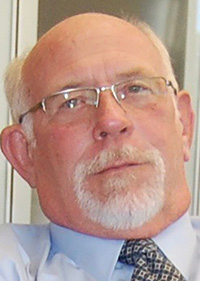
“I didn’t know microscopes could cost $850,000 apiece, but we have three of those to prove it,” he said.
More than 800 students are currently enrolled, with 76% coming from Arkansas and Oklahoma. Tuition is $62,000 a year, with the state paying half the cost for Arkansas residents to attend. Ninety-three percent of the physical therapy students and 100% of the occupational therapy students are from Arkansas. Eighty-nine percent of the students earning a master’s degree in public health are from Arkansas.
“Why in the world are we trying to recruit everybody from Arkansas?” he said. “Because they stay. That’s why.”
Parker said that to get those graduates to remain, there must be residencies available for them to move into. History has shown physicians stay where they do their residencies. The school has created 147 of those in Arkansas, it’s affiliated with 573, and there are 66 slots and five fellows opening up in its new programs.
The graduates will be critical for a state that is the third most underserved in health care, with neighboring Oklahoma, part of the school’s service area, ranking second and Mississippi ranking as the most underserved.
Parker isn’t concerned about competing with other medical schools in Arkansas. The state needs the physicians. He said he opened up his school’s books when Alice Walton visited before she founded the Alice Walton School of Medicine in Bentonville.
“She’s an MD school with a DO attitude,” he said. “What I mean by that is mind, body and spirit.”
The institution has a 100% match rate on residencies and is leading the nation in board pass rates, although not all the schools’ scores have been collected, Parker said.
The osteopathic school recently surpassed 6,700 applications for next year’s slots. It will interview 700 and decide on 162. Parker said academic achievement is not the only factor driving admission. The school looks at what’s in the applicants’ hearts and what’s driving them.
“We know they’re smart,” he said. “That’s a given. Why do you want to do it?”