
Initial public input supports recreational uses for ACME property
by January 13, 2026 8:00 pm 567 views
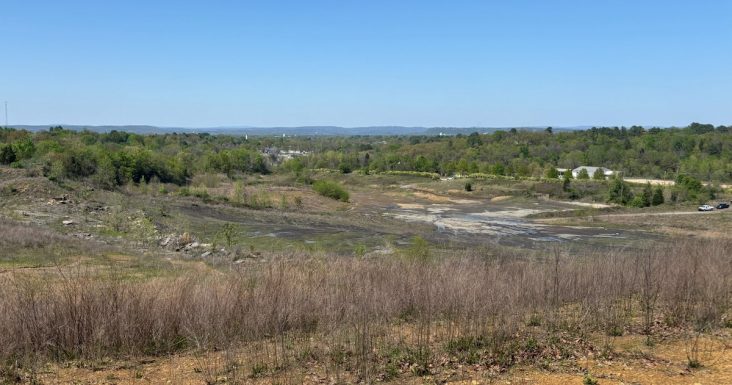
The Fort Smith Board of Directors on Tuesday (Jan. 13) broadly approved moving forward with efforts to develop a master use plan for more than 100 acres of former ACME Brick property in Fort Smith.
An effort to develop a master use plan for more than 100 acres of former ACME Brick property in Fort Smith has drawn criticism from those who don’t think the city can afford another park, and is drawing support from those who believe a new park is a smart investment.
The Fort Smith Board of Directors approved the $2.288 million purchase of 111.31 acres formerly utilized by ACME Brick Company in October 2023. Plans at the time were to use the property for flood mitigation and park amenities such as trails and bike paths.
Richardson, Texas-based Halff Associates was hired as the engineer for the flood – storm water – mitigation design, and Des Moines, Iowa-based RDG Planning and Design were selected for park master planning.
A representative for Halff said Tuesday that preliminary costs for flood retention range between $5 million and $6 million. Acting City Administrator Jeff Dingman said the funding would come from the city’s streets, bridges and drainage budget that is supported in part by proceeds from a 1% sales tax.
During Tuesday’s board study session, Scott Crawford, a landscape architect and parks and open space principal with RDG, said public input points to support for using the former ACME beyond just flood mitigation.
Crawford said the Concept 1 plan is only flood mitigation. The Concept 2 plan builds on the flood mitigation with a small lake, water-based recreation, hiking and biking trails, covered shelters, and other features. The Concept 3 plan builds further and would include selling part of the property – 10 to 18 acres – for private development that could include multi-family housing, restaurants, retail, and an “eco-lodge” type hotel.
Crawford said the public input between early December and through Jan. 1 shows that 53% support Concept 2, 28% support Concept 3, with 19% for Concept 1. He said the “overwhelming consensus” from the public is for a multi-phase plan that includes a deeper connection to nature with biking, walking trails, and other recreational amenities. Crawford also said there was “some hesitancy” with a majority of the feedback to sell off parts of the property for private development.
In response to questions from the board about potential grant funding, Fort Smith Parks and Recreation Director said an outdoor grant program through the state is leaning to support larger, more impactful projects to support. But detailed plans are needed to apply for such grants.
“We think there is a good possibility,” Deuster said of landing a state grant. “But we have to know what the plan is, because that is one of the requirements whenever you submit an application for a project of this magnitude you have to have a master plan, you have to show the support from not only citizens, but also from city administration because that is a weight in their evaluation.”
Directors Jared Rego and Kevin Settle argued that a well-developed plan with public input is needed to ensure the city makes the best use of the property. Rego said it is unlikely that a private foundation will be interested in supporting “just a plain-jane” flood mitigation use for the property. He said the city may initially consider something between Concepts 1 and 2 that includes trails and biking areas around the detention ponds. Settle said the board and citizens should also consider that use of the property has an economic development function.
“We have to remember, we are in a race to improve our city,” Settle said. “And if we don’t we’re going to fall behind. Companies need workers, and workers come here because there is stuff to do. If we can’t supply those workers, those jobs are going to go somewhere else.”
The next steps include RDG providing what is essentially a first-draft plan that incorporates the public input with direction from the board and the Fort Smith Parks and Recreation Commission. The process, Crawford noted, includes continuing to work with Halff on ensuring plans for flood mitigation are developed in a way that allows for future recreational-use options.
A final plan would include costs, business model possibilities, private-sector options, and a “phasing plan” for development, Crawford said.