
Northwest Arkansas benefits from CRE tailwinds
by December 22, 2025 9:31 am 1,104 views

How will we remember 2025? Amid many bright spots — low unemployment, strong consumer spending and easing inflation — we’ve experienced unique challenges due to what Deloitte calls a “rapidly changing economic environment.”
The U.S. commercial real estate (CRE) industry is no stranger to these ups and downs. But, as we close out the year, we see a disconnect between national headlines about the CRE market and what’s happening on the ground in Arkansas.
While much of the U.S. is still working through elevated office vacancies, industrial normalization and cautious capital investments, the story in secondary markets (i.e., growing, mid-size regions) like Northwest Arkansas is much more nuanced — and far more positive. Here, we’re benefiting from a combination of forces reshaping where people want to live, where companies invest and how supply chains operate.
As we head into 2026, CRE leaders agree that the heartland is positioned to capture an outsized share of reshoring, relocations and expansions. Corporations, manufacturers and logistics users want central geography, favorable labor dynamics and long-term operating stability for their investments — all attributes Northwest Arkansas provides.
Northwest Arkansas’ population growth, diversifying economy and strong employer demand give it a competitive edge that many coastal markets envy. This is most evident in the office market, where national vacancy rates are above 20% while local vacancy rates have remained resilient at 5%. Insights from CBRE, JLL and Colliers all point to the growing divide between commodity and class A spaces in live-work-play environments. Post-COVID, the best buildings in the best locations are capturing the lion’s share of activity.
Today, tenants want quality, walkability, access to amenities and environments that can attract talent. They are choosing experience over square footage and prioritizing locations where employees want to work. At Tempus, we’ve seen this play out in our investments. Our fully leased Uber Freight/Transplace building at Pinnacle Hills in Rogers has features that win in the current market: high-quality construction; access to trails, retail and housing; and a modern layout for collaboration.
The industrial sector is telling its own two-track story. Big-box distribution is still digesting the record supply delivered from 2022 through 2024. At the same time, small-bay and shallow-bay industrial buildings under 100,000 square feet have remained undersupplied. According to Cushman and Wakefield, the national vacancy rate for industrial properties of 100,000 square feet or less is 4.6%, while the vacancy rate for properties greater than 500,000 square feet is over twice as high at 9.9%.
In Northwest Arkansas, we continue to see tenants seek modern, high-efficiency facilities, including flex space. These users want functional, accessible space close to their workforces and customers. With rising development costs, there simply aren’t many of these assets available to support smaller businesses, trades, specialty manufacturers and service companies. This segment’s steady, strong demand is why Tempus is particularly excited about our acquisition of four vacant, small-format industrial buildings on East Linden Street in Rogers. Owner-users and tenants actively want this type of space, and our properties meet that demand.
So, what will 2026 bring for the CRE industry? From Heartland Forward’s reshoring metrics to CBRE, JLL, Cushman and Colliers’ data outlooks, the patterns are consistent. Quality wins. Functionality wins. Location wins. That’s why, at Tempus, we remain focused on assets aligned with long-term trends rather than short-term noise.
We feel confident that Northwest Arkansas will continue to benefit from the structural tailwinds reshaping our nation’s CRE market.
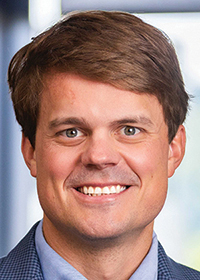
Editor’s note: Clay Ramey is a partner and vice president of capital markets for Tempus Realty Partners, a Little Rock-based real estate investment partnership. The opinions expressed are those of the author.