
Fort Smith airport, military close to pilot training center joint use agreement
by December 10, 2025 5:10 pm 2,663 views
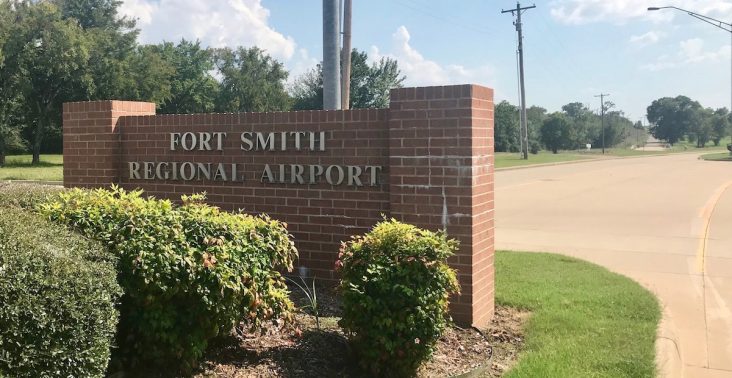
Fort Smith Regional Airport Commissioner Eric Pendergrass believes the airport is close to signing an Airport Joint Use Agreement (AJUA) with the U.S. Air Force that details fiscal and physical obligations related to use of the airport for the military’s foreign pilot training mission.
The airport commission met Tuesday (Dec. 9) in a study session to discuss the proposed AJUA. The goal, according to Pendergrass, who was commission chair when AJUA negotiations began, is to have an AJUA ready for approval at the commission’s Dec. 16 meeting.
Ebbing Air National Guard Base in Fort Smith was selected in March 2023 by the U.S. Air Force to be the long-term pilot training center supporting F-35 fighter planes purchased by Singapore, Switzerland, Poland, Germany, Finland, and other countries participating in the Foreign Military Sales (FMS) program. The base will also house and provide training support for Republic of Singapore F-16s.
The base is co-located with the airport, and the Air National Guard leases property from the airport for operations of the 188th Wing. That lease is not part of the AJUA.
The Air Force estimates the cost to complete the training center is $807 million. The previous estimate, provided by federal and state officials, ranged between $850 million and more than $1.2 billion. About $600 million in federal funds has been appropriated since 2021 for the center.
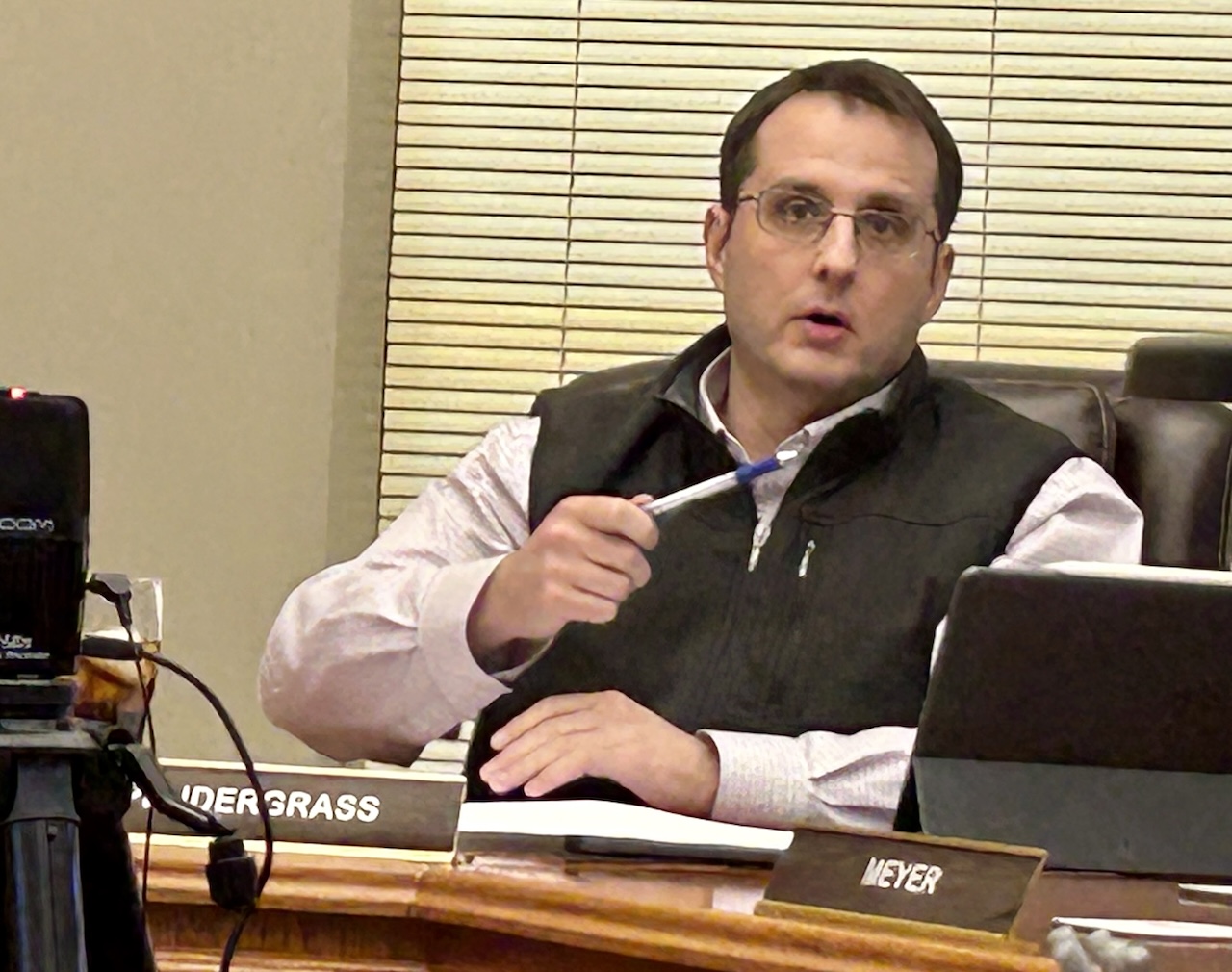
Pendergrass, who praised airport staff and consultants for keeping the effort moving, told commissioners that working with state and federal military officials has been a challenge because this is the first ever AJUA of its kind to be negotiated.
“There is no FMS going on, being built, on any civilian airfield in the country,” Pendergrass said. “So, there was a learning curve associated with that.”
Following are some of the key terms included or being considered as part of the AJUA.
- The agreement would be for five years, with negotiated renewals after that.
- The parties will share in appropriate direct costs of operating and maintaining the “jointly used areas.” Those areas do not include the airport’s overhead costs, the civilian terminal and ramps used for commercial and general aviation.
- The airport will receive, on average, $430,000 from the Department of Defense for costs incurred by military use of the airport.
- The military will continue to provide aircraft rescue and fire-fighting services for all users of the airport.
- All airport use rules, especially with respect to access and security, must meet with Federal Aviation Administration and Transportation Security Administration approval.
- Operational control of the airport remains with the airport commission and staff.
One of the sticking points has been security protocols with transportation of jet fuel, lubricants and oils in and around areas used by the military. However, Pendergrass told commissioners they are “really, really close” to an agreement on all points, with all parties, including legal officers with the military in Washington, D.C., aware of and focused on getting the agreement finalized in time for the commission’s Dec. 16 meeting.
“I feel good about getting it wrapped up because we’ve had excellent support from everyone here in Fort Smith,” Pendergrass said after the meeting, adding that he believes 98% of the AJUA is complete.
The agreement, according to Pendergrass, has seven “guidelines” on the following topics: regular coordination meetings among all parties, badging and security, airport perimeter road and fuel transport, military operation area maintenance and access, bird hazard mitigation, aircraft rescue and fire fighting, and snow and ice removal protocols.