
Rice stink bug a focus of agri researchers in several states
by May 6, 2026 10:00 am 274 views

Allen Szalanski is a professor in the department of entomology and plant pathology for the Arkansas Agricultural Experiment Stations, the research arm of the University of Arkansas System Division of Agriculture. (courtesy U of A System Division of Agriculture photo by Fred Miller)
Arkansas’ rice crop this year is set to be the smallest in nearly 50 years. Drought, higher input costs, and lower commodity prices are among the factors that are driving down this year.
There’s one pest, however, that has plagued rice farmers since the 1880s — the rice stink bug. The insect reportedly causes up to $20 million worth of damage to rice crops in Arkansas each year, according to AgInnovation. In heavily infested fields, yields can drop by up to 10%.
A scientist and several colleagues from the University of Arkansas System of Division of Agriculture joined a group of researchers from Florida to study the genetics of this nuisance insect. Studies like this can help aid in the production of more effective insecticides.
“They are found in every state that cultivates rice except for California,” said Allen Szalanski, professor in the department of entomology and plant pathology for the Arkansas Agricultural Experiment Stations. “It’s the No. 1 pest of rice during the heading stage, when grain is forming.”
Researchers from the University of Florida Institute of Food and Agricultural Sciences and Florida A&M University also took part in the study. It’s aim was to study the genetic variation of native and invasive rice stink bugs using a mitochondrial DNA marker. Samples were collected in Arkansas, Mississippi and Florida, and researchers discovered evidence that the native species, Oebalus pugnax, has more genetic variation than two invasive species, which are so far only found stateside in Florida.
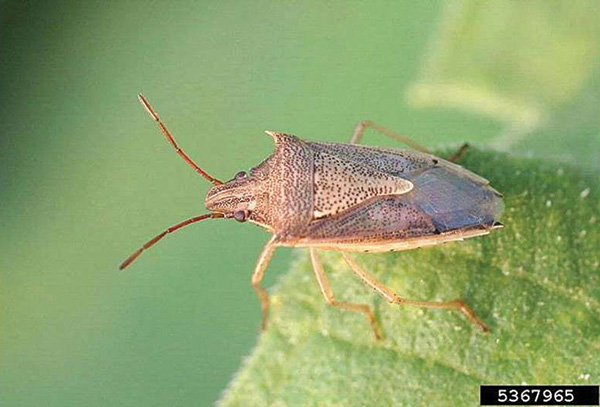
“That gives us an indication that these insect pests are moving from state to state, but also that we have populations in Arkansas that are specific to the region,” Szalanski said. “If some populations have distinct genotypes, this may help monitor the spread of insecticide resistance among populations. Knowing this helps design better monitoring and management strategies to help insecticides work longer.”
The rice stink bug has developed insecticide resistance on sorghum in Texas. In Arkansas, it overwinters as an adult, feeding on grasses before moving over to rice once it reaches the heading stage around June and July.
“It’s not like some insects, where you have just one host plant species. This one has over 15 host plant species it can feed on,” Szalanski said.
Nick Bateman, associate professor and extension entomologist for the Division of Agriculture, said problems in Arkansas with rice stink bug control using py rethroids were observed late in the 2019 growing season. The following year, in some cases, farmers needed to spray up to three times to control rice stink bugs, he added.
“In 2021, the problem moved from a late-season issue to a season-long issue and has been that way since,” Bateman said.
Bateman’s research suggests that no more than 50% control has been achieved with pyrethroids across populations tested in Arkansas. His counterparts at Mississippi State University have observed the same, he said.
In Florida, the invasive species of rice stink bugs — O. ypsilongriseus and O. insularis — “may be displacing the relative abundance of the major pest that is O. pugnax,” said Ronald Cherry, a co-author of the study and emeritus professor of entomology and nematology with the University of Florida Institute of Food and Agricultural Sciences. The researchers hypothesize that the bugs were carried by hurricane winds from Cuba to Florida.
“We can’t rule out other places, but Cuba could be a source,” Szalanski said. “The interesting thing is why it hasn’t been found outside of Florida in the United States.”
Developing better molecular diagnostics is a goal for Szalanski as part of monitoring the invasive species and developing a molecular marker to detect an insecticide-resistance gene. Rich Adams, a co-author of the study and a statistician with the experiment station’s Center for Agricultural Data Analytics, said the study provides valuable insights into pest management of an insect that is so impactful across the Southeast in rice.
“What you don’t know can be scary when it comes to insect pressure on crops,” said Adams, who is also an assistant professor with the department of entomology and plant pathology. “Looking at how much genetic diversity exists and how much connectivity there is tells you something fundamental about the population-level health of that organism.”
Determining the baseline of genetic diversity in the mitochondria will also help scientists lay a foundation to understand that connectivity and eventually study adaptation, Adams said.
“Once invasives get established, it’s very hard to rewind that,” he said. “So, helping us see the spread and relationships of the native pugnax and the two invasives will shape a better foundational understanding and maybe help find targets for controlling the line.”
Forming better insecticides will help future rice farmers, but this year is set to be an abysmal one for those in the Natural State, the country’s leading rice producer. The U.S. Department of Agriculture projects that one million rice acres will be planted in the state this year, a 30% drop from 2025. Rice agronomist Jarrod Hardke said he wouldn’t be surprised if the number is closer to 900,000 acres — the smallest crop in Arkansas since 1977.
A lack of water, the continued war with Iran, better commodity prices with other crops like soybeans and other factors are pushing rice acres down, he said. Since the war began with Iran, diesel prices are up 50% and that will seriously impact farmers when they have to irrigate. Fertilizer prices have also been up by 30% since Iran shutdown the Strait of Hormuz.