
Fort Smith is part of the American flag ‘sojourn’
by December 6, 2025 10:24 am 757 views

It is right, fitting, and proper to talk about Arkansas and specifically Fort Smith as part of the Flag Sojourn 250, the journey of a single American flag to every U.S. state, every U.S. territory, and every U.S. military cemetery overseas.
Flag Sojourn 250 is a partner with America 250, whose mission is to celebrate and commemorate the 250th anniversary of the signing of the Declaration of Independence, marking America’s Semi quincentennial.
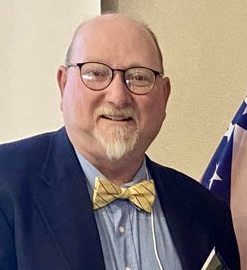
On Dec. 4, 2025, I was invited to make a small presentation at the Fort Smith National Cemetery as part of a much larger commemoration.
As a professor of American History, with emphasis on the history of Arkansas, the Jacksonian Era, and Federal Indian Policy, I am well acquainted with our contributions to our national story. The land that became Arkansas had been populated by Native Americans long before President Thomas Jefferson authorized the Louisiana Purchase from Napoleon Bonaparte.
Incidentally, the entire Louisiana Territory was surveyed from a point in what is today Arkansas. A few years later, as the country moved west, Jefferson’s ideas about Indian removal saw the Southeastern Tribes (Cherokee, Choctaw, Chickasaw, Muscogee/Creek, and Seminole) removed to Indian Territory.
Armed conflict caused the need for a military post to end tribal hostilities caused by removal policies. Fort Smith was created in 1817 for this purpose. As the Trail of Tears progressed under President Andrew Jackson, all the major tribes came through Fort Smith. Jackson also has the distinction of setting aside the first Federally protected area, Hot Springs.
Moving on in American History, Fort Smith was a stopping point for soldiers going to fight in the Mexican War. During the Civil War, Fort Smith served as a base of operations for the Confederacy from 1861-63 and for the Union from 1863-65, Civil War generals like Samuel Sturgis, Henry Little, James McIntosh, Ben McCulloch, Lafayette McLaws, Richard Garnett, and James Longstreet all spent time in Fort Smith before or during the war.
By 1871 the army moved west to deal with other issues, leaving the abandoned fort to the federal Justice Department as surplus property. The federal court for the Western District of Arkansas made Fort Smith its home after 20 years of operation in Van Buren. The court, its famous Judge Isaac C, Parker, notorious jail, extensive list of outlaws, courageous deputies, and solemn gallows made Fort Smith big news in the late 1800’s.
The Fort Smith area next answered its nation’s call with the creation of Fort Chaffee in 1941. Thousands of American soldiers trained at Fort Chaffee for the invasion of Europe in World War II, while German prisoners of war were kept there as well. Later, more troops trained for the fighting in Korea and Vietnam. Chaffee served as a temporary home to refugees from Vietnam, many who settled here and enriched our community. Criminal and political prisoners of Fidel Castro’s government in Cuba spent time at Fort Chaffee, People displaced by Hurricane Katrina found refuge there, also.
Since 1953, Fort Smith has been the home of the Arkansas Air National Guard, known today as Ebbing Air National Guard Base. Pilot training and deployments have seen F-100’s, F-4’s, F-16’s, A-10’s, use of unmanned aerial vehicles, and F-35’s. Ebbing served during the Berlin Airlift and today trains pilots from our allies across the globe.
Fort Smith Mayor George McGill has said that “the United States military is in Fort Smith’s DNA.” From the founding of the first fort in 1817 to the Air Force base here today, the military, and the history of Arkansas and the United States makes the case for this flag raising here. The flag we raised here flew over the graves of soldiers from the first Fort Smith. It flew over the graves of soldiers from the War of 1812, the Mexican War, and the Civil War. It flew over the grave of Judge Parker and Fort Smith’s bravest and most famous native son, Brigadier gen. William O. Darby who founded the U.S. Army Rangers.
The flag we raised flew over my former University of Arkansas at Fort Smith Chancellor and mentor Lt. Col. Joel Stubblefield. It flew over the grave of my dear friend and fellow teacher Lt. Col. David Alexander. On an even more personal note, the flag flew over the grave of my mother, interred here last March, waiting for my dad, a young soldier from Illinois who was transferred to Fort Chaffee where he met an Arkansas girl and made Fort Smith his home after he was discharged.
Mayor McGill is right. The United States military is in Fort Smith’s DNA, and it surely is in mine.
Editor’s note: Tom Wing is an assistant professor of history at the University of Arkansas at Fort Smith, and a member of the Arkansas Historical Association Board of Trustees. The opinions expressed are those of the author.