
High water levels, tariffs impact Arkansas River shipping numbers
by July 10, 2025 3:33 pm 1,530 views
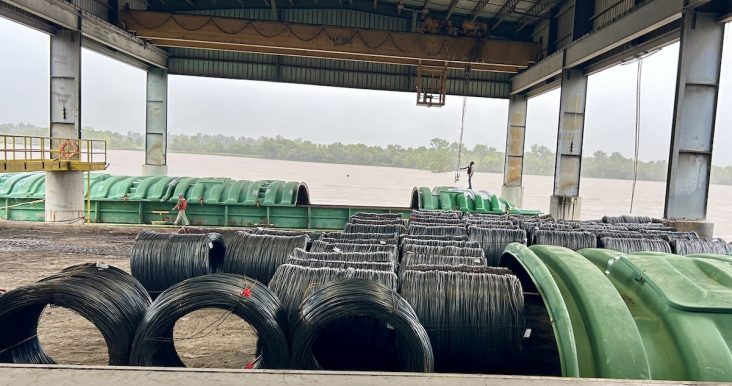
Employees with Five Rivers Distribution work to unload a barge at the Port of Van Buren.
High water levels and Trump’s tariffs are key factors in the almost 20% decline in Arkansas River tonnage in the first half of 2025. Commercial river tonnage in June was down almost 33% compared with June 2024.
Arkansas River tonnage totaled 5.006 million tons in the first six months of 2025, down 19.1% compared with the 6.192 million tons in the same period of 2024, according to a report posted Thursday (July 10) by the U.S. Corps of Engineers (USACE). June traffic totaled 599,946 tons, down 32.7% compared with the 891,955 million in June 2024.
The 2025 numbers are up against an almost 2% gain in 2024 tonnage.
Inbound shipments in the first six months of 2025 — those coming from off the river system — totaled 2.075 million tons, down 1% compared with the same period in 2024. Outbound shipments totaled 1.83 million tons, down 16% compared with the same period in 2024. Internal shipments — those sent between port operations on the river — totaled 1.1 million tons, down 42%.
Following are the top five shipment categories by tonnage in the first six months of 2025, with the percentage change from 2024.
- Sand, gravel, rock: 1.372 million tons (down 39%)
- Chemical fertilizer: 1.207 tons (down 13%)
- Iron and steel: 563,806 tons (up 11%)
- Soybeans: 381,790 tons (up 20%)
- Wheat: 377,058 tons (down 19%)
RAIN, ALUMINUM ISSUES
A rainy spring and early summer pushed river levels higher, making it more difficult for barge shipments. For example, Arkansas River water levels in the Fort Smith area hovered around a normal 12 feet for the first three months of the year, but began rising in early April, hitting more than 17 feet on April 5. The river level would crest at almost 23 feet on June 16 before falling back to around 17 feet on July 10, according to federal data.
Bryan Day, executive director of the Port of Little Rock, said tariffs implemented and proposed by the Trump administration also are to blame for the shipping decline.
“The Little Rock Port Authority is fortunate that our tonnage is running very similar to the same period last year,” Day said. “However, the high water is delaying the movement of cargo and barges, and that is having an impact on overall tonnage. Also, we are beginning to see the impact of tariffs. For example, the Port of Little Rock traditionally handles large volumes of aluminum; because of the tariff, or the threat of tariffs, our aluminum business has all but ceased to exist.”
Marty Shell, owner of Van Buren-based Five Rivers Distribution and manager of Van Buren port operations and the Port of Fort Smith, said his operations have been busy. He said river levels are a problem.
“Five Rivers Distribution tonnage has been robust in the second quarter of 2025, and we will see a record tonnage in July of this year as well, but high water events are slowing the barge traffic down substantially, and with the threat of tariffs, I believe customers are trying to bring as much in to beat the tariff (impacts),” Shell said.
Shell said he is watching to see what tariffs are implemented following President Trump’s new deadline of Aug. 1.
TONNAGE HISTORY, RIVER INFO
Tonnage shipped on the Arkansas River in 2024 totaled 12.446 million tons, up 1.95% compared with 2023 tonnage. The increase was driven by a 13% increase in sand, gravel, rock shipments, and 8% and 41% gains, respectively, in wheat and soybean shipments.
Inbound shipments — those coming from off the river system — totaled 3.793 million tons during 2024, down 16% compared with 2023. Outbound shipments totaled 4.769 million tons, up 134% compared with 2023. Internal shipments — those sent between port operations on the river — totaled 3.884 million tons, up 10%.
The Arkansas River system — McClellan-Kerr Arkansas River Navigation System (MKARNS) — is 445 miles long and stretches from the confluence of the Mississippi River to the Port of Catoosa near Tulsa, Okla. The controlled waterway has 18 locks and dams, with 13 in Arkansas and five in Oklahoma. The river also has five commercial ports: Pine Bluff, Little Rock, and Fort Smith, and Muskogee and the Tulsa Port of Catoosa in Oklahoma.