
NEA Regional Archives touts importance of archives, need for more support
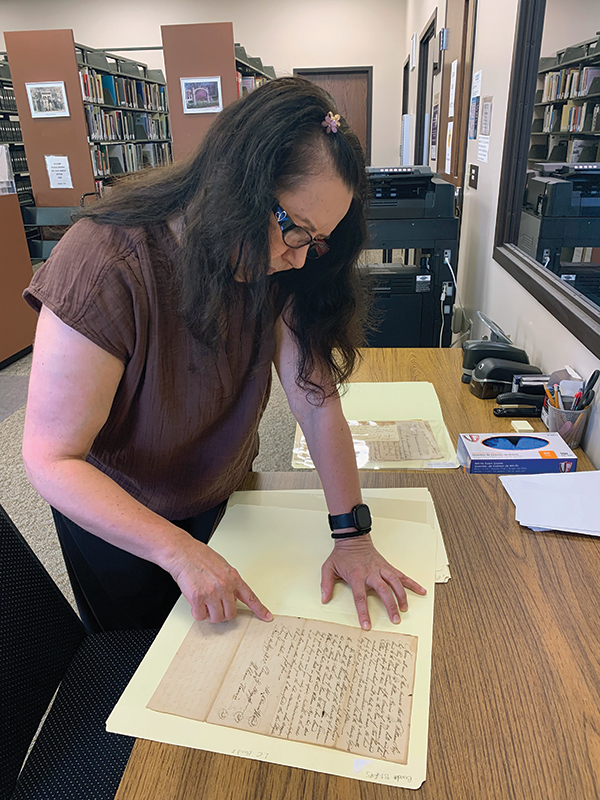
William Nix wanted to start a ferry on the Black River in Lawrence County. A bond for the ferry business was written and signed more than 200 years ago. Around the same time, a man named Nicholas Trammel signed a $100 promissory note, vowing to pay back the loan in either 1806 or 1809.
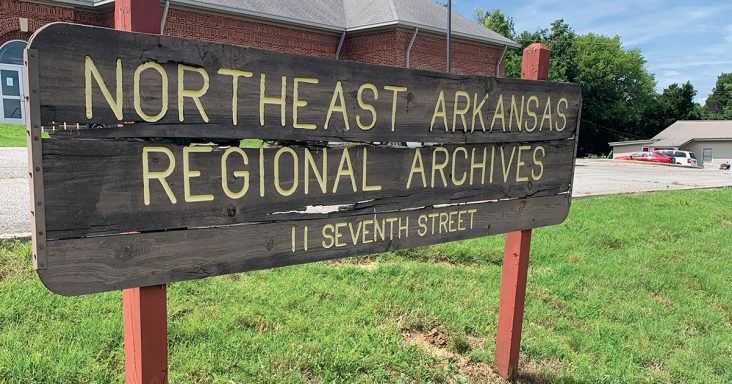
Both of the documents are housed at the Northeast Arkansas Regional Archives (NEARA) located in Powhatan, NEARA archivist and manager Dr. Fatme Myuhtar-May told Talk Business & Politics.
“He (Trammel) was a French settler in this area at that time,” she said. “There are several documents with him named. He ended up in western Arkansas.”
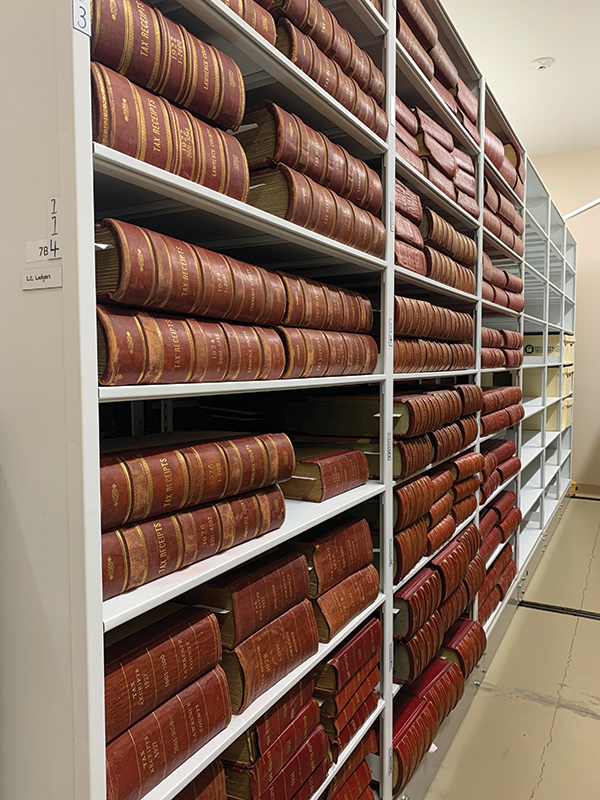
First opened in 2011, the nearly $1 million facility holds about 1,000 cubic feet of records, she said. It houses documents from 16 counties in Northeast Arkansas, and is one of two satellite archives in the state with the central archive in Little Rock.
NEARA was created as a collaborative effort between Arkansas State Parks, the Arkansas State Archives, and the Lawrence County Historical Society. When Lawrence County consolidated the two county seats, in Powhatan and Walnut Ridge, and closed operations at Powhatan, a large collection of records was abandoned, according to the Encyclopedia of Arkansas.
The Lawrence County Historical Society convinced county officials to donate the records to the society. The collection remained in the Powhatan courthouse, which was acquired by Arkansas State Parks in 1974. When the courthouse was renovated in 2004, the records were permanently removed. Construction of NEARA allowed the records to return to Powhatan, according to the society.
The facility, built with grant funding from the Arkansas Natural and Cultural Resources Council, is owned by Arkansas State Parks and operated by the Arkansas State Archives. Construction on this 3,965-square-foot building, which includes a 1,484-square-foot fire-proof archival vault to offer protection for the collections, cost $813,704, including furniture, fixtures, and equipment.
Myuhtar said a majority of the records housed there come from Lawrence County, which at one time was considered the “Mother of counties” in Arkansas.
Arkansas became United States territory with the Louisiana Purchase of 1803. Named for War of 1812 naval hero Captain James Lawrence, the county was created in 1815 as part of Missouri Territory and was the second of five large counties in what became Arkansas Territory in 1819, preceding the creation of Arkansas Territory by four years, according to historians.
There have been recent problems at the archive, however.
 The archive lost one of its archivists six months ago and the state has opted to replace that position with a part-time employee, said Arkansas Department of Parks, Heritage and Tourism Chief of Communications Katie Fite. The part-time position pays $16 per hour, while the former archivist made about $39,000 per year. The part-time position doesn’t offer healthcare or any other benefits. Since Gov. Sarah Sanders took office there has been a shift in state resources toward outdoor tourism.
Dr. Rodney Harris, president of the Randolph County Heritage Museum, said it doesn’t seem like a big deal to shorten that one position to part-time. But, processing all the documents, pictures and other materials in the archive is a tedious task that will require many more years. The lack of another full-time archivist is putting them further and further behind, he said. Each month about 40 people visit the archive to do research, but that doesn’t tell the entire story, he said. Many more utilize the archive’s digital service.
“They made their decision based on numbers,” he said.
Williams Baptist University, through its Williams Works program, has stepped in to help fill the gap until someone is hired. A student now works part-time at the archive.
A meeting with public officials was recently held and several state lawmakers said if the new part-time position didn’t work out, legislative action might be taken to correct the problem.
“This is not about visitor numbers or politics — this is about whether the state of Arkansas is going to meet its responsibility to preserve our shared history,” Harris said. “The work of an archive does not stop when visitors are few. Collections must be processed, preserved, and made accessible. That requires trained professionals.”