
The Supply Side: Amazon maintains price leadership over Walmart, competitors
by December 8, 2025 10:52 am 1,580 views

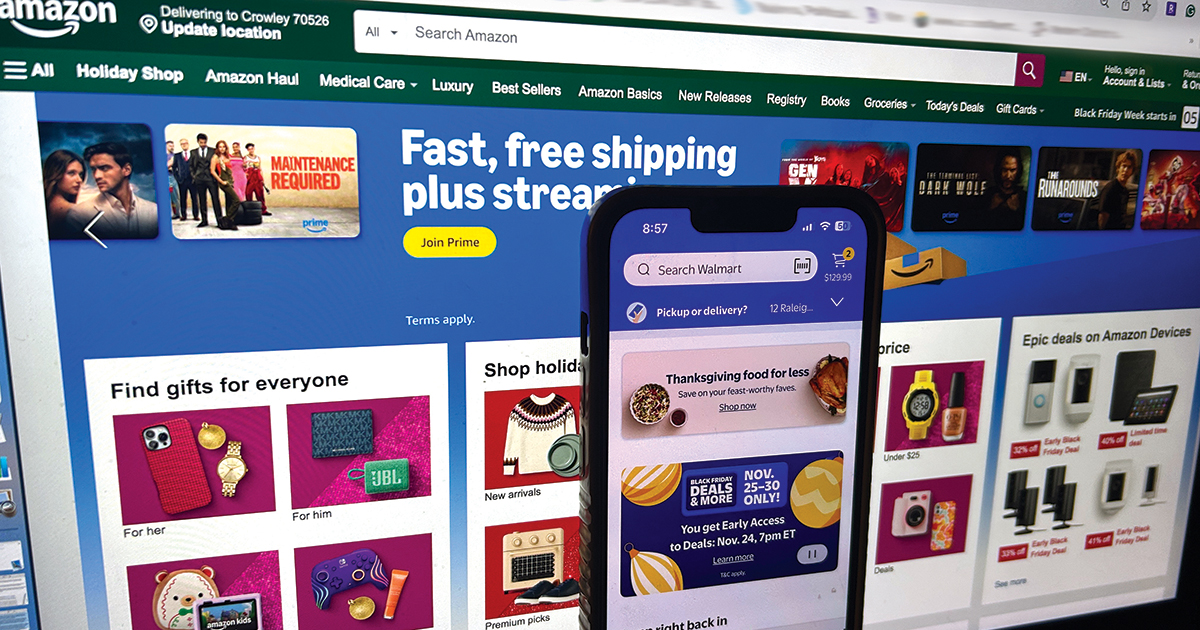
Retail price wars are alive and well in 2025, particularly during the holidays. Profitero’s ninth annual price comparison of online retailers found Amazon again had the lowest prices against 22 other retailers in 16 different discretionary categories, including packaged foods.
On average, Amazon’s prices were 14% lower than major online competitors. The research analyzed more than 10,000 items across 16 product categories.
“This research shows that once again, Amazon is America’s lowest-price retailer,” said Doug Herrington, CEO of Worldwide Amazon Stores. “Customers can trust that when they’re shopping on Amazon, they’re getting the most affordable everyday low prices across the widest selection, and that we’ll meet or beat the prices of other major retailers.”
Profitero’s research was released ahead of the traditional holiday shopping push, which officially began on Black Friday (Nov. 28). The results indicate Amazon offered the lowest prices across all top-selling holiday product categories, offering values over Walmart, the nearest competitor.
Walmart narrowed its price gap from 5% to 4% over the past year with improvements in 10 of the 15 categories analyzed. The most notable improvement was in video games, where the price gap shrank from 12% last year to just 3% in 2025, according to the report. Target’s prices were 13% higher than Amazon, on par with a year ago. Price gaps widened in favor of Amazon in fashion, health and wellness year over year when compared to Target.
 Health and personal care category prices were 31% cheaper on average at Amazon this year. Drugstore competitors Walgreens and CVS are not competitive with Amazon in wellness and health-related categories. Profitero reports Amazon maintained price gaps of 63% against CVS and 66% compared to Walgreens in this year’s report. Walmart’s health and wellness category prices were 3% more expensive than Amazon’s. Target’s prices were 23% more expensive than Amazon.
BEAUTY, PETS
Beauty is a category Walmart has embraced in recent years in hopes of taking share from Ulta, Sephora and Amazon. Amid Walmart’s effort to bring on more upscale beauty brands, it also made little progress in its price comparison with Amazon.
Profitero found Walmart’s beauty prices averaged 4% more expensive than Amazon, which is down from 5% a year ago. The research found Walmart has the second-lowest prices in beauty products compared to Amazon, but it still maintained price leadership over Target, which was 19% more expensive than Amazon and 15% more pricey than Walmart. CVS and Walgreens were also 31% and 32%, respectively, more expensive than Amazon in beauty products. Beauty specialty retailers Ulta were 31% more expensive, and Sephora came in 8% more costly than Amazon. Department store Macy’s was 20% more expensive than Amazon and 16% more pricey than Walmart on beauty items.
Pet products is another growing category in which Walmart has attempted to gain market share. Profitero found Walmart narrowed the price gaps with Amazon in pets by 5% over the past year. In 2024, Walmart’s prices on pet supplies averaged 8% more than Amazon’s, compared to 3% this year. The average price leadership of Amazon this year in pet supplies was 6%. The closest competitor to Amazon was Chewy, which came in just 1% higher. PetSmart tied with Walmart at 3% price gaps against Amazon compared to a year ago. Petco was 6% more costly than Amazon, compared to just 3% a year ago.
The fashion category carries higher margins and is critical to Walmart’s ability to grow income faster than revenue, given that so much of the retail giant’s sales transactions come from grocery. Walmart has continued to invest in the fashion category and has also brought on more apparel and accessories to its growing marketplace. Over the past year, Walmart lost ground to Amazon’s price competitiveness by 2%. In 2025, Walmart’s fashion prices were 7% more expensive than Amazon’s, which held a 16% average price advantage in the category. Nordstrom was the closest competitor to Amazon in the fashion category, coming in 5% more expensive.
Target, which has traditionally been known for its fashion business, has suffered over the past two years with lackluster sales. Target’s online fashion prices were 12% more expensive than Amazon and 5% more pricey than Walmart. Department stores Kohl’s and Macy’s were 33% and 23%, respectively, more expensive on fashion than Amazon.
HOUSEHOLD, HOLIDAY SALES
Daily household essentials are a category where Amazon also wins on price, averaging 8% less expensive than its competitors. Walmart was the closest competitor in this category, with prices 4% more expensive.
Amazon said it has worked to lower holiday prices in major gift categories from appliances to toys. Walmart execs have also said they plan to offer meaningful values to customers this holiday season, making a significant push on deals, particularly under $20, to attract budget-conscious shoppers. Walmart stresses its readiness and ability to deliver on speed with in-store and home delivery options.
With appliances like kitchen and floor care products, Amazon had an average price advantage of 9% over all the competitors. Walmart was the closest at 3%, and Best Buy came in at 6%. Target was 7% with Home Depot registering 8% more expensive. Lowe’s was 12% more costly, and Macy’s was the most expensive at 20% more costly than Amazon.
Baby is another important category for big box retailers. Amazon was a clear winner with baby product prices 7% on average lower than its competitors. Walmart was a close second, just 2% more expensive than Amazon. Target and Albee Baby were each 10% more expensive than Amazon. Target lowered the price gap by 1% from a year ago, but Albee Baby lost ground by 2%.
Tools are a big gifting category, and Amazon had the lowest prices against its competitors with Walmart in second place. Amazon’s tool prices were 7% lower on average and 3% lower than at Walmart. Target was 5% more expensive, Home Depot was 9% higher and Lowe’s tools cost 13% more. Amazon trimmed its price gaps for tools with Walmart and Target over the past year. Home Depot held the same price gaps with Amazon year over year, but Lowe’s prices rose 3% from a year ago.
Overall, the research shows Walmart, more so than any other competitor, held the closest price gaps with Amazon, within 5%, among 15 of the 16 categories in the report. Target was far less competitive with price gaps of 15% or more in five of the 16 categories. Among other big-box competitors, Home Depot averaged 7% more expensive than Amazon, and Lowe’s had a wider price average at 13%.
Profitero analysts noted in the study that consumers are watching prices and are concerned about higher costs related to tariffs, sending consumer sentiment readings to their lowest level in three years. The research also indicates that 73% of consumers are comparing prices across three or more retailers before buying.
Editor’s note: The Supply Side section of Talk Business & Politics focuses on the companies, organizations, issues and individuals engaged in providing products and services to retailers. The Supply Side is managed by Talk Business & Politics, and is sponsored by HRG.