
Arkansas Secretary of Agriculture Wes Ward: Bailouts, state creativity needed for farm survival
by November 4, 2025 7:01 am 824 views
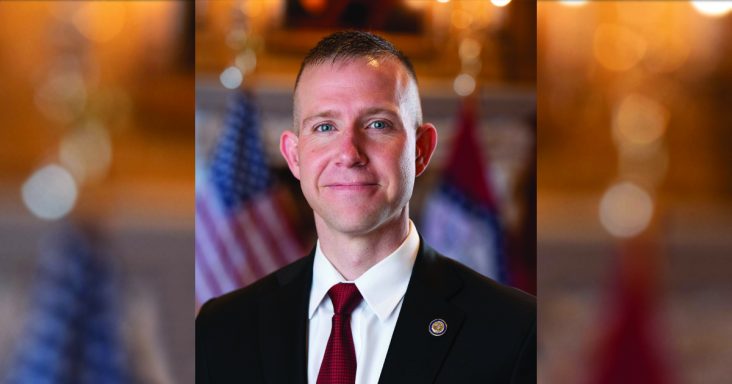
Arkansas Secretary of Agriculture Wes Ward
A late September national conference of agricultural leaders, including U.S. Department of Agriculture Secretary Brooke Rollins, was held in Arkansas and gave some hope to farmers across the state who are contending with dire economic circumstances.
On average, Arkansas farmers will lose hundreds of dollars per acre on this year’s crops due to high input costs, lost markets, trade and tariff policies, low commodity prices, and the lack of a federal Farm Bill.
Wes Ward, Arkansas Secretary of Agriculture, just ended his presidency of the National Association of State Departments of Agriculture, the group that convened in state. Ward, a native of Lake City (Craighead County), sat down with Talk Business & Politics Editor-in-Chief Roby Brock to discuss current events.
Roby Brock: Let’s talk about row crop farmers and what they’re experiencing. Obviously, the One Big Beautiful Bill at the federal level is going to be a year in the making for relief because of the way reference prices and crop insurance work. What needs to be done immediately? Are we just at financial bailouts as the only option at this point?
Wes Ward: There’s a lot of conversations on that. Both Gov. Sanders and Ag Secretary Brooke Rollins talked about the short-term bridge to get us to next year. Those new reference prices should take effect Oct. 1 of next year. That will be beneficial, but it’s just how do we get our producers to that?
We’ve got a delegation from Taiwan that we’re signing a letter of intent with. They’re going to purchase about $5 [billion] to $6 billion worth of corn and soybeans. There is a need for some assistance at the federal level, but it also takes creativity on the state level.
Brock: You’re talking about opening up some new trade markets. That is a short-term and a long-term solution because some of those foreign trade markets dried up over the last, I’d say four to six years maybe. Is there any idea of what we are looking at in terms of estimates for farmers for a potential bailout. Do you think we’re looking at a $30 billion bailout package, a $50 billion bailout? Does anybody have a good estimate?
Ward: That’s a great question. I’ve heard the $30 billion number. I think everyone’s still trying to, especially for the row crop industry as they’re going into harvest now, trying to figure that out. What will the impact be once they get done with harvest? How are yields? What’s the output? What’s the prices that they’re able to capture?
In Arkansas, we kind of got a good estimate, but other states are working on their numbers. I think we’re probably a little bit ahead of some other states, just knowing what we’re anticipating. But it’ll be a big number.
Brock: Do you think it gets done, No. 1? And No. 2, what’s the point of no return if you can’t get it done by a certain date? If you wait too late, it’s just not going to be helpful at all.
Ward: I do think with the conversations that are happening, we’ve got a great congressional delegation. Arkansas really couldn’t ask for a better position to be making that argument. So we’ve got all hands on board trying to help. I think something will happen. The question is just how big, how long, and what will the number be? I certainly got that impression from Secretary Rollins this week and from Sen. Boozman as well, that they’re definitely trying to make that happen. How long can they wait? That’s a great question. Some people would say at the end of the year, because people start making decisions for next year. You don’t want go out and spend in these operations. It’s not cheap to put a crop in the ground, and they don’t want to spend that money if they’re not going to be able to stay in business and incur that additional debt.
Brock: We’ve heard that as many as one in three farmers may close this year due to the crisis. What happens if that happens?
Ward: It will completely change the face of agriculture across the country. So something has to happen. We’ve seen consolidation. We don’t want that to happen. Even the larger producers say, “I cannot take anymore. I don’t want additional farm ground.” We can’t afford to let some of these smaller producers go out. It would be drastic and it would be significant should that happen, especially for states like Arkansas.
Agriculture is our largest industry. It is for many states. But you take some of these small agriculture communities like where I grew up in Lake City, it’s agriculture. You may be able to drive to Jonesboro or some other city to take another job to do additional off-farm income. But those communities are driven by agriculture, and if you lose the industry, you lose your schools, you lose your restaurants, you lose your grocery stores, you lose everything.