
Some TempleLive venues go dark, Fort Smith could close by the end of 2025
by September 5, 2025 3:05 pm 7,380 views
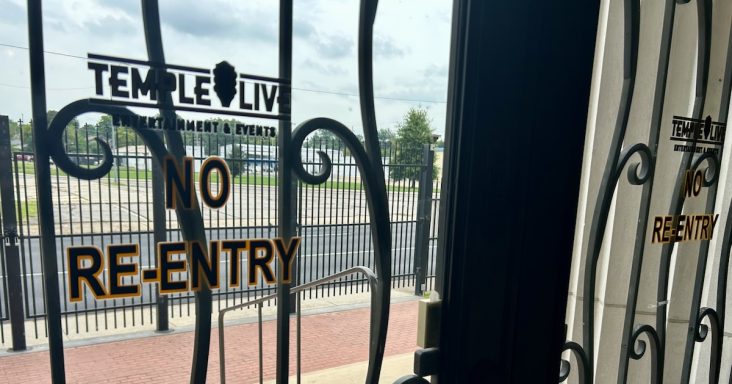
The TempleLive entertainment company that began in November 2014 when Rogers-based Beaty Capital Group (BCG) acquired the Masonic Temple in downtown Fort Smith and expanded to Cleveland, Ohio, and other towns could cease operations by the end of 2025.
Beaty Capital CEO Lance Beaty on Friday (Sept. 5) told Talk Business & Politics that financial pressures largely created by “market power consolidation” within online ticketing and agencies representing artists has forced him to cease or begin to cease operations in Cleveland; Peoria, Ill.; Wichita, Kan.; and Fort Smith.
The closing of venues was first reported by 25 News Now in Illinois, with follow up reporting by Cleveland.com.
In the Friday interview with Talk Business & Politics, Beaty said small and independent entertainment venues are at a financial disadvantage in an entertainment industry that has seen consolidation in ticketing, venue ownership, and the agencies who represent artists.
“We are simply an outsider in an insider’s business,” he said. “No matter how much money you throw at it or how creative you think you are, if you’re not on the inside, you’re not in.”
The COVID pandemic also hit the TempleLive network just as investments were made and renovations were either underway or completed.
BCG acquired the historic 53,000-square-foot Masonic Temple in downtown Fort Smith in November 2014 in a $2.5 million deal. The three-story building at 200 N. 11th St. was built in 1928 and has numerous meeting rooms and a theater capable of seating 900. It reopened as TempleLive in August 2017 after approximately $5 million in renovations. BCG followed the Fort Smith deal by buying and renovating Masonic Temples in other cities, including the 200,000-square-foot historic temple in downtown Cleveland. BCG invested more than $8 million in that property, which opened just a few months before the COVID-19 pandemic.
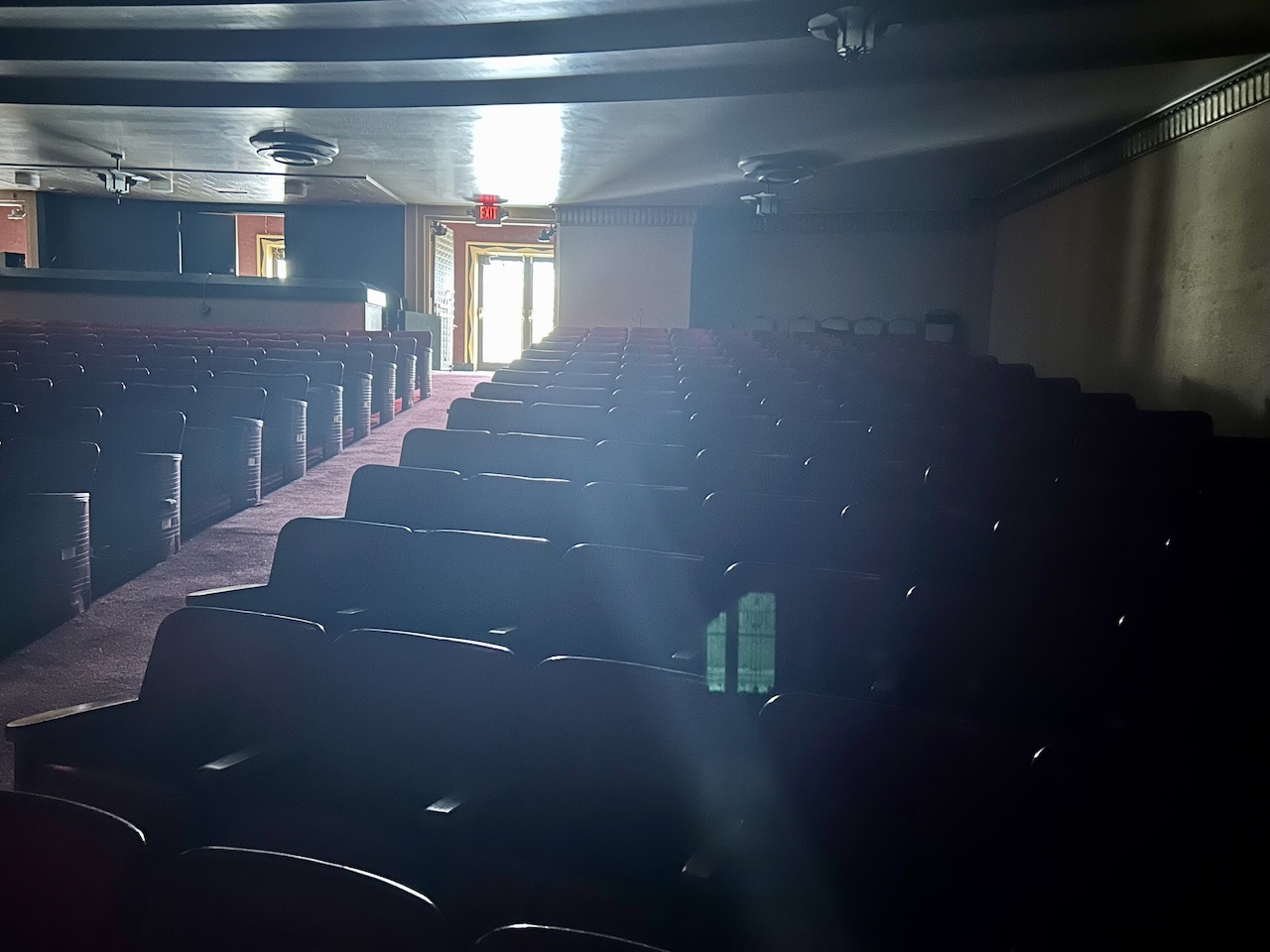
“We were essentially out of business with them (venues) for almost 30 months,” Beaty said. “That’s 30 months of making debt payments with essentially nothing, no revenue, coming through the doors.”
‘FAIR SYSTEM’
Beaty referenced a recent report from the National Independent Venue Association (NIVA) that points to financial difficulties for independent — indie — entertainment venues. The report shows that 64% of indie venues were not profitable in 2024, with 42% of those not profitable but able to remain open, and 22% facing “significant” hurdles in remaining open. The report also noted that 31% of expenses on average were for artist and booking fees.
“Ticketing is more than a transaction — it’s the backbone of the business model,” noted an excerpt from the NIVA report. “Yet this core revenue stream is increasingly threatened by external pressures: forced ticket transferability, unchecked secondary resale, and unfair platform practices. Without the ability to manage how tickets are priced, delivered, and sold, venues risk losing both the trust of fans and the income they depend on. Alcohol and beverage sales — another key revenue pillar, making up 25% of income — are also under pressure, as consumption trends shift nationwide. When both of these primary revenue streams are squeezed, there’s no backup plan.”
The report suggested that “comprehensive ticketing reform” through state and federal governments and agencies is needed to provide a “fair system” for indie and small venues.
“This is not a sector asking for special treatment,” the advocacy report noted. “It is a sector doing the work — paying artists, creating jobs, strengthening neighborhoods, and building opportunity night after night. But like any business, it needs a fair system to survive. That means policies that protect its revenue streams, recognize its value, and address the real cost of staying open.”
FINDING A SOLUTION
Beaty’s not sure what happens next with the Fort Smith venue, which remains open.
“We’re making that determination now, but we’ll have to do something, certainly by the end of the year,” he said. “There might be a show or two we cancel and then take it dark.” (Editor’s note: After this story posted, the TempleLive Fort Smith website indicated that all shows have been cancelled.)
For now, Beaty said he is working to find options that keep the doors open for all TempleLive venues and satisfy creditors.
“We’re having discussions with other national operators with respect to either a sale or a joint venture of some kind where we would be a passive minority holder in a newly capitalized company,” Beaty said. “We’ll see what happens.”
The pressure is mounting. Helena, Ark.-based Partners Bank on Sept. 3 filed a complaint seeking repayment of a $1.5 million line of credit. The note, issued in October 2023, matured May 2, 2025.
Beaty said whatever happens will be a complex deal that brings together numerous assets in a combination that appeases creditors while also being attractive to a party or parties interested in acquiring all or part of the TempleLive operation.
“Look, this is likely a $50 million to $60 million transaction that has to be worked through. … But solutions have to be found,” he said.