
Online grocery sales top $12.3 billion in November, up 28% from year ago
by December 10, 2025 12:38 pm 463 views
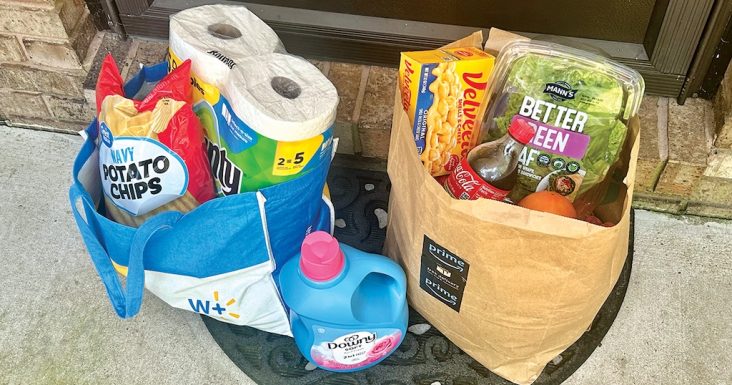
Consumers continue to turn to online shopping for their grocery and consumable needs. Brick Meets Click reports that online grocery spending accounted for 17% of total food and consumable sales through November.
Consumers spent a combined $12.3 billion online on groceries in November, up 28% year-over-year. The results are not adjusted for inflation.
The growth was attributed to higher order frequency, higher spending rates, and consumers using multiple delivery forms, according to the report compiled by Mercatus for Brick Meets Click.
“November 2025 results mark a strong rebound versus the moderate growth reported for October when the U.S. government was shut down during the entire month,” said David Bishop, a partner at Brick Meets Click. “The overall growth rate for e-grocery has accelerated each November since 2022.”
Bishop said order frequency, which measures the average number of orders completed monthly by active users, rose for the 15th consecutive month, compared to the year-ago period.
In November, users completed an average of 2.8 orders, up 12% from a year ago. Roughly half of the active monthly users completed three or more orders during the month. Users between the ages of 30 and 44 years had the highest average monthly use compared to the prior year, with 3.1 orders in November, up 20% from 2024.
The report said the number of consumers receiving online grocery orders in two or all three methods — pickup, delivery or ship-to-home — increased to its highest level since tracking began.
Consumers spent an average of 11% more on each online order in November, compared to a year ago. The ship-to-home method had the biggest growth, up 12% from a year ago. This was likely aided by Amazon’s same-day fresh grocery service that was rolled out in September, the report states. Ship-to-home garnered around 18% of the total online grocery market at midyear, the last time Mercatus shared the metric.
Curbside pickup remains a popular method among consumers shopping online for groceries, with about 25% of households using this delivery method in the past year, according to a report from Payments. Mercatus data indicated average order gains of 11% with curbside pickup orders in November, compared to the year-ago period. Brick Meets Click reported midyear that curbside pickup accounted for 45% of the market share of online grocery.
Online orders for delivery are also growing among delivery preferences. Brick Meets Click reported that delivery orders increased in order value by 8% in November, according to the prior year. Mercatus estimated that orders for delivery accounted for 45% in August, the last time that metric was shared. At that same time, Walmart had roughly 30% of that share, with Amazon and Instacart each controlling around 22% of the online grocery delivery share.
Walmart recently said its biggest growth areas for online grocery are delivery. In Walmart’s recent quarter, the retailer said its online grocery business contributed to overall e-commerce sales growth of 27% amid faster delivery times, such as same-day or within three hours. It forecast similar results for the fourth quarter with growth in its Walmart+ subscriptions, which include expedited delivery options.
“Today’s grocers face a very competitive environment marked by fundamental changes in shopping behavior,” Bishop said. “The online grocery customer pool continues to expand, order frequency has steadily grown for over a year, and spending remains resilient, which shows that eGrocery is evolving from just a convenient option to the preferred way to get groceries for many.”
Following are the post-pandemic online grocery sales in November.
2025: $12.3 billion, up 28%
2024: $9.6 billion, up 18.5%
2023: $8.1 billion, up 14%
2022: $7.1 billion, down 10.1%