
Walmart shareholders earned big under McMillon; Furner faces high expectations
by November 16, 2025 11:54 am 1,090 views
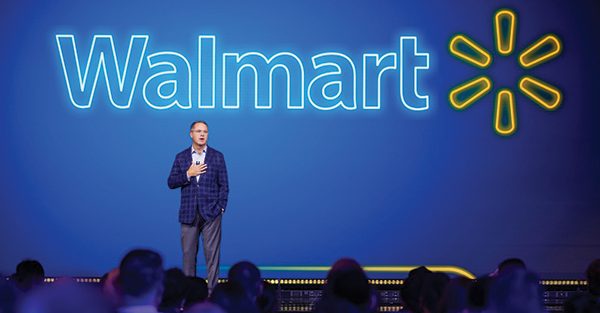
Walmart CEO Doug McMillon speaks during a Walmart event in 2024.
Walmart shareholders have experienced an average annual return of 14.53% during the past 12 years of CEO Doug McMillon’s tenure. There have been ups and downs, but the total return is 323% so far.
The head of the world’s largest retailer announced Nov. 14 he will step down as CEO on Jan. 31, 2026 — the end of the company’s fiscal year. John Furner, CEO of Walmart U.S., will succeed McMillon in running the Bentonville-based company.
The 323% gain is nearly twice the performance of the S&P 500 and better than his predecessors. Mike Duke, who ran Walmart from 2009 to early 2014, recorded total stock gains of 60.4%.
Walmart’s annual operating income grew by $259.79 billion during McMillon’s tenure so far. Revenue has grown from $486 billion in 2015 to an estimated $710 billion this year, which will end Jan. 31.
McMillon also did well financially during his run as CEO. His total compensation in his first fiscal year as CEO was $19.392 million, which included a salary of $1.2 million and bonus pay of $2.878 million. In his most recent fiscal year, McMillon’s total pay package was $27.408 million, including a salary of $1.511 million and bonus pay of $4.356 million.
MCMILLON PRAISE
When McMillon’s pending retirement was announced, equity analysts who follow the company sounded off on his accomplishments and expectations under his successor.

TD Securities analyst Oliver Chen said when McMillon took over Walmart in early 2014, the company faced increased competition from digital-first rivals like Amazon. He credited McMillon with transforming Walmart into an omnichannel (selling goods and services across different digital and physical platforms) retailer, quadrupling the stock’s market capitalization over the past decade.
Eric Howerton, founder of WhyteSpyder and now partner at AdFury, said Walmart is not the company it is today without McMillon’s vision to become an omnichannel retailer. He said it was a tough sell early on as so much of Walmart’s business was brick and mortar and grocery, with the online business based in California and run totally separately from Bentonville.
“Doug McMillon was one of the first brick-and-mortar CEO’s to put it all together,” Howerton said. “He cast vision, recognizing that future success would be linked to omni expertise … one Walmart serving customers how, when and where they wanted to shop.”
“We were on the ground floor of this vision and I remember there being so much doubt that it would work,” Howerton added. “It was a hard vision for many to get behind when so much of their revenue was coming from stores. It took a culture change and there were plenty of pain points along the way.”
Walmart made big early investments in e-commerce, learning from Mark Lore, who joined Walmart with the $3 billion acquisition of Jet.com. There were more than a half dozen other retail acquisitions of online businesses during Lore’s tenure that lasted just under five years.
FURNER EXPECTATIONS
Scott Benedict, consultant with Benedict Enterprises, said there were plenty of failures in McMillon’s early years. He said consolidation of the store and online business was a pivotal point in Walmart becoming omnichannel. He said Furner, who helped consolidate and oversee the combined U.S. online and store businesses, is ready for the top job.
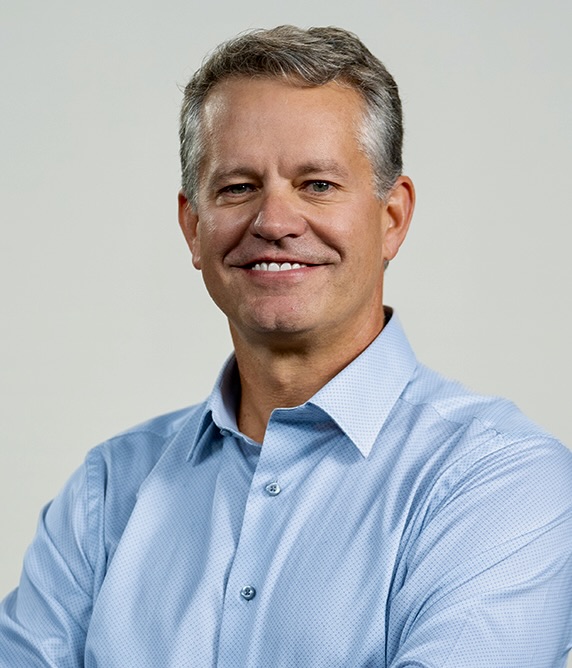
“He is well-positioned to build on the successes and incredible legacy before him,” Benedict said of Furner. “He’s taking over at Walmart during a profitable time. As a lifer, he is steeped in the company culture and is a strong leader and manager of people.”
He and Howerton each said artificial intelligence (AI) is the next frontier for Walmart. They said just like McMillon set up Walmart for the future with omnichannel, Furner will have the opportunity to pioneer an AI plan to manage a complex business for future growth.
“I love it when big companies promote from within,” Howerton said. “ I think it’s great for John (Furner), who worked alongside Doug (McMillon) with the omnichannel strategy, and I could not be more excited to see how Walmart embraces AI to enhance jobs, not replace them.”
Andy Wilson, a former Walmart officer, said he’s known Furner since he was a child, having worked with his father at Walmart for decades.
“Walmart always has a strong succession plan, and John is the perfect fit to succeed Doug,” he said. “Being a merchant who is ingrained in the culture as well as operations, he’s ripe for the promotion. There are big shoes to fill, but John is the right fit.”
Like Wilson, U.S. Rep. Steve Womack, R-Rogers, said he watched Furner grow up playing football in high school.
“Like Doug, John has come up through the ranks and held several leadership positions that have perfectly suited him to become the chief executive officer,” Womack said in a recent interview with Talk Business & Politics’ Roby Brock. “I’m excited for Doug and how he has earned this retirement. But I’m also excited for John Furner and for Walmart’s future because I know it’s in very, very good hands.”
Market reaction to the succession news early Friday sent Walmart shares (NYSE: WMT) down around 2% in early trading. The stock bounced back later in the day to close at $102.49, down 6 cents on the day. Over the past 52 weeks the share price has traded between $79.81 and $109.58.
ANALYSTS APPROVE
Jefferies analyst Corey Tarlowe said his firm sees the transition as strategic continuity, with no disruption to momentum or long-term growth.
“McMillon spent a decade investing in digital, supply chain, and omnichannel capabilities; now we think Furner’s mandate is to innovate and accelerate, leveraging these investments to drive sales growth, profitability, and AI-driven retail leadership,” he said.
Morgan Stanley analyst Simeon Gutman called Furner the logical successor to McMillon.
“Often in a transition of this magnitude, there is natural concern as to how an incoming leader will step up into an elevated role, especially when filling such big shoes,” Gutman said. “In this instance, we have no doubts, as we know Furner well and believe he has already been operating with the holistic thinking of Walmart’s enterprise CEO.”
Wells Fargo analyst Edward Kelly said the timing of the CEO shift was a surprise ahead of year-end earnings, but he said the firm has high regard for Furner. Gordon Haskett’s Chuck Grom said the announcement might cause some anxiety with shareholders because McMillon was arguably the best CEO at Walmart since Sam Walton. David Bellinger of Mizuho viewed McMillon’s run as “one of the most consequential in company history, outside of Sam Walton.”
WALMART NAYSAYERS
While there were plenty of champions for Walmart’s transition news, not everyone is a fan of the retail giant.
Author Austin Frerik, wrote about his dislike of Walmart and other corporate titans in his book “Barons: Money, Power, and Corruption of America’s Food Industry.” He said billionaire companies like Walmart exploited and shaped regulations to grow their profits at the expense of families and communities.
“Walmart is the head honcho at my table of barons,” he said during a recent podcast with Food and Water Watch.
He said Walmart strong-arms its suppliers for low costs because it controls a massive share of the food business. He said the impact on regional grocers and retailers has been deadly because suppliers pass along higher costs to smaller players who then lose share to Walmart.
While under McMillon’s tenure Walmart’s grocery share rose to 21.2%, the next closest retailer is Kroger’s at 8.5%. Freik said it’s Walmart’s goal to capture every consumption dollar they can from lower-income Americans.
Groups such as the NAACP and the National Urban League criticized Walmart’s 2024 efforts to dial back its diversity and inclusion (DEI) programs in favor of its everyone belongs protocol. The Organization United for Respect, which represents Walmart employees, also petitioned the board at the shareholder meeting in June to conduct a racial equity audit and make those findings public on its website. The union claims that while people of color make up 51% of Walmart’s workforce, they represent only 30% of officers and 18% of its board of directors.
Walmart replied that its talent initiatives aim to create business value, build stakeholder trust, and enable everyone to perform at their highest level. Walmart said that a core value is respect for the individual, where all belong and whose contributions are valued. The shareholder proposal failed to pass.