
SylamoreBio receives $3 million NIH grant to study rare neurological disease
by November 6, 2025 4:52 pm 216 views
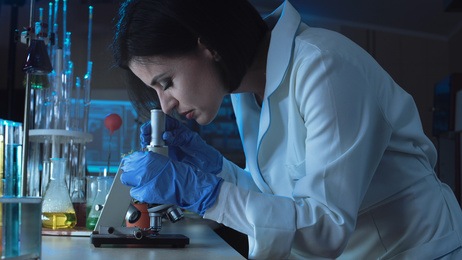
A Northeast Arkansas based company, SylamoreBio, has received a $3 million Phase II Small Business Innovation Research (SBIR) grant from the National Institutes of Health’s (NIH) National Institute of Neurological Disorders and Stroke.
The grant will help SylamoreBio’s pre-clinical research to develop a therapeutic for GM1 gangliosidosis, a rare, fatal, neurodegenerative disease. This research is being conducted on the Arkansas State University campus at the Catalyst Innovation Center, a life sciences-focused business incubator housed within the Arkansas Biosciences Institute (ABI) building.
Dr. Walter Acosta is the chief scientific officer and Dr. Tianhong Yang is a senior scientist, with the company and both are A-State graduates. The two are the primary investigators on this specific grant.
“This is a profound success story that highlights the direct value of A-State’s investment in both people and infrastructure,” said Dr. Todd Shields, chancellor of Arkansas State University. “Dr. Acosta’s journey — from Ph.D. student to chief scientific officer of a company developing life-saving therapies in a facility on our campus — is a testament to the quality of our molecular biosciences program and the vision of the ABI. We are incredibly proud of Dr. Acosta and the entire SylamoreBio team.”
SylamoreBio is leveraging its proprietary SyLEC delivery system, designed to transport therapeutic agents across the blood-brain barrier, a significant challenge in treating neurological disorders.
The company was co-founded by Dr. Carole Cramer, professor emeritus of biological sciences and former executive director of the ABI, who was Acosta’s faculty mentor during his time at A-State. Cramer serves as the company’s president and founder.
“The success of SylamoreBio, led by a A-State alumni and former faculty members, demonstrates the critical role our research ecosystem plays in moving basic science from the lab bench to the marketplace,” said Dr. Travis Marsico, vice provost for research, innovation, and discovery and executive director of the ABI. “Having a company working on such high-impact, federally funded research here at the Catalyst Innovation Center is exactly what the ABI was designed to achieve.”