
Studies point to benefit of rice as an ingredient in brewing beer
by November 30, 2025 9:00 am 535 views

From left, Christian Schubert and Dr. Scott Lafontaine are trying to change the perception that rice isn’t a good ingredient for brewing. Lafontaine is an assistant professor of food chemistry in the Dale Bumpers College of Agricultural, Food and Life Sciences, and Schubert has been a visiting postdoctoral researcher from the Research Institute for Raw Materials and Beverage Analysis, officially known as Versuchs- und Lehranstalt für Brauerei — or VLB — in Berlin.
There is archeological evidence that humans were brewing beer in China almost 10,000 years ago. Other evidence points to beer brewing in Iraq 7,000 years ago, and the ancient Egyptians were famed for their beer dating back to the construction of the Great Pyramid on the Giza Plateau.
Humans continued to brew beer with a wide variety of ingredients, but a major change came in Germany in 1516. Bread and beer makers were competing for resources. The Beer Purity Law was adopted, and it has impacted brewer perceptions about the ingredients that can be used in brewing, Dr. Scott Lafontaine told Talk Business & Politics.
An assistant professor of food chemistry in the Dale Bumpers College of Agricultural, Food and Life Sciences, Lafontaine said he and a German colleague, Christian Schubert, are trying to change the perception that rice isn’t a good ingredient for brewing.
“In Germany, the Beer Purity Law, or Reinheitsgebot, has shaped cultural attitudes toward what should go into beer,” said Lafontaine, who is also co-director of the Arkansas Center for Beverage Innovation with the Arkansas Agricultural Experiment Station, the research arm of the University of Arkansas System Division of Agriculture. “But here in the U.S., we have more flexibility to explore innovation.”
The Reinheitsgebot limited beer ingredients to water, hops, and barley malt. Yeast was included much later. Lafontaine said while the law has protected tradition, it also created resistance to alternative ingredients like rice and stifles innovation in countries like the U.S., where the definition of beer is broader.
Schubert has been a visiting postdoctoral researcher from the Research Institute for Raw Materials and Beverage Analysis, officially known as Versuchs- und Lehranstalt für Brauerei — or VLB — in Berlin.
Two studies by Schubert and Lafontaine show that rice can play a role in development of flavor and what’s known as extract yield, the amount of fermentable sugars extracted from grains in the brewing process.
ARKANSAS IMPACT
Expanded use of rice in brewing could be a boon to Arkansas rice farmers. This spring, the Legislature passed Arkansas House Bill 1491, which creates incentives for the use of Arkansas-grown rice in beer and sake production.
Arkansas is the nation’s top rice grower with about 50% of U.S. rice production. However, rice breeding programs from the U.S. Department of Agriculture and an international organization are going in opposite directions for what Lafontaine’s research is showing is best for brewers.
“This research is timely because current trends in rice breeding may unintentionally work against brewing needs if brewers are not proactive in cultivar selection,” Lafontaine said. “USDA breeding programs are emphasizing higher head rice yields, which is a critical quality parameter for rice millers to increase whole kernel recovery. At the same time, the International Rice Research Institute is advancing efforts to develop low-glycemic table rice varieties, which typically feature higher amylose content and elevated gelatinization temperatures.”
While the higher head rice yield and low-glycemic traits are advantageous for food applications, Lafontaine said they directly contrast with those shown to improve brewing extract efficiency. Also, rice with lower gelatinization temperatures could save energy in the brewing process and allow for craft brewers to utilize rice.
“Without intentional sourcing and closer collaboration with rice breeders, brewers risk losing access to cultivars best suited for brewing performance,” Lafontaine said.
As the demand for sustainability and innovation in brewing grows, securing access to the right varieties of rice will be essential for ensuring continued efficiency and product quality, Lafontaine said.
THE RICE ADJUNCT
Rice has historically been mischaracterized as a cheap adjunct. An “adjunct” in brewing is any fermentable ingredient other than malted barley used for a variety of reasons including cost reduction, flavor enhancement, body and mouth feel adjustment, or to achieve a specific style characteristic.
The first study, “Investigating the Incorporation of Milled Rice in Brewing Non-Alcoholic Beer to Enhance Sensory Quality,” was published in the “International Journal of Food Properties” and was co-authored by Nils Rettberg, head of special analytics at VLB and previously Schubert’s doctoral adviser as well as Lafontaine’s postdoctoral host.
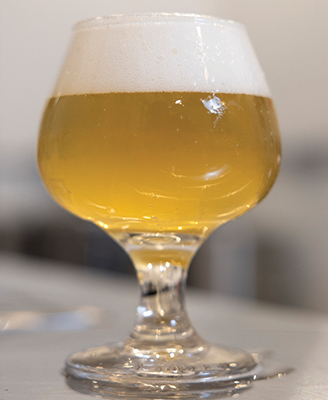 Their results show that rice improves flavor profiles, shortens fermentation time, and may extend shelf life by limiting the production of undesirable aldehydes, which are organic compounds often associated with off-flavors and aromas.
“Dr. Schubert led the charge in redefining the role of rice in brewing,” Lafontaine said. “He’s a certified German brewmaster with extensive technical training from the VLB. From a capability standpoint, there was no one better suited to lead this project.”
In the U.S., nonalcoholic beer is classified as having 0.5% or less alcohol by volume. International standards range from 0.05% to 1.2%, with “alcohol-free” beer typically defined as under 0.05%.
There are several methods to produce nonalcoholic beer. These include removing alcohol after fermentation or controlling fermentation using yeasts that do not fully metabolize malt sugars. Lafontaine and Schubert’s work focused on using Saccharomycodes ludwigii, a non-Saccharomyces yeast that cannot ferment maltose, the primary sugar from barley.
The key to rice’s success lies in its chemical composition. Unlike barley, milled rice has naturally lower levels of the unwanted aldehydes often found in nonalcoholic beer. By limiting aldehyde formation during fermentation rather than removing them afterward, brewers can reduce costs and improve product quality.
The research team also explored how rice is perceived across global markets. Using ARoma 22, a jasmine-type aromatic rice developed by the Arkansas Agricultural Experiment Station’s rice breeding program, the team brewed several nonalcoholic beer formulations with Saccharomycodes ludwigii.
FLAVOR TESTS
Sensory panels in Arkansas and Germany revealed distinct preferences. Arkansas participants favored a 30% rice/70% malted barley mix, while German participants preferred the inverse. The researchers suggest that a 50-50 blend may offer the most universally appealing profile.
Flavor analysis showed that barley-heavy beers had more “worty” characteristics, while higher rice content revealed buttery, vanilla and creamy notes. Additionally, higher rice content was correlated with increased levels of larger alcohol molecules, like 3-methyl-1-butanol, which contribute positively to mouthfeel without raising alcohol content above the legal nonalcoholic beer threshold.
Essentially, rice-based worts can make nonalcoholic beer taste more like full-strength beer. Fermentation also occurred faster with increased rice content, thanks to its higher levels of simple sugars such as glucose and fructose.
The nonalcoholic beer sector is poised for growth. While nonalcoholic beer accounts for about 5% of the German beer market, it comprises just 1% in the U.S. but is expected to expand significantly, Lafontaine added.
The second study, led by food science master’s student Matthew Aitkens, focused on how rice variety impacts brewing efficiency in terms of extract yield. The study, “Unveiling Cultivar and Agricultural Factors Influencing Extract Yield from Milled Rice,” was co-authored by Lafontaine, Schubert, and collaborators from the experiment station’s Arkansas Rice Processing Program and the USDA’s Agricultural Research Service.
Analyzing 74 rice cultivars, the team found significant variability in extract potential. High-extract varieties tended to have lower amylose content and cracked more easily, facilitating sugar release during the mashing process. Mashing is the first step in brewing beer, where grains are soaked in hot water to convert starches to sugar.
“Identifying cultivars with higher extract yield can enhance brewhouse efficiency and reduce raw material requirements,” the study concluded.
This is an important finding, Lafontaine said, because the economic implications are considerable. Improved extract yield means less grain is needed to produce the same volume of beer, which can help brewers cut costs, reduce waste, and scale production more sustainably.
“Rice isn’t just neutral filler. It’s a tool for innovation,” Lafontaine said. “It’s time we move beyond outdated perceptions and recognize what rice can offer in creating beer that’s sessionable, efficient, and aligned with both tradition and the evolving preferences of today’s consumer.”