
Walmart’s McMillon hopeful about holiday sales, talks tariffs
by September 3, 2025 5:58 pm 2,022 views
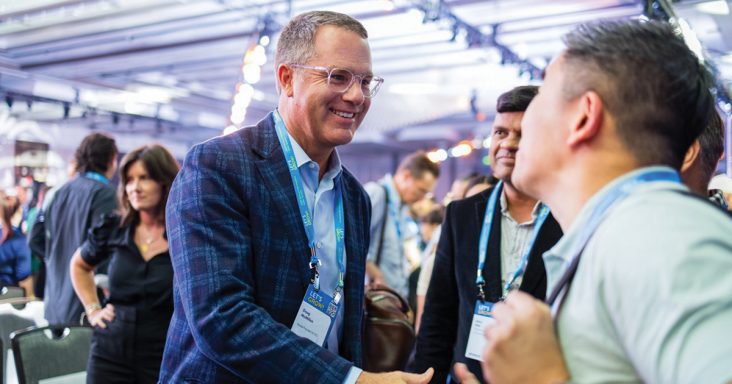
Walmart CEO Doug McMillon
Running the world’s largest retailer can be tricky with volatile tariffs and trade policies, food inflation, and struggling consumers. But Walmart CEO Doug McMillon expects good holiday sales based on a strong back-to-school season.
“Generally speaking, people have held up really well, and we expect the same thing to happen for the balance of the year, and this quarter started in the same strong fashion on the top line,” McMillon said during an interview with Katharine McShane, a retail analyst at Goldman Sachs, at the company’s annual retail conference held Sept. 3 in New York City. “So we’re continuing to see what happened in the second quarter spill into the third quarter.”
McMillon said Walmart is benefiting from strong demand among middle- and upper-income shoppers. He said there has been stress among mid- to lower-income levels and behavior changes with higher prices. Some consumers are switching brands and trading down or withholding purchases, McMillon said, which is typical during times of economic pressures.
He credited his merchant teams for smart buying for what is shaping up to be a strong back-to-school season.
“For us, back-to-school has really been strong, and that causes us to feel good about the second half of this year,” McMillon said. “Sell-throughs were good, the value we created for customers was good, and e-commerce continues to grow as a percent of total as it relates to back-to-school, which is great to see.”
With respect to inventory and supply chain disruptions, he said Walmart has not experienced any big disruptions, which is somewhat surprising given the Trump administration’s tariff and trade policy changes. McMillon said merchants are being creative, making different decisions to get better outcomes so prices are lower than they would have been otherwise. He said inventory is well managed, which is crucial in this type of environment.
“Between now and holiday, I feel pretty good that we know what we’ve got,” he said.
He said inflation remains an issue, and the low U.S. inflation rate does not tell the whole story. In food categories, particularly processed foods, dry grocery and prepared foods, McMillon said prices have gone up for multiple years, so absolute prices in food are higher than Walmart and consumers want. On the general merchandise side, he said prices came down after supply chain issues created by the pandemic cycled out. But prices are rising again because of the tariffs.
He said the promotional environment is hit or miss, depending on the category. McMillon said Walmart is always looking for areas to be more efficient, generate price rollbacks, and maintain price gaps with competitors.
“So while some items are going up, other items are coming down,” he said. “It’s also great to have fuel prices at a low level. We sell a lot of gasoline, and being around $2.50 a gallon is helpful. When you put it all together, I think we’re able to find consumers who can still consume, and we want to make sure that that’s the case going through the rest of the year, too.”
He said for the balance of this fiscal year, expectations for consumers are about the same, not better or worse. McMillon said for the company as a whole, cost pressures have been gradual, but he expects that will change when tariff levels are finally set. President Donald Trump’s tariff plan for India is now a concern, and he’s hopeful that policy will get settled sooner rather than later at lower rates than what’s being discussed.
The Trump administration imposed 50% tariffs on India, including secondary duties of 25% last month in retaliation for India’s continued purchasing of Russian oil. In 2024, India imposed a 6.2% tariff on U.S. imports, while the U.S. levied a 2.4% tariff on Indian goods.
“If you pass on the entire impact of a tariff at a higher price point, it can put it out of range, and you really see a unit decline,” McMillon said. “So we do things like spread within categories and across categories within general merchandise to help manage that, trying to protect food prices and keep some separation there.”