
The Supply Side: Walmart’s fashion segment now a $29.5 billion business
by July 9, 2025 11:21 am 2,124 views

While Walmart is the socks, T-shirts and underwear retailer for tens of millions of consumers, it has become much more in recent years, according to Deanah Baker, who spent 32 years as a fashion merchant at Walmart.
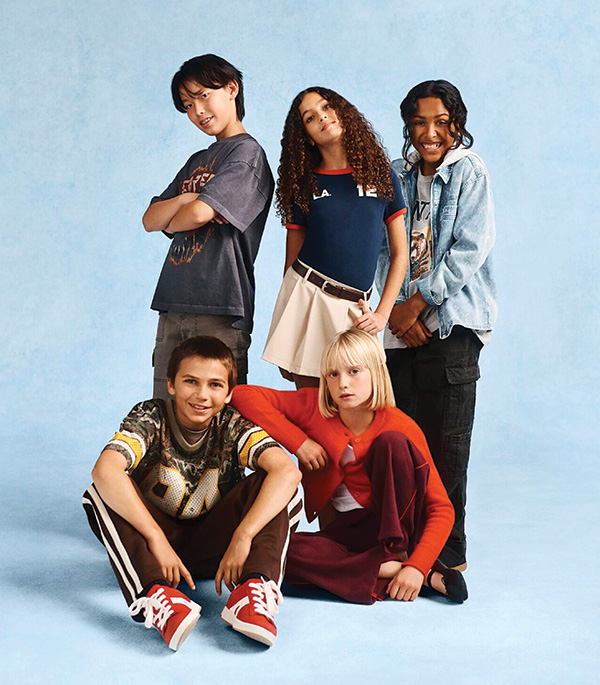
Baker, who retired from Walmart in 2022 as senior vice president and general merchandise manager of omni apparel merchandising, said there has been a significant effort by Walmart to expand its fashion footprint, with some successes and some not so much. Walmart’s latest apparel launch of its new tween private brand, Weekend Academy, is geared toward youth ages 9 to 12 and are members of Generation Alpha.
“A big part of Walmart’s fashion strategy is modernizing and elevating our private brand assortment to offer all our customers the best style and value on the market, including our tween shoppers,” said Gypsy Jo Diessner, vice president of kids fashion at Walmart U.S.
Diessner said the brand will be available in stores and online July 7, in time for back-to-school shopping. She said the new tween brand was designed by Walmart’s in-house team from New York and fills in the selection between the private brands’ successes for Wonder Nation for younger kids and the recently revamped No Boundaries private brand for Generation Z consumers — ages 13 to 28.
She said Weekend Academy features 65 pieces spanning apparel, footwear and accessories for girls and boys. Walmart was conscious of the price points with denim at $16.78, graphic tees under $9, and mix-and-match fleece under $15. Many of the items are priced under $10. Walmart said the apparel line will be updated seasonally.
Baker said by the time kids are 10 years old, they have a lot of say in what they wear, meaning this generation wields massive purchasing power. Numerator reports that Gen Alpha (children under the age of 15) has an estimated $28 billion in direct purchasing power. About 53% of the parents of Gen Alpha kids give allowances for personal spending and saving.
This generation is also motivated to spend by their exposure to social media, with 90% of young teens daily accessing YouTube, TikTok, Snapchat and Instagram. This generation also is known to share their digital shopping lists with parents for the items they want. Numerator said parents of this young generation report giving their kids independence when choosing snacks, apparel, entertainment and school supplies.
Walmart is supporting the Weekend Academy apparel launch with marketing dollars on social media sites and mainstream television.
Baker said given the limited space in stores it will be interesting to see what inventory is pulled to make room for the Weekend Academy. She said it’s likely they are pulling back on Wonder Nation items for older kids to make room for the new brand.
Baker said Walmart has come a long way with its large private brands in apparel. The No Boundaries apparel line, which was launched in 1994 and refreshed in 2024, is a $2 billion brand. Baker said bringing on designer Brandon Maxwell in 2021 was a smart move. Maxwell has dressed everyone from Lady Gaga to Michelle Obama with red carpet designs, and he applied that creative talent to Walmart as the creative director of the retailer’s Free Assembly and Scoop private brands, which were launched four years ago. Those are growing brands with seasonal updates.
“Free Assembly is all about individuality, and the variety of products allows you to freely assemble a look that represents who you want to be on any given day,” Maxwell said recently.
Baker said during her tenure at Walmart, they experimented with trying to carry the Free Assembly brand down to the tween ages, but it did not happen. She said Weekend Academy is a smart-looking line of apparel and accessories that is a better fit for tweens.
She said Walmart is having some success with its new designer team based in New York. Baker was at Walmart when the entire fashion team moved to New York in 2009, and the two-year experiment was not successful. She said a team of 40 went to New York, but only six came back because there was constant turnover and a hodgepodge of cultures that just didn’t work.
“There was not enough focus on the customer, and the important Walmart culture was absent,” Baker said.
Baker transitioned to outdoor living as a divisional merchandise manager for the two years when Walmart’s fashion team was based in New York. The other 30 years, Baker spent in apparel. Part of the success of four of Walmart’s private brand apparel lines launched in 2017, now worth $6 billion in sales, came as the retailer focused on better quality, lower prices, and the store of the future design for apparel, which was led by Baker.
Walmart’s store of the future remodels seek to merchandise apparel in a way that more resembles a Gap store. Baker said fashion and accessories have to be displayed in a way that catches a shopper’s eye. But the modular sets also have to be designed so store employees don’t have to constantly touch the product.
“Apparel does require more hands-on experience from store staff than other departments,” Baker said. “But stores also have to carefully manage the inventory. Presentation matters a lot. But in a quest to get more sales out of the same square footage, we went to racks. Walmart had too much fashion inventory that was sold more slowly. We went on a SKU [item] diet and had to make sure every item had a home and that the back room process could keep the floor orderly and reset so customers can see what you really have for sale. If you don’t show up at the right time, whether it’s online or in-store, sales are missed.”
Baker also worked with fashion suppliers on sustainability goals and onshoring some production during her tenure. One of the most important tasks she worked on was getting radio-frequency identification (RFID) tagging inside apparel. This task required a buy-in from suppliers, but Baker said RFID made it possible for Walmart to sell apparel online because it provided the exact inventory on hand in size and color, and style for each item.
She applauds Walmart’s use of generative artificial intelligence (AI) to speed up the design process with its Trend-to-Product initiative that shortens the traditional production timeline for fashion by as much as 18 weeks. Baker said fashion changes so fast, and speed to market is important.
“The way to save that much time is to have your fabric figured out up front, because a lot of the makers have to purchase the fabric from China, and deliver it to the country making the product,” she said. “So if you got that figured out already and have got that flow going, great. It’s gonna take you three months to get the product here from most countries, unless it’s Central America. So that’s baked in. If you can shorten this production time to make decision-making better or fewer samples going back and forth, it makes total sense. I see this as not only good for fashion but for other parts of the business as well.”
Editor’s note: The Supply Side section of Talk Business & Politics focuses on the companies, organizations, issues and individuals engaged in providing products and services to retailers. The Supply Side is managed by Talk Business & Politics, and is sponsored by HRG.