
Low Mississippi River levels cost soybean farmers up to $293 million
by July 8, 2025 5:46 pm 1,050 views
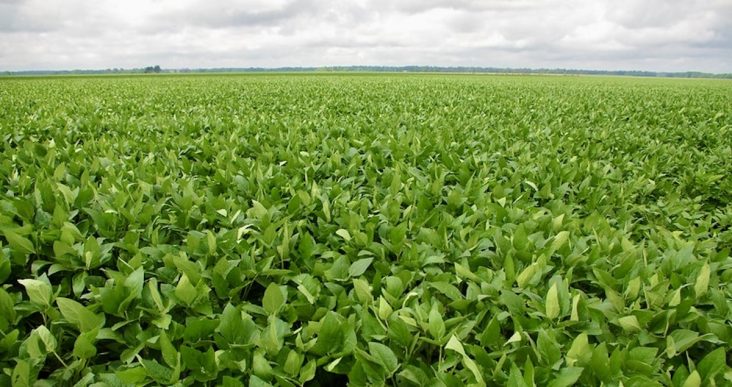
During the past several years, drought conditions have plagued the lower Mississippi Delta region and have had a dramatic impact on row crop farmers. The lack of rain caused river levels throughout the river’s system to drop, and it has led to historic low levels at key points along the river, including Memphis.
It got to a point where some farmers would just dump their crops on riverbanks because the price of the crop wouldn’t justify the transport costs. Barges had to dump crops to keep from hitting the riverbed.
Two agricultural economists, James Mitchell and Hunter Biram, recently conducted a study of how the river’s low levels impacted Arkansas’s soybean crop in 2022. Mitchell and Biram have calculated that the state’s soybean crop lost up to $293 million in value in 2022.
“We were getting a lot of calls about this issue from local producers, stakeholder groups, and policymakers,” Mitchell said. “It wasn’t just a regional concern. There were major news outlets featuring stories on how low Mississippi River levels had become in the fall and the disruptions it was causing to river transportation.
That year in October, the U.S. Geological Survey reported the water level in Memphis was at minus 10.8 feet, and one year later it was measured at minus 12 feet — an all-time record low. In 2024, it was measured at minus 10 feet.
Draft restrictions had to be issued forcing barges to lighten their loads. The number of barges in tow was also reduced. Both restrictions meant less commodity movement, the key marine highway for the Midwest and Mid-South to get agriculture products to the Port of New Orleans for export.
“What really stood out to us was how often this was happening, three years in a row, and always at harvest when soybean sales are at their peak,” Mitchell said. “Everyone kept asking the same question: ‘What’s the cost to Arkansas producers when the river is low?’ We realized there was an opportunity to put numbers behind a very real and very visible problem.”
The two noted that that record-low water levels increased transportation costs and barge freight rates and that those higher transportation costs are transmitted to row crop producers through lower cash bids or a weakening of local crop basis. “Basis” refers to the difference between the local cash price of a commodity and its futures price.
The weakened basis cost millions of dollars.
For their study, Mitchell and Biram defined “low river” conditions as minus 5 feet at the Memphis river gauge. At that level, the two found that, on average, Arkansas soybean basis weakens more the closer the grain market is to the closest Mississippi River port.
It was down 58 cents per bushel for grain markets 5 miles from the closest Mississippi River port; down 29 cents per bushel for grain markets 10 miles from the closest Mississippi River port; and down 12 cents per bushel for grain markets 25 miles from the closest Mississippi River port.
It wasn’t just Arkansas being affected. A parallel weakening was noted across the river in Mississippi soybeans too, widening by 55 cents per bushel, 28 cents per bushel, and 11 cents per bushel for the same distances to grain markets.
Mitchell said the distance/basis size numbers show “the farther away you are from the river, the less of an impact there will be on prices.” Biram said the study findings can clarify the conditions to trigger some market self-defense for Mid-South farmers.
“Low river levels along the lower Mississippi River matter, especially for soybean farmers in states that rely more heavily on export markets, like those in Arkansas and bordering states along the Mississippi River,” Biram said. “Buyers currently do and farmers should be keeping an eye on river levels in order to manage the risk of lower basis and therefore lower price. In fact, it is never a bad idea to book a portion of production by the end of June in order to manage the risk of lower prices resulting from various factors, including low river levels along the Mississippi River.”
Impacts to farmers in the upper Midwest were not part of the study.
Mitchell said “the Mississippi River has a fascinating history, and we both went down the rabbit hole a couple of times looking into it.”
“Most of the major disruptions in the past have been flood-related, like the historic flood of 1993, which also impact navigation but in a different way,” he said. “When it comes to low-water episodes, it’s actually difficult to find historical events that match what we were seeing in 2022-24. There have been low-water events but 2022-24 was record-setting, both in terms of severity and timing. That’s what made it stand out and why we started paying closer attention.”